Prepared by: Joseph Bakarji
Logistic Regression
Logistic Regression
Part I
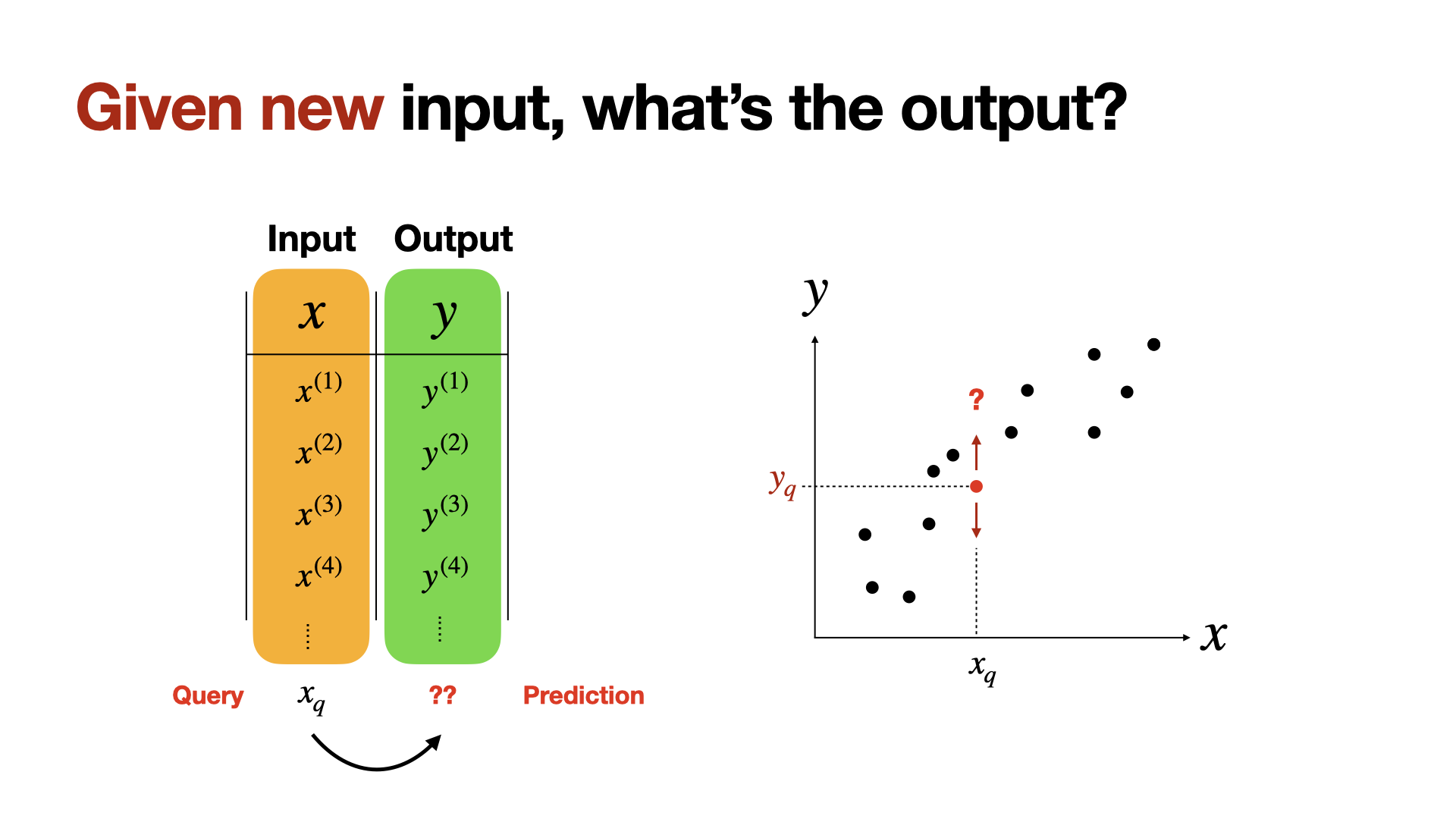
Given new input, what’s the output?
…..
…..
Input
Output
?
Query
??
Prediction
Given new input, what’s the output?
Actions: make decisions and act from a set of possible
Perceptions: observe the world and one’s own state
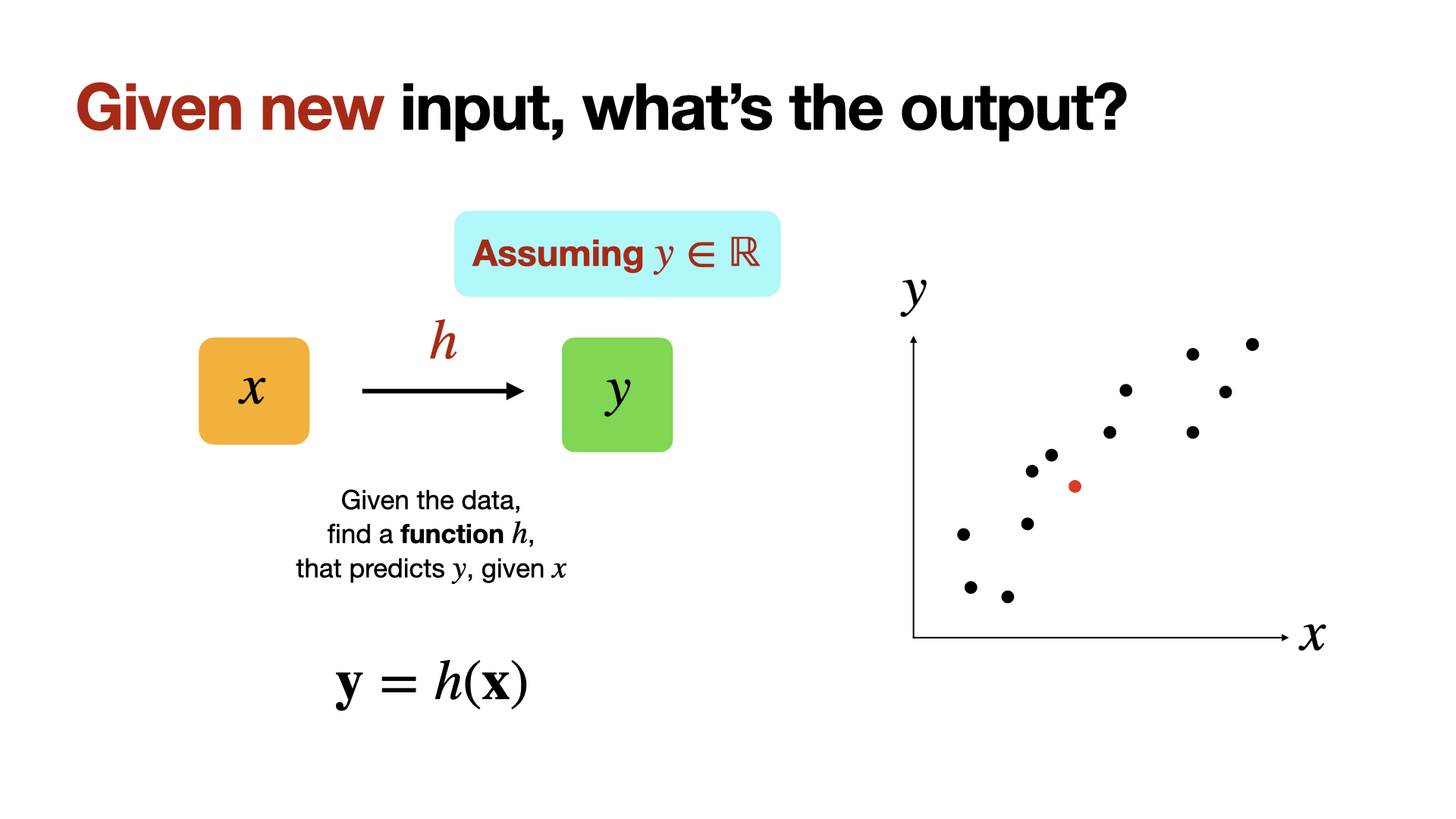
Given new input, what’s the output?
Assuming 
Given the data,
find a function ,
that predicts , given 
Given new input, what’s the output?
Actions: make decisions and act from a set of possible
Perceptions: observe the world and one’s own state
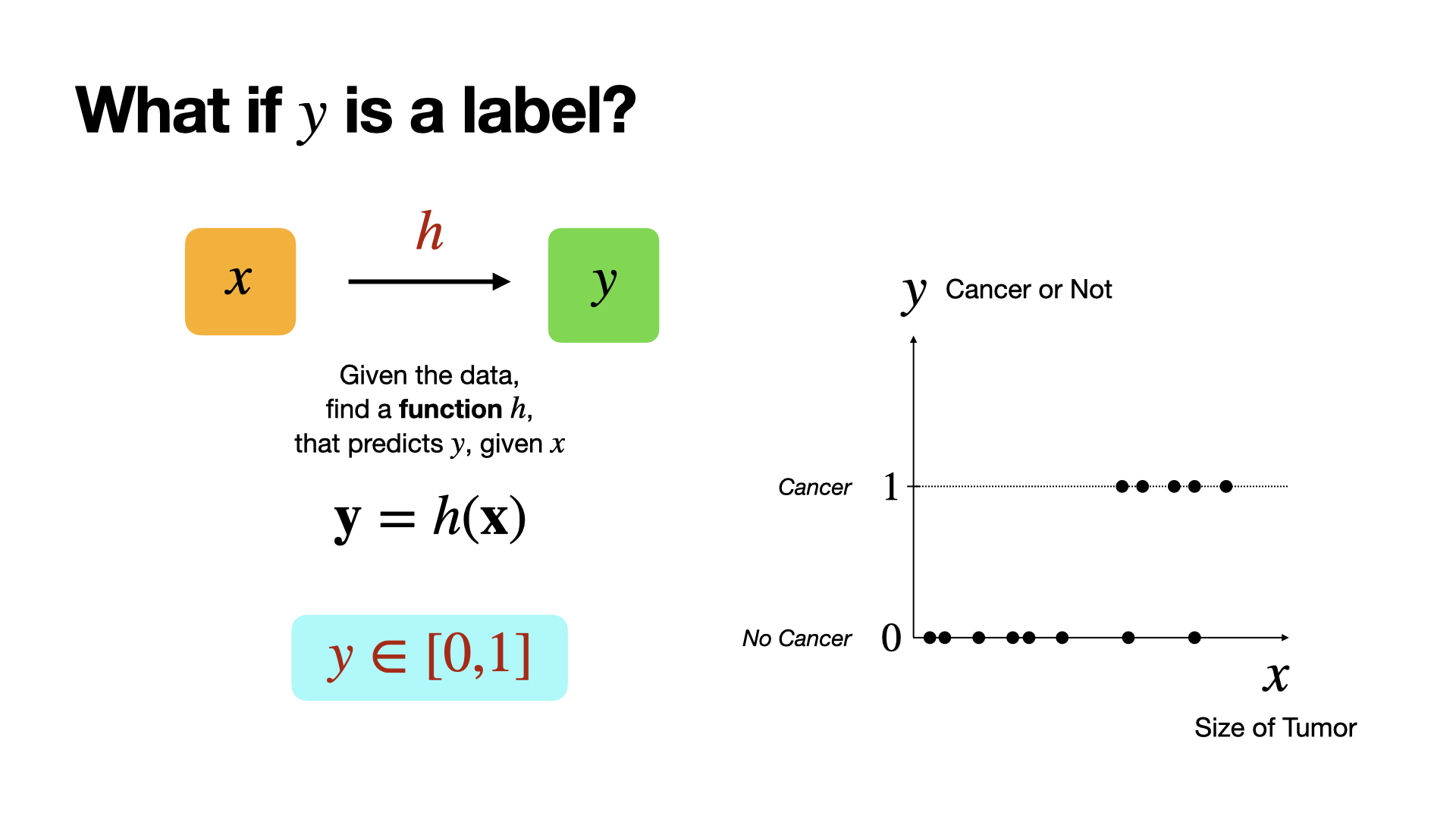
What if  is a label?
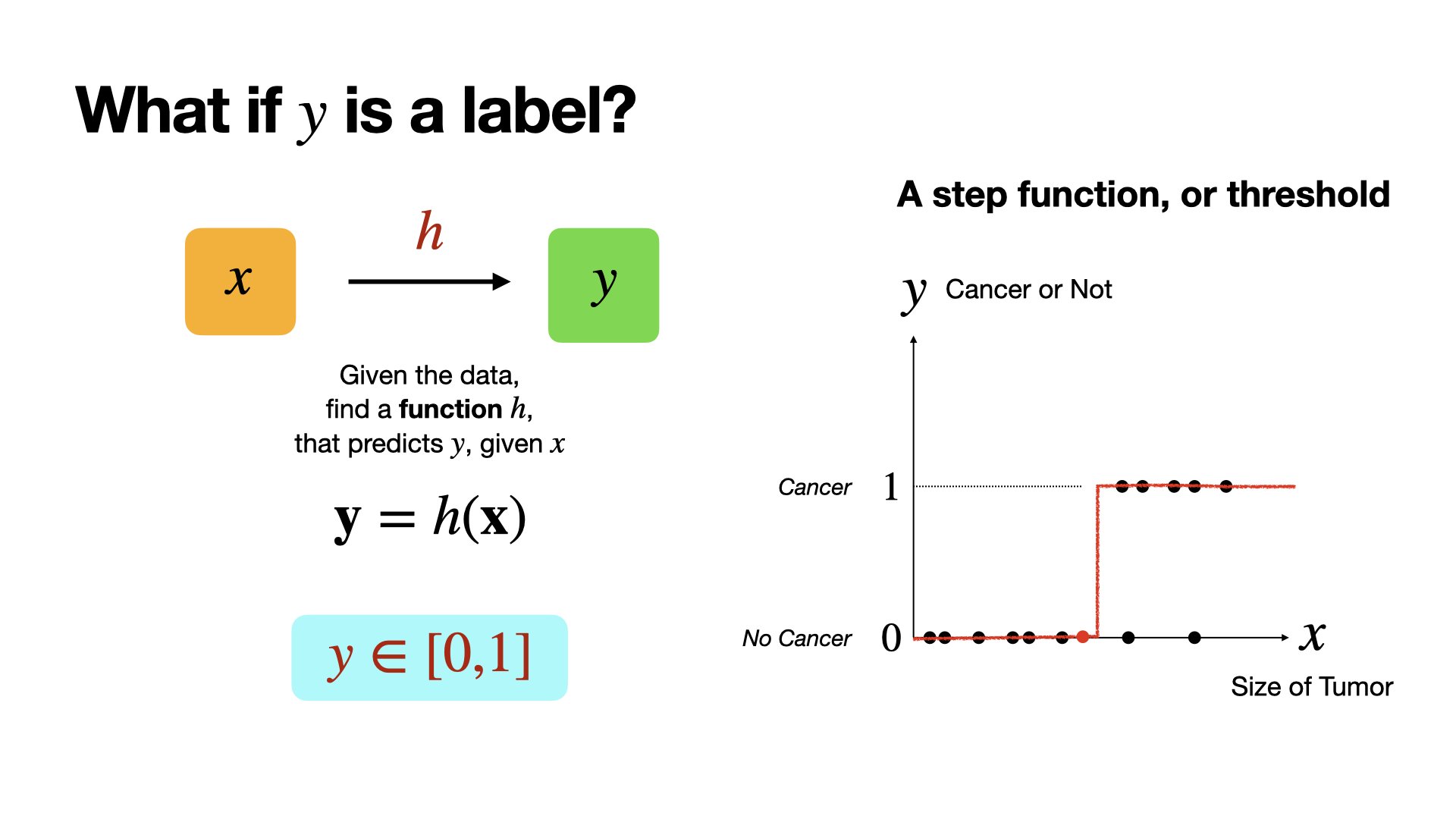
Size of Tumor
Cancer or Not
Cancer
No Cancer
Given the data,
find a function ,
that predicts , given 
What if  is a label?
Actions: make decisions and act from a set of possible
Perceptions: observe the world and one’s own state
What if  is a label?
Size of Tumor
Cancer or Not
Cancer
No Cancer
Given the data,
find a function ,
that predicts , given 
A step function, or threshold
What if  is a label?
Actions: make decisions and act from a set of possible
Perceptions: observe the world and one’s own state
What if  is a label?
Given the data,
find a function ,
that predicts , given 
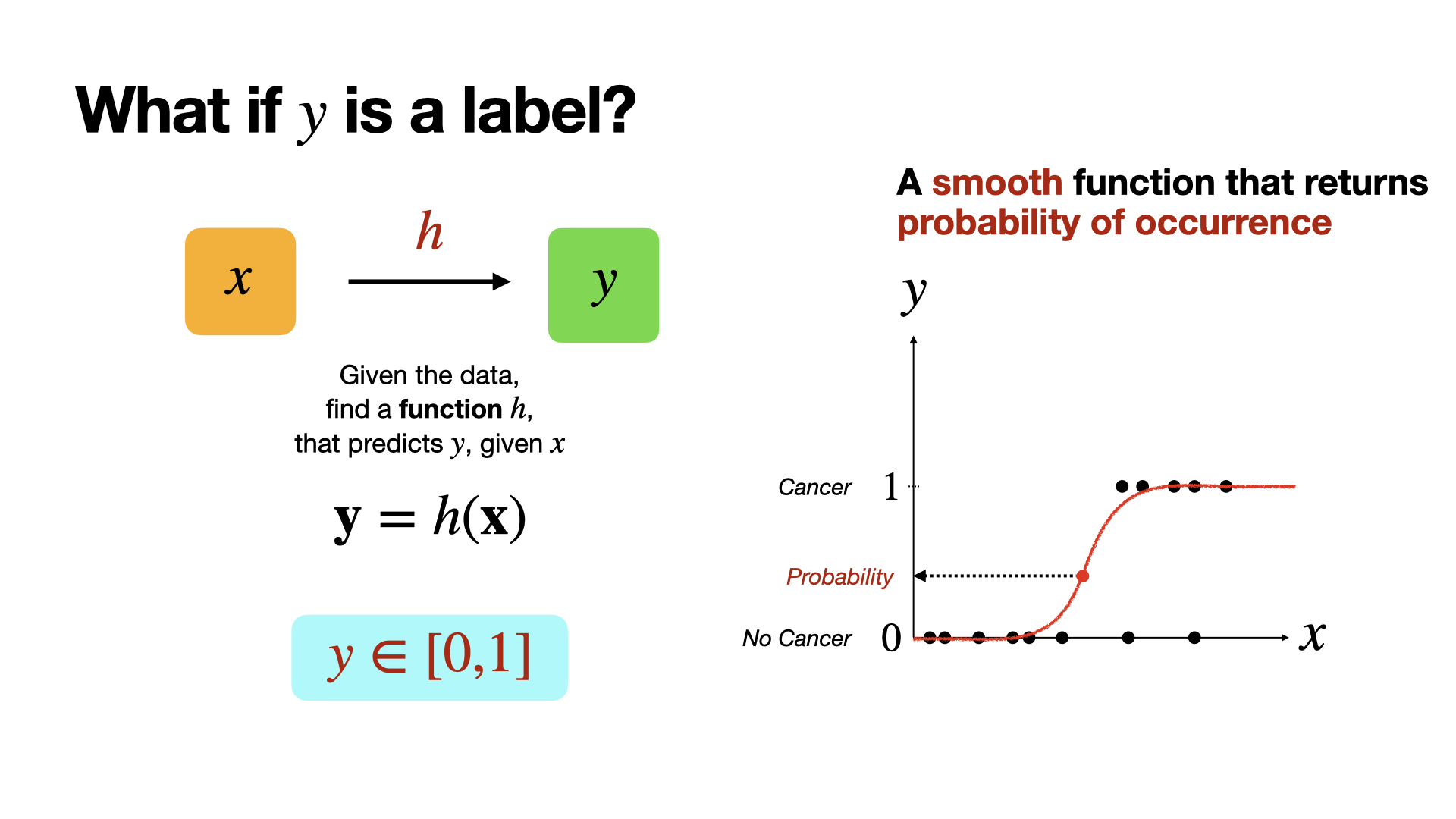
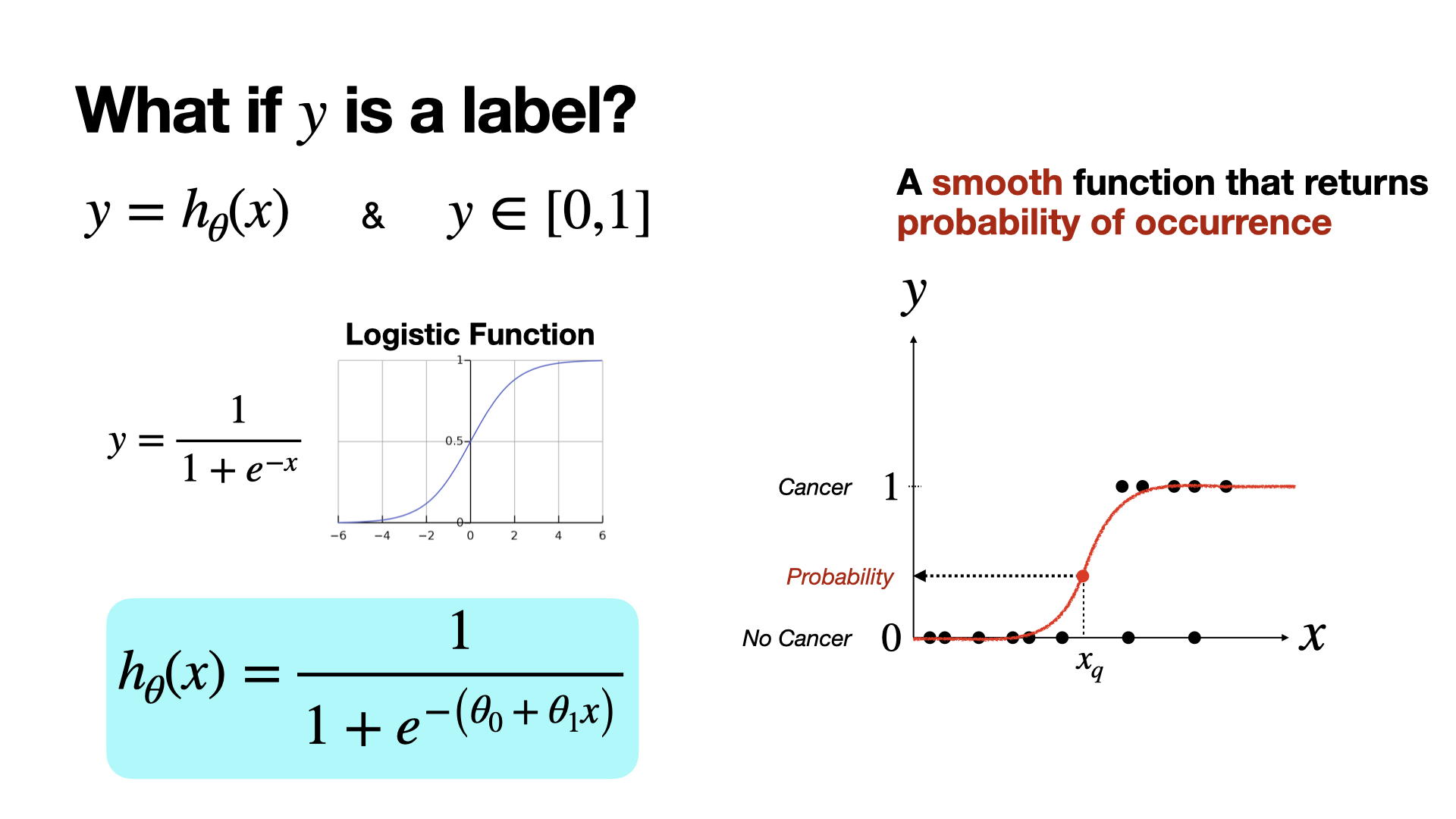
A smooth function that returns
probability of occurrence
Cancer
No Cancer
Probability
What if  is a label?
Actions: make decisions and act from a set of possible
Perceptions: observe the world and one’s own state
What if  is a label?
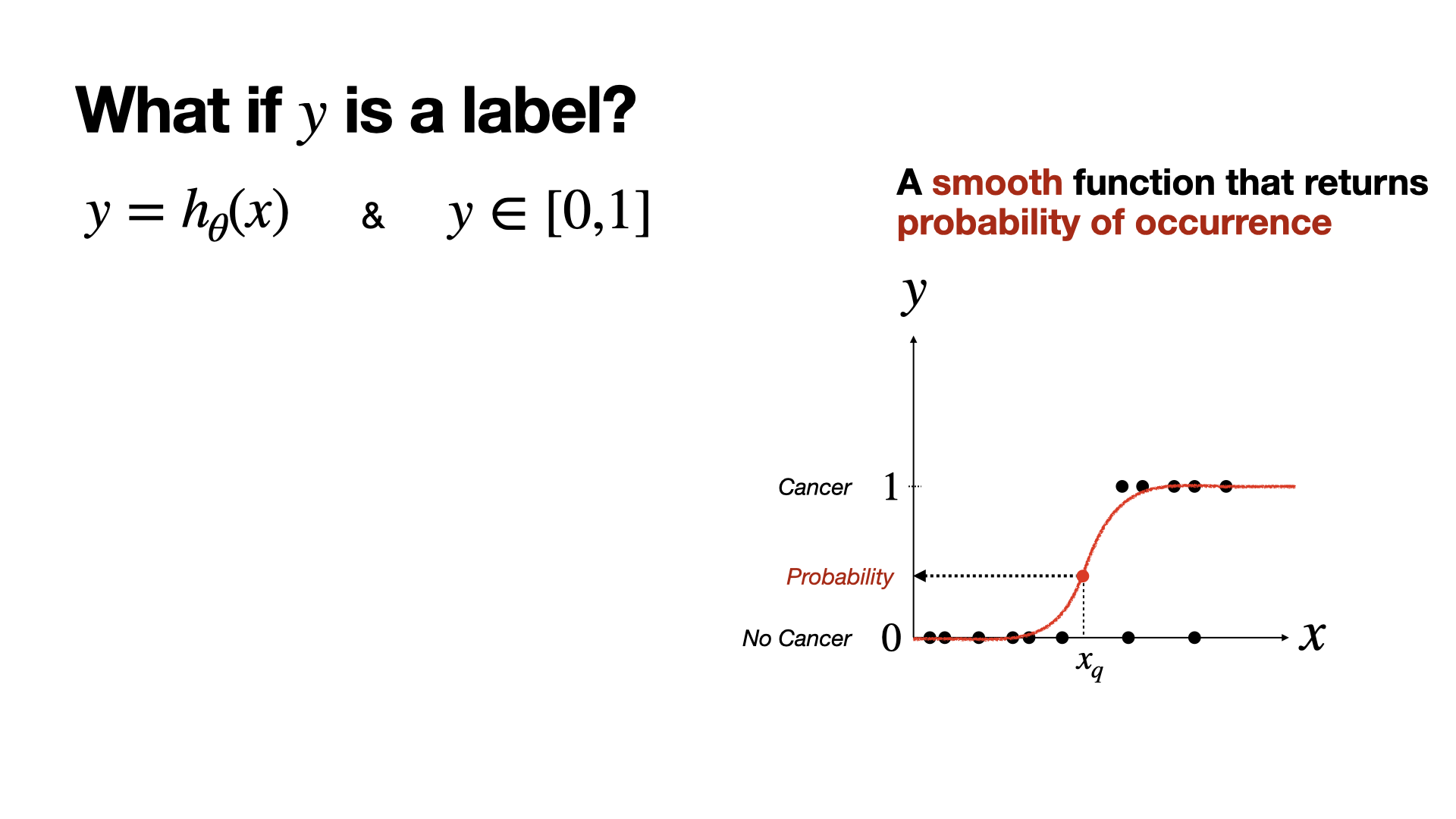
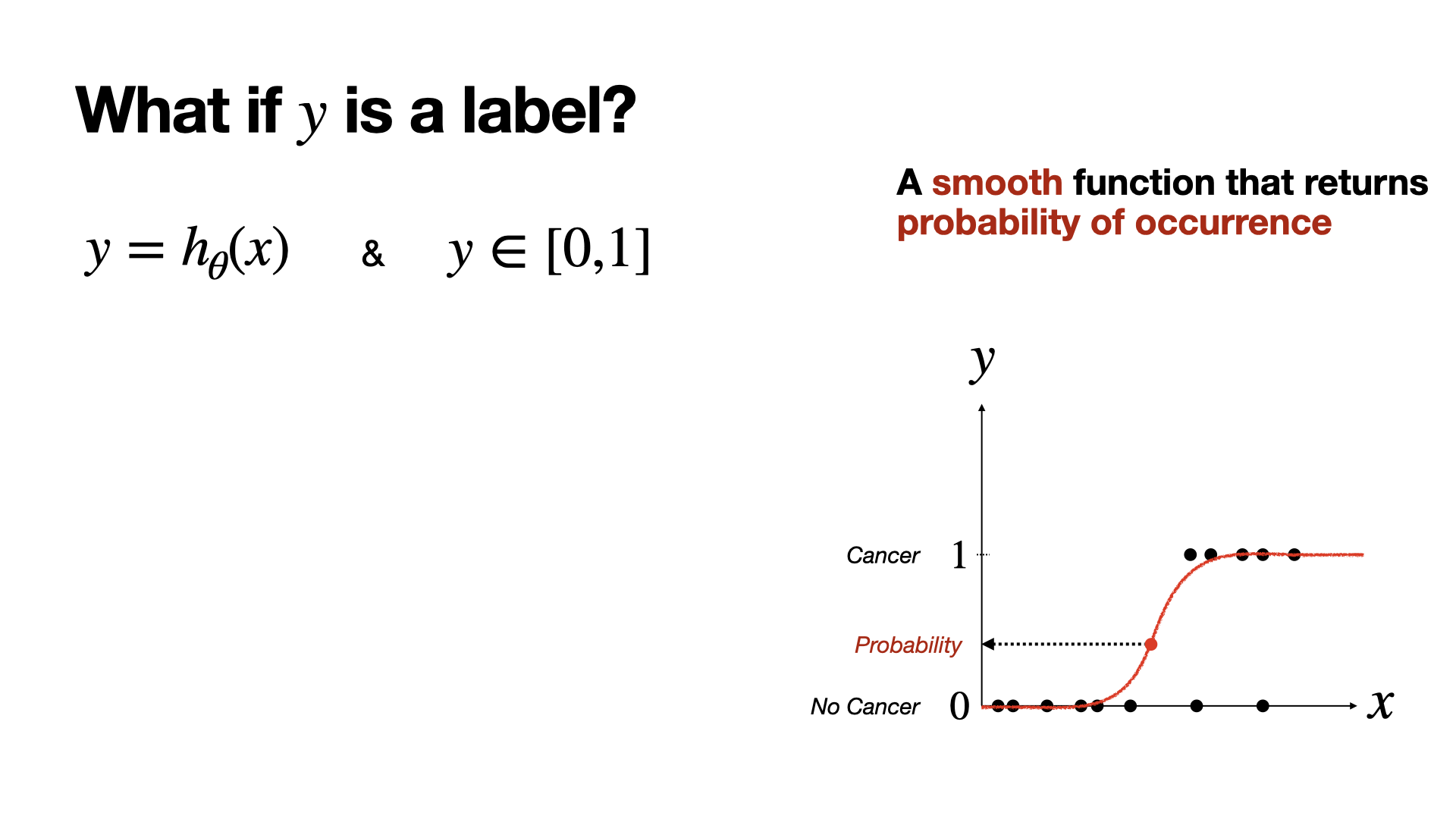
A smooth function that returns
probability of occurrence
Cancer
No Cancer
Probability
&
What if  is a label?
Actions: make decisions and act from a set of possible
Perceptions: observe the world and one’s own state
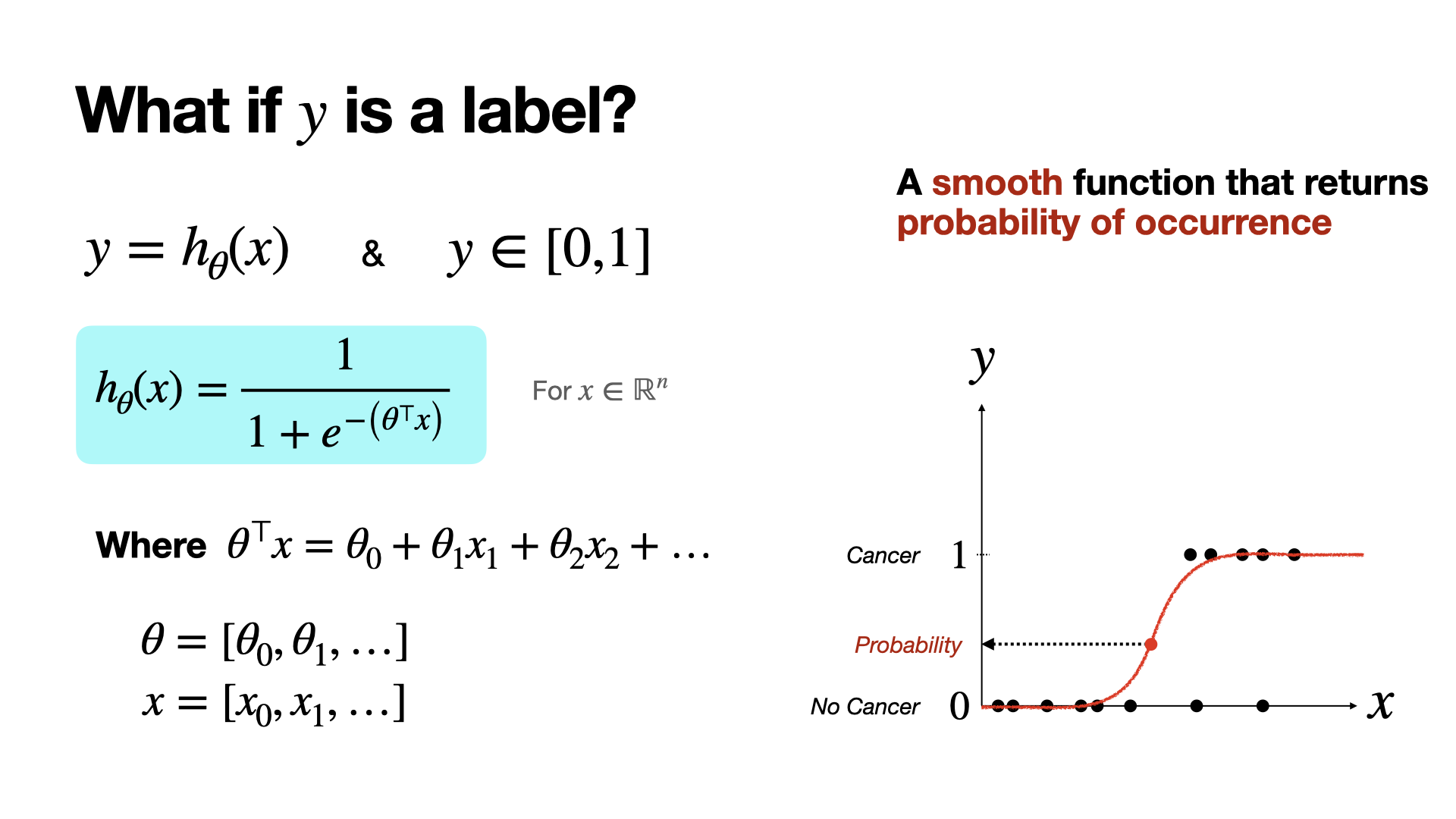
What if  is a label?
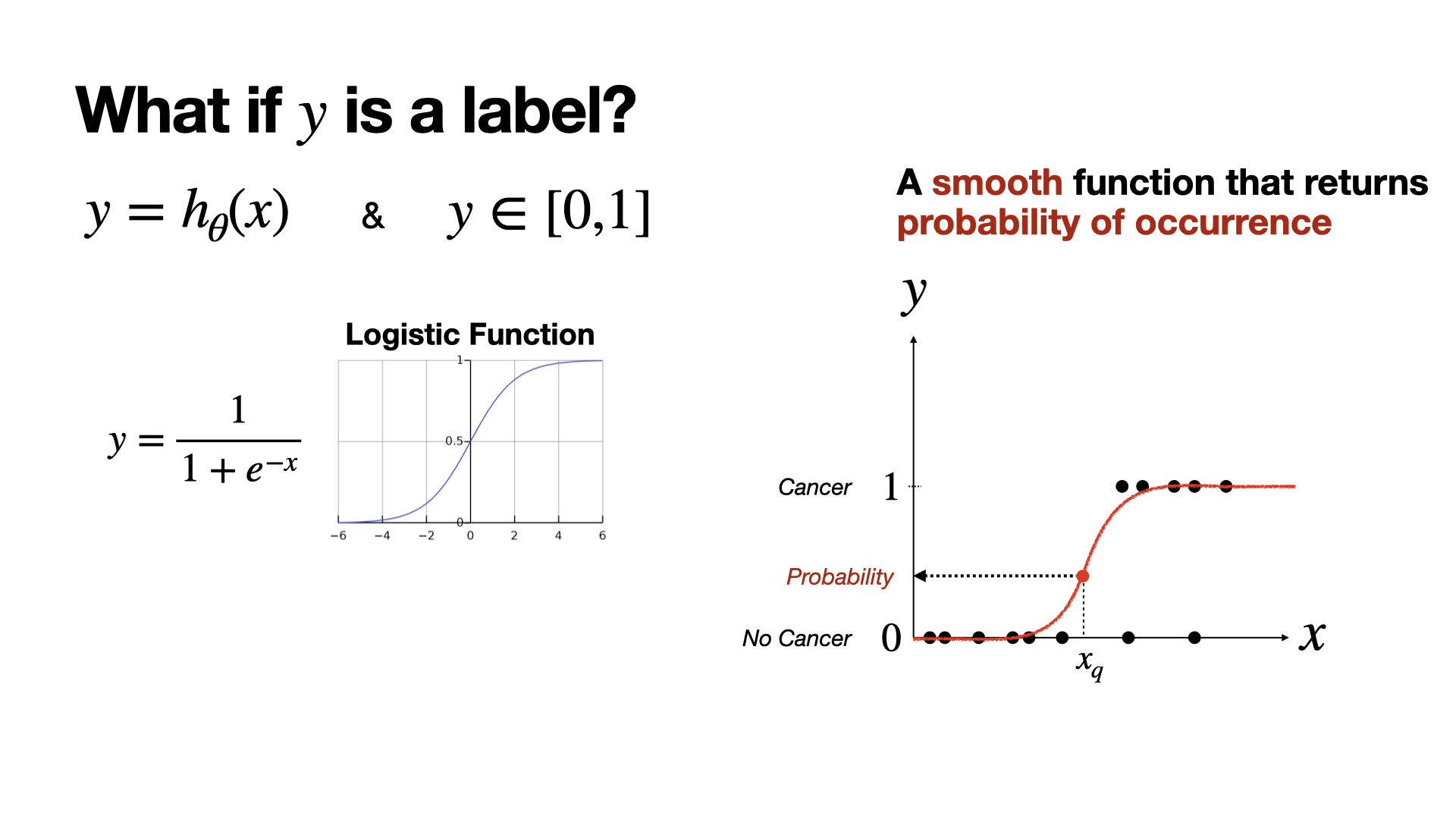
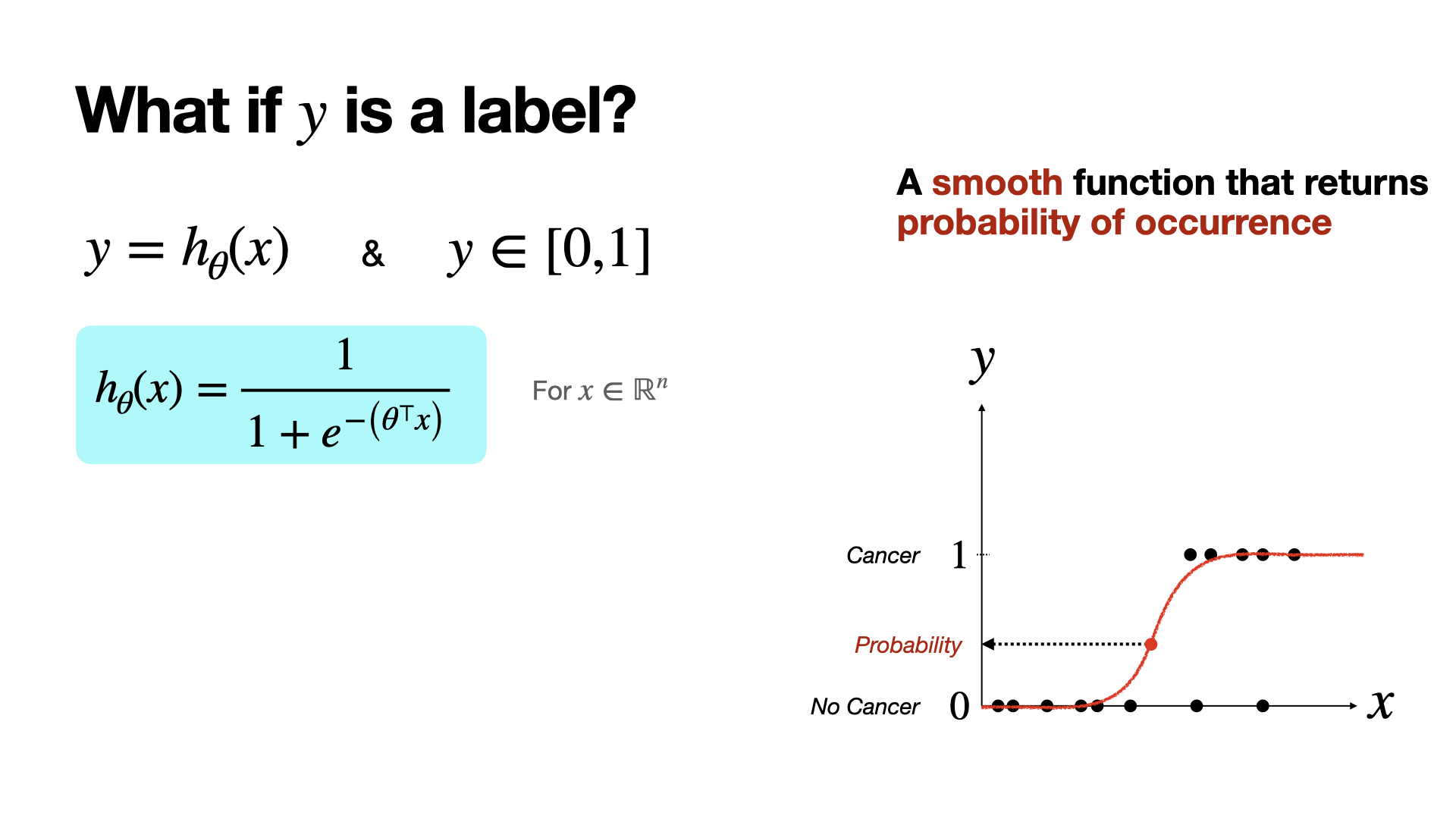
A smooth function that returns
probability of occurrence
Cancer
No Cancer
Probability
&
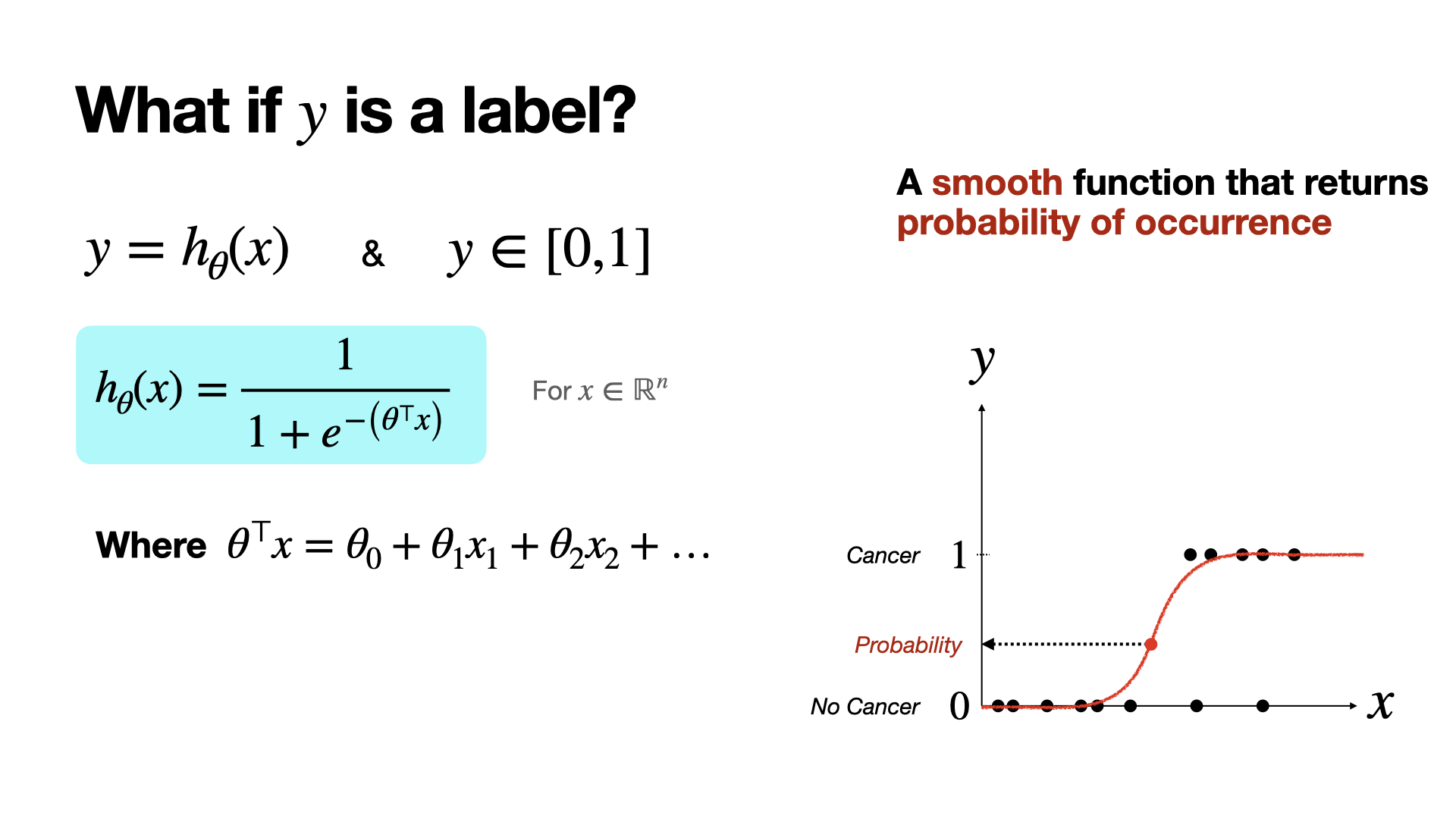
Where 
What if  is a label?
Actions: make decisions and act from a set of possible
Perceptions: observe the world and one’s own state
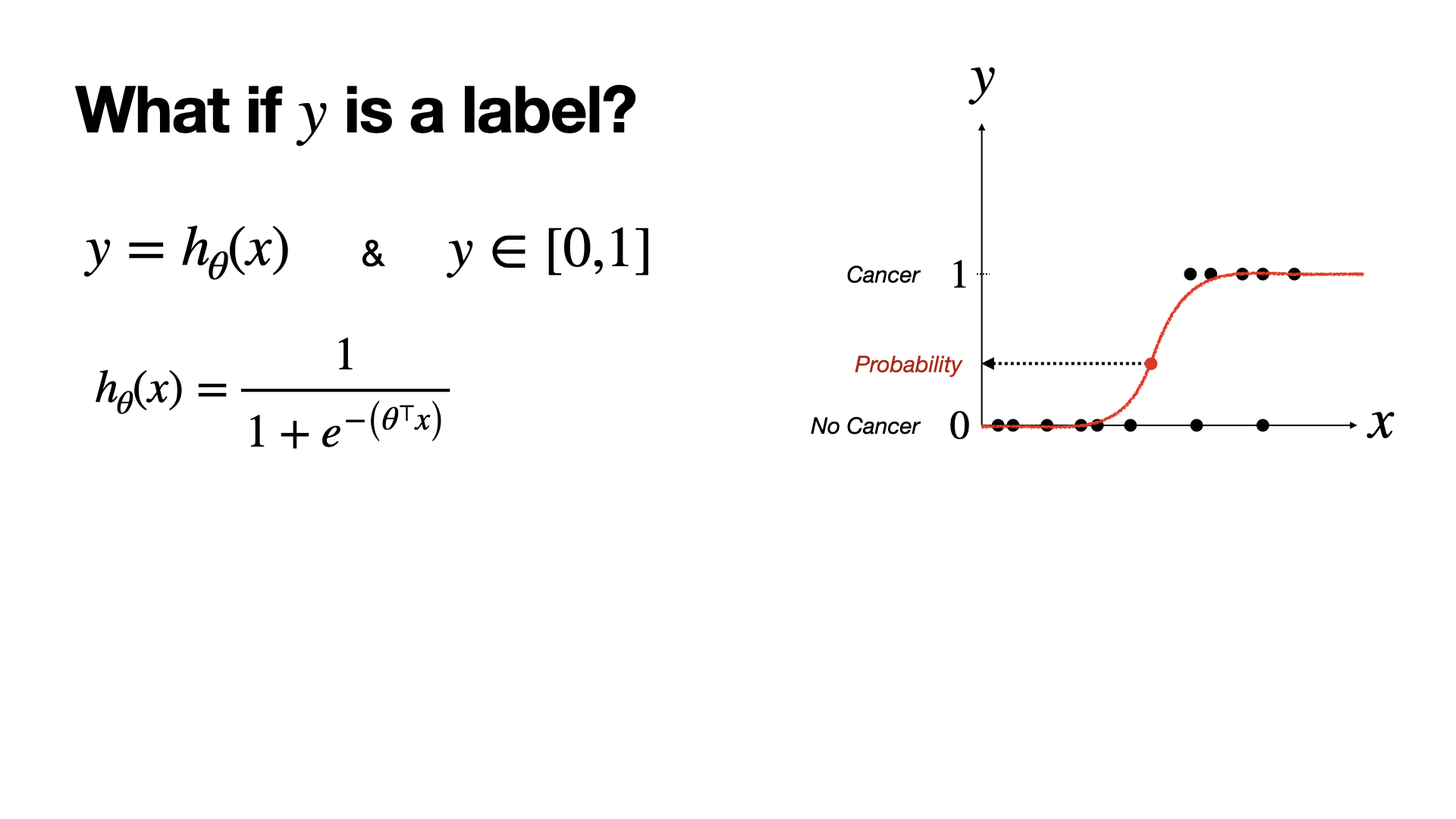
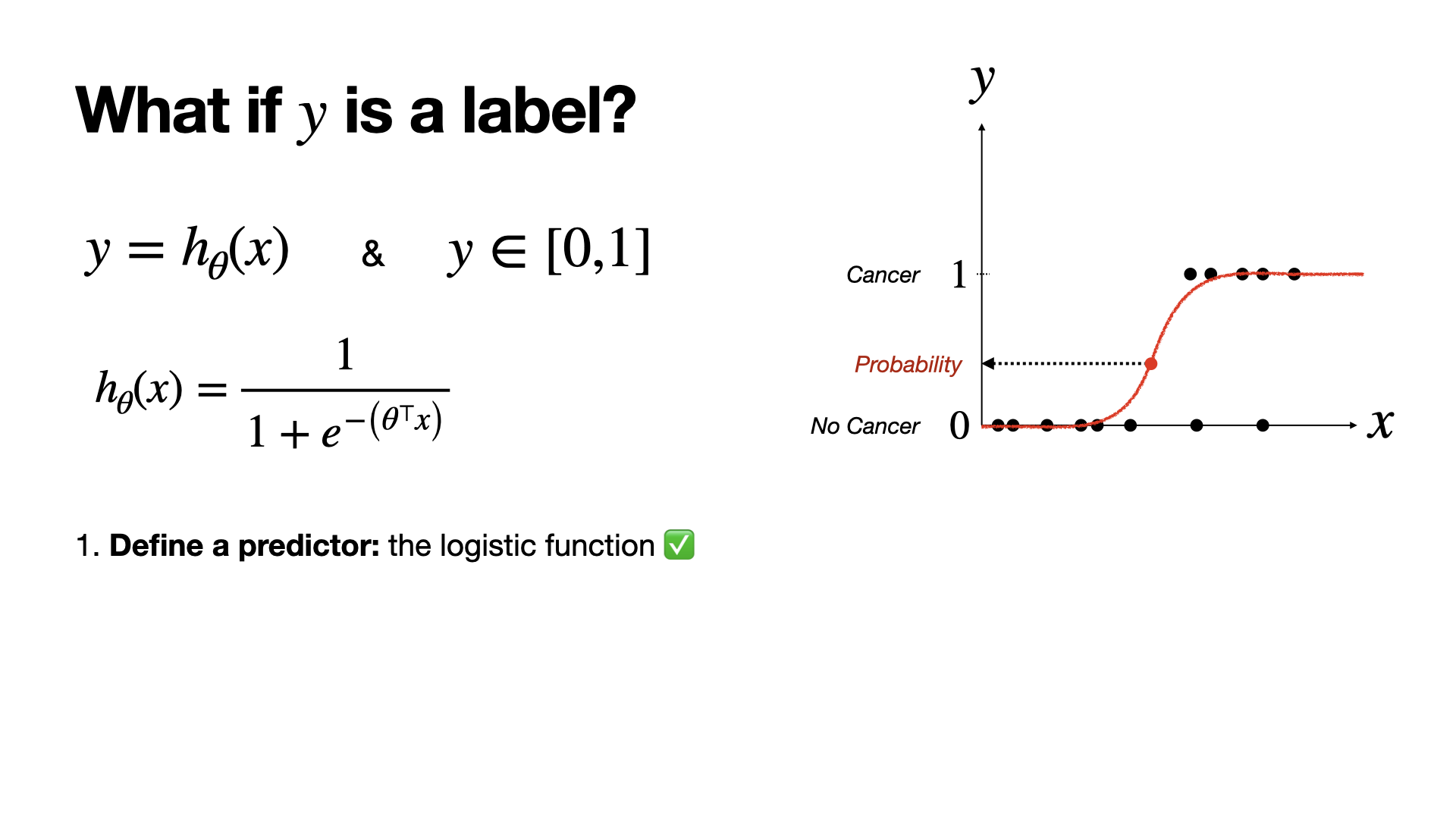
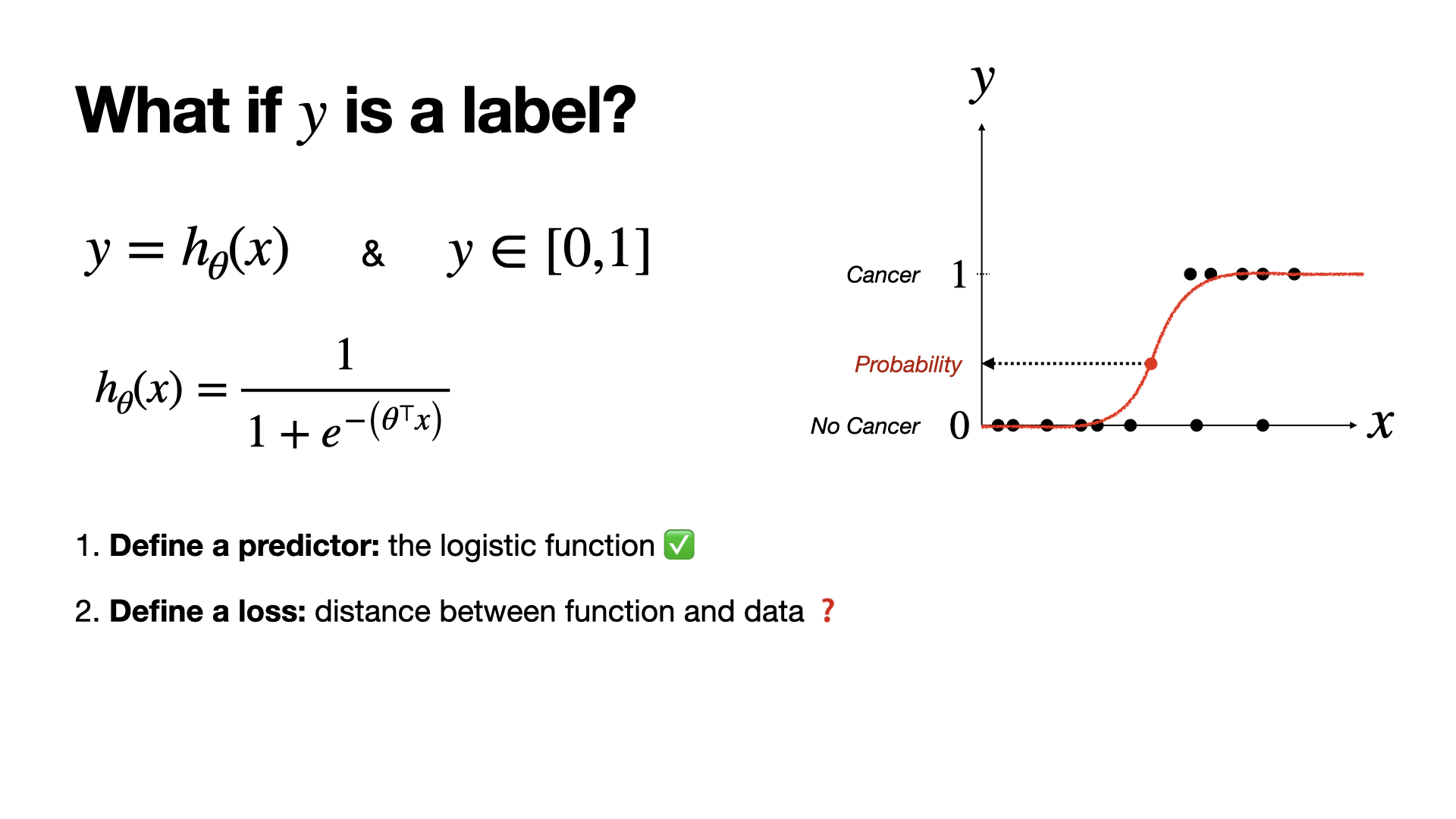
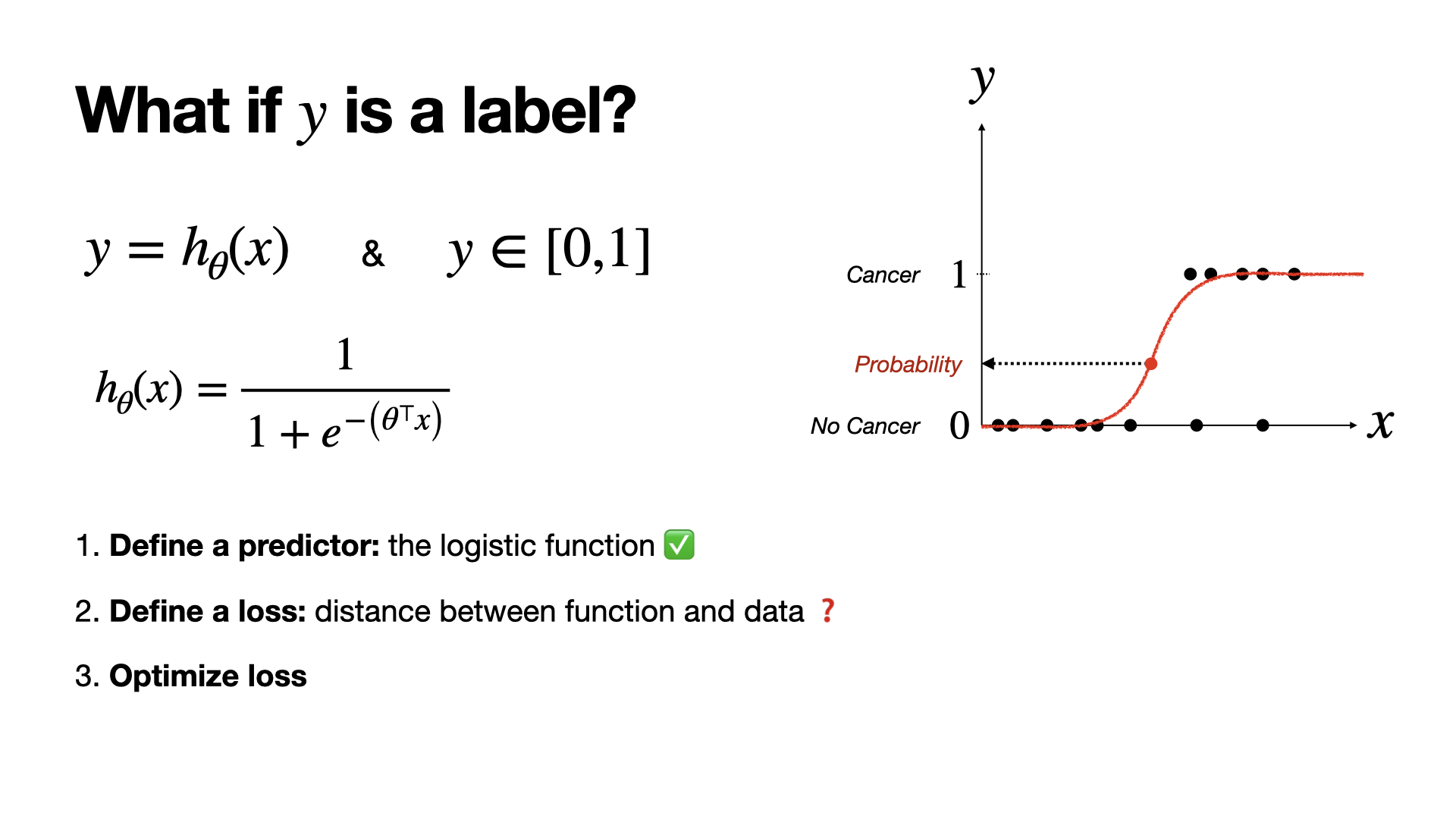
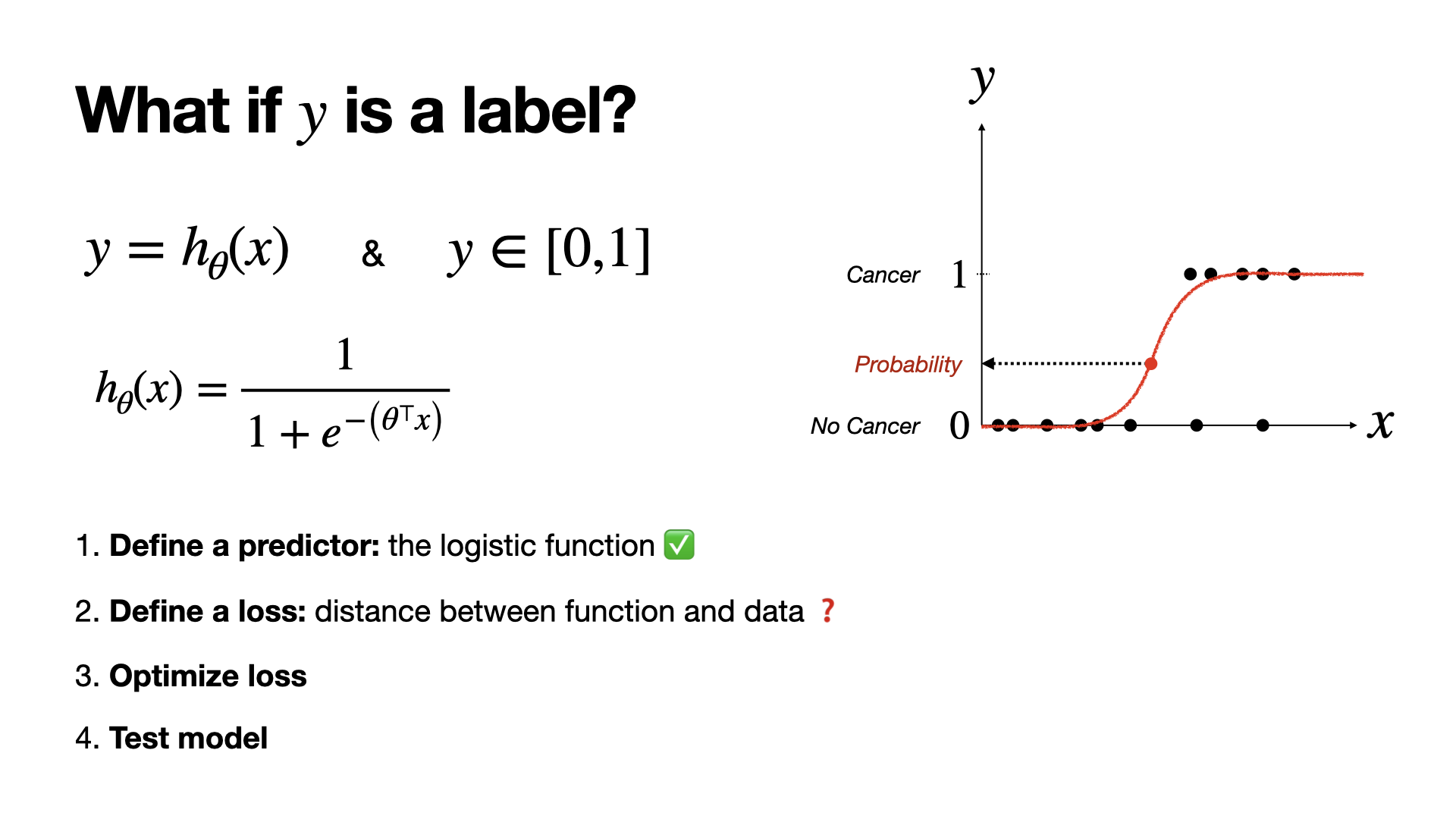
What if  is a label?
Cancer
No Cancer
Probability
&
Define a predictor: the logistic function ✅
Define a loss: distance between function and data ❓
Optimize loss
Test model
What if  is a label?
Define a predictor: the logistic function ✅
Define a loss: distance between function and data ❓
Optimize loss
Test model
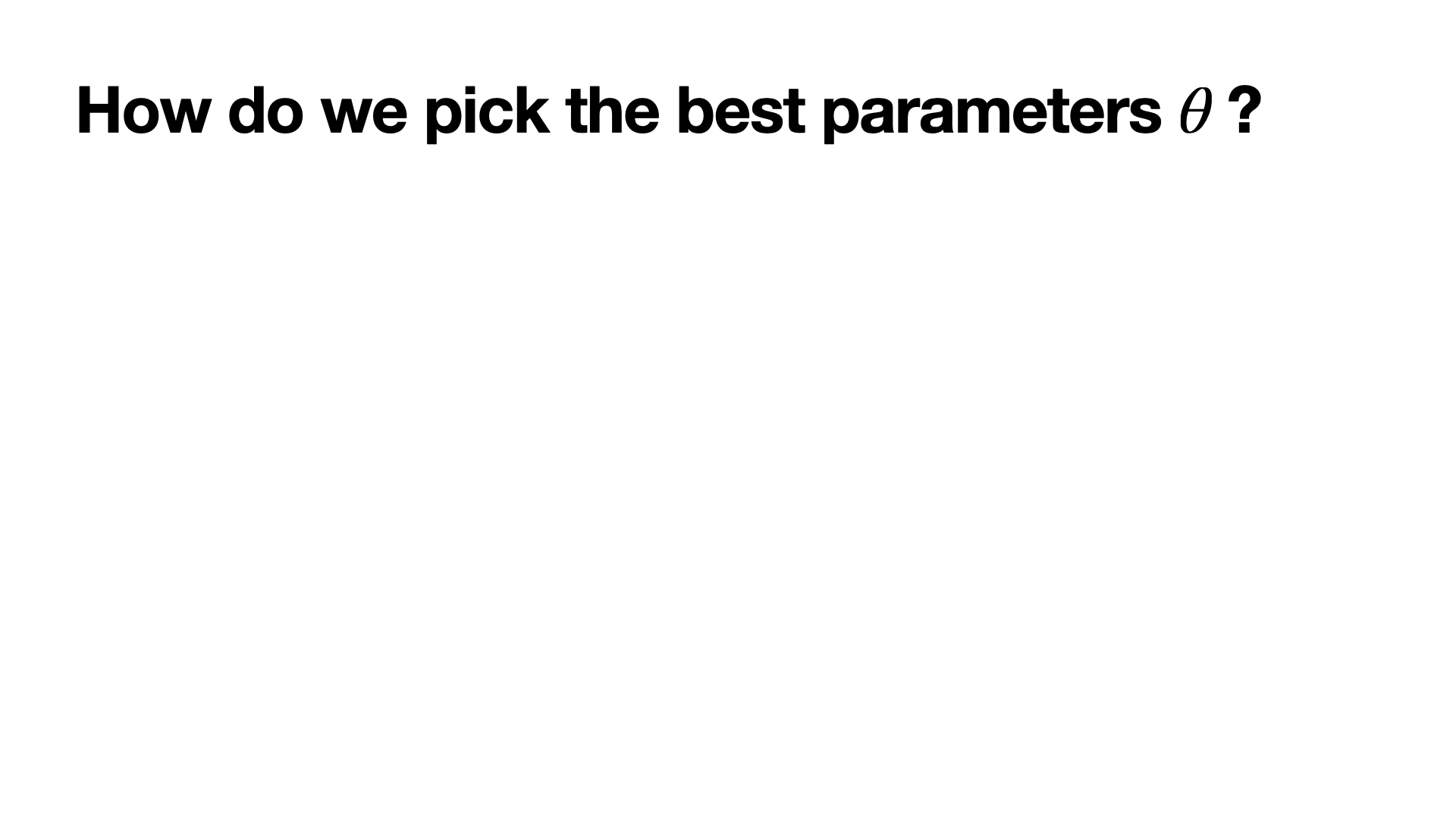
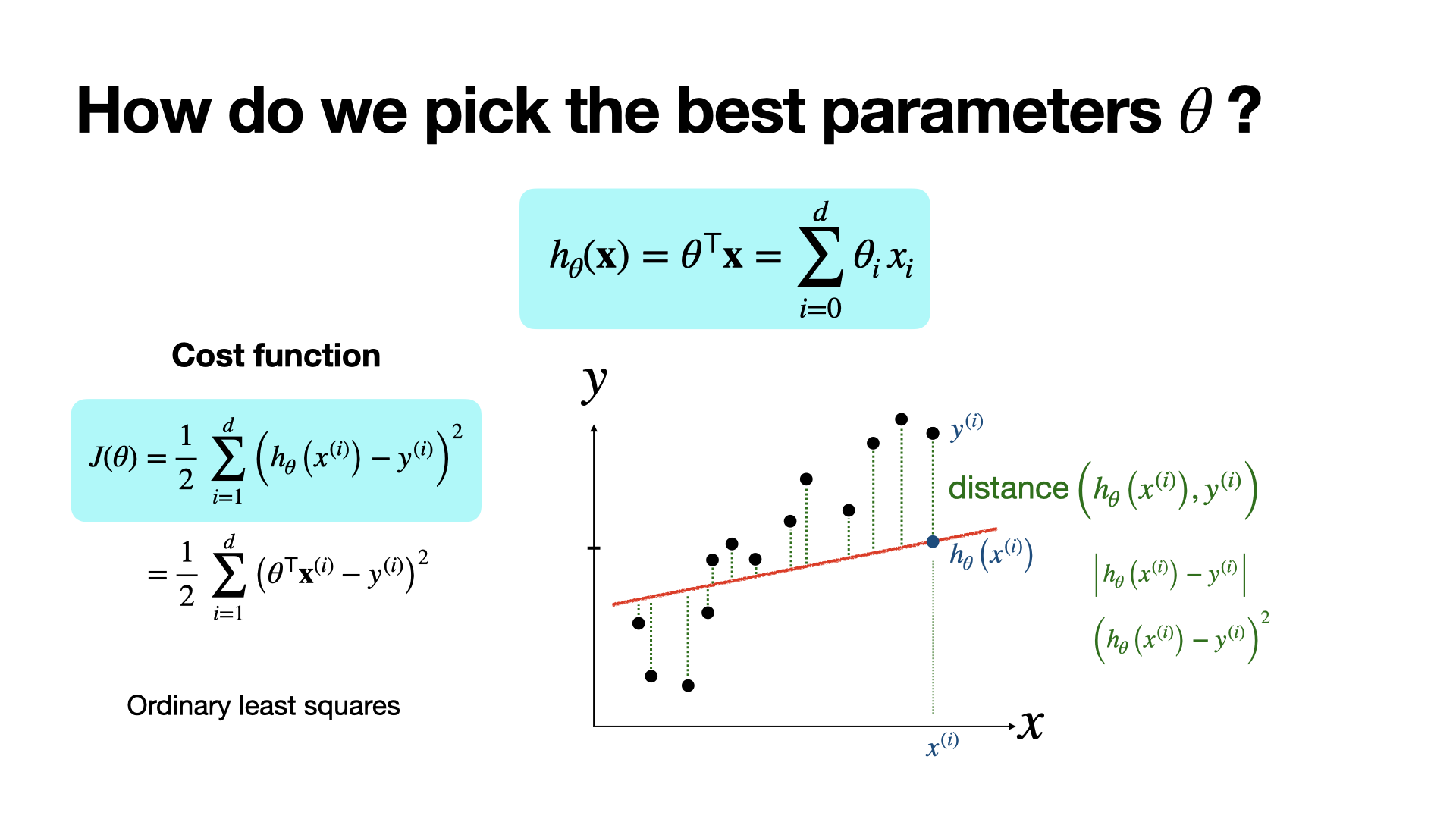
How do we pick the best parameters  ?
How do we pick the best parameters  ?
Actions: make decisions and act from a set of possible
Perceptions: observe the world and one’s own state
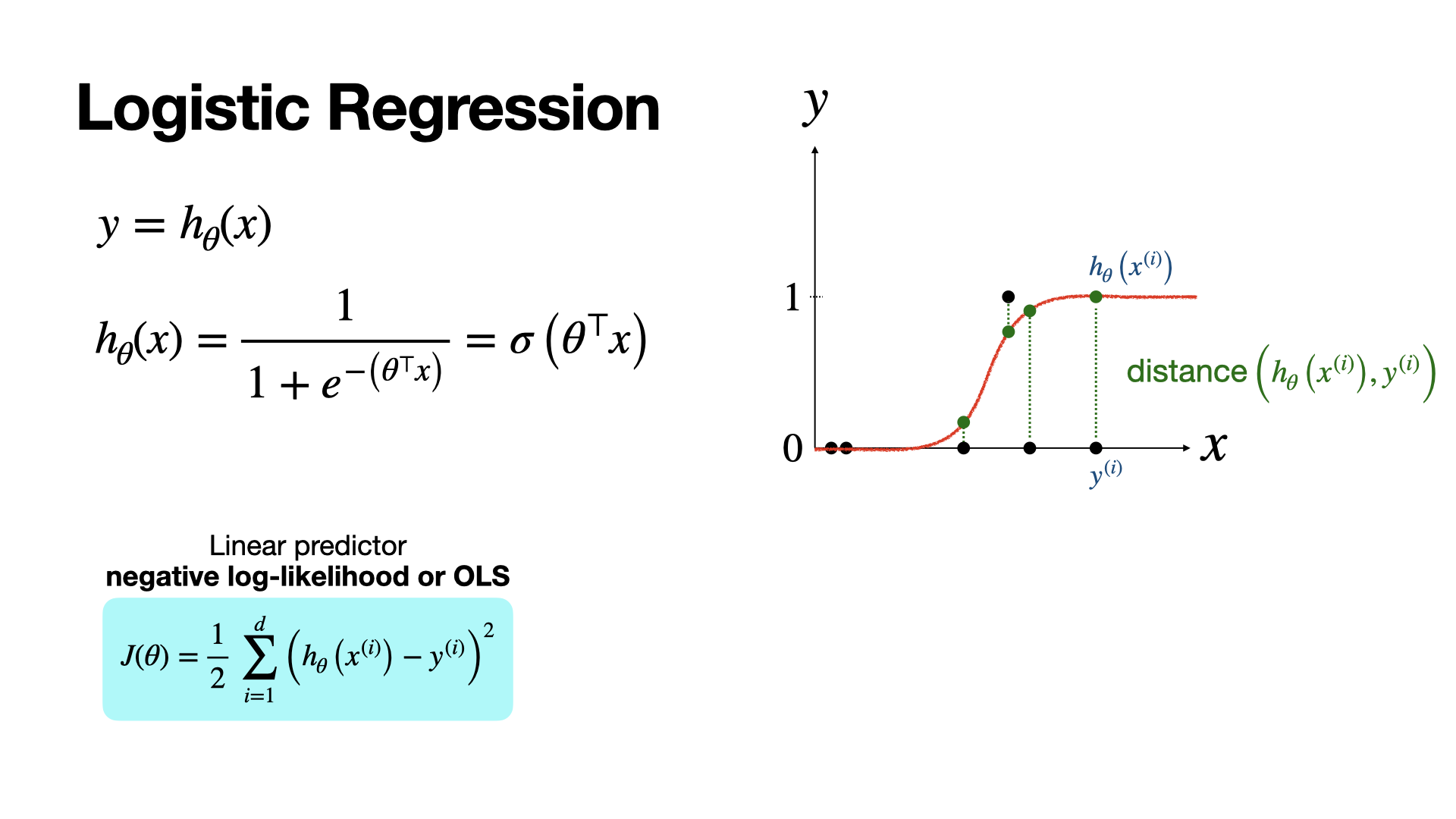
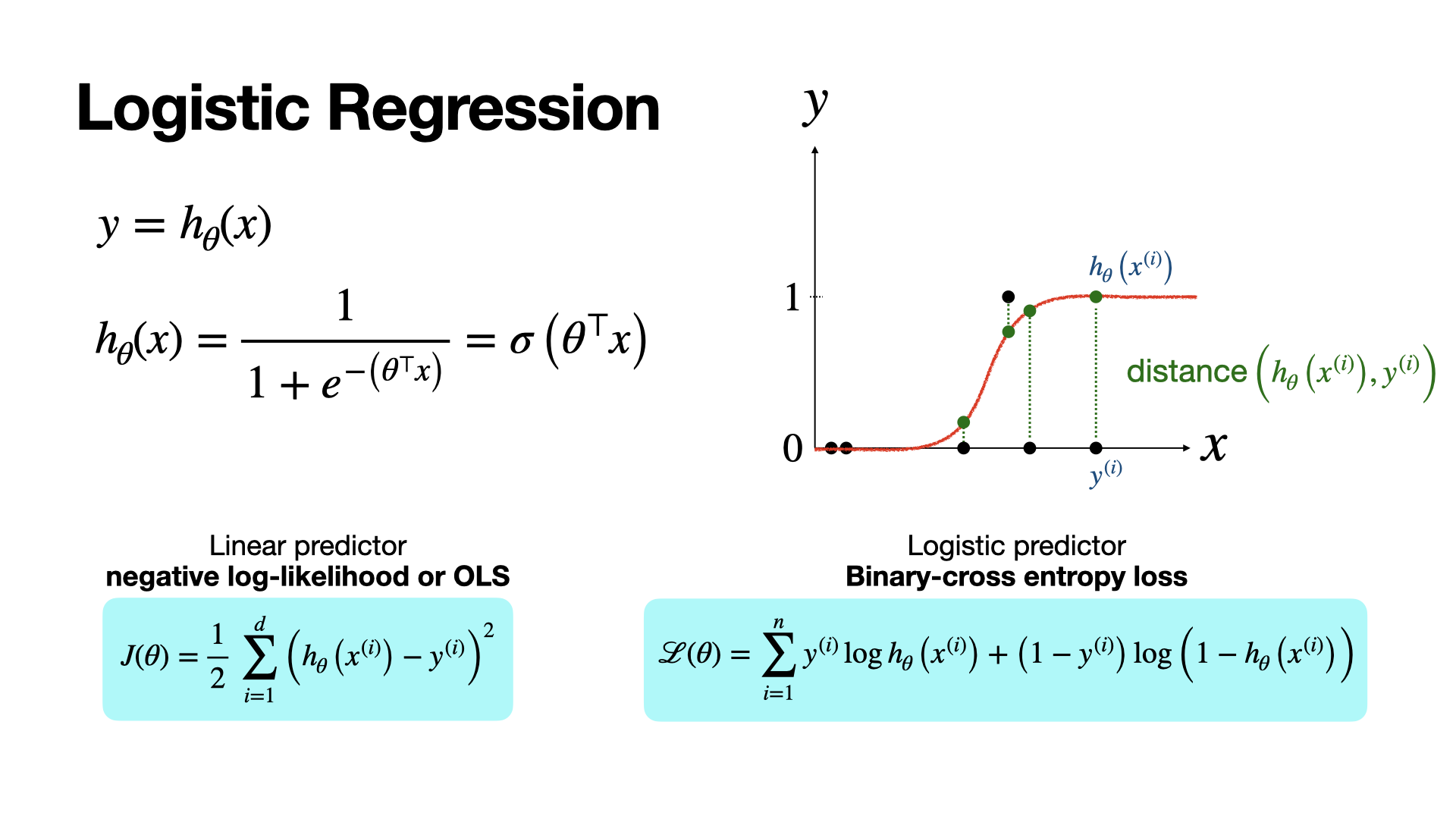
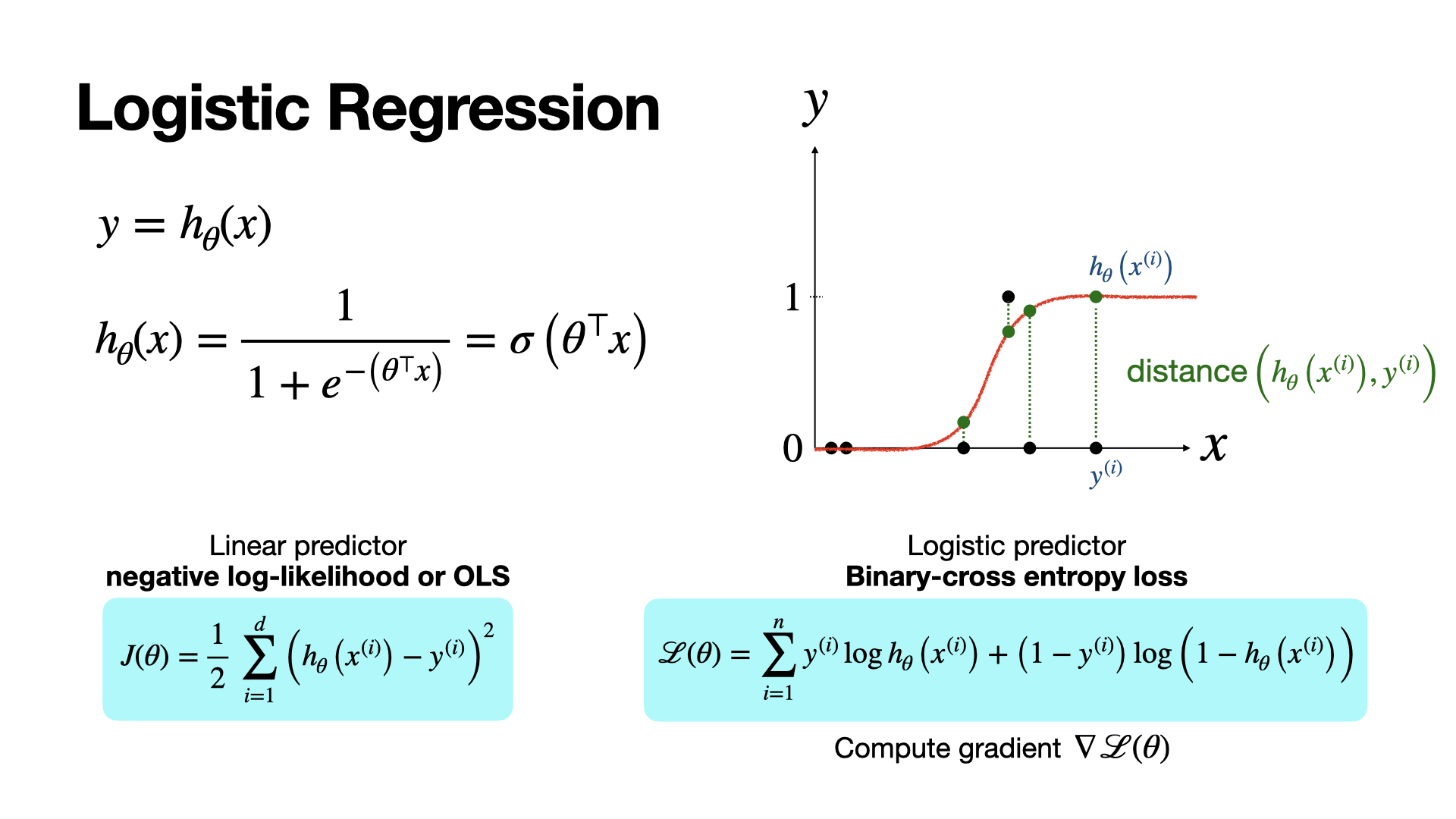
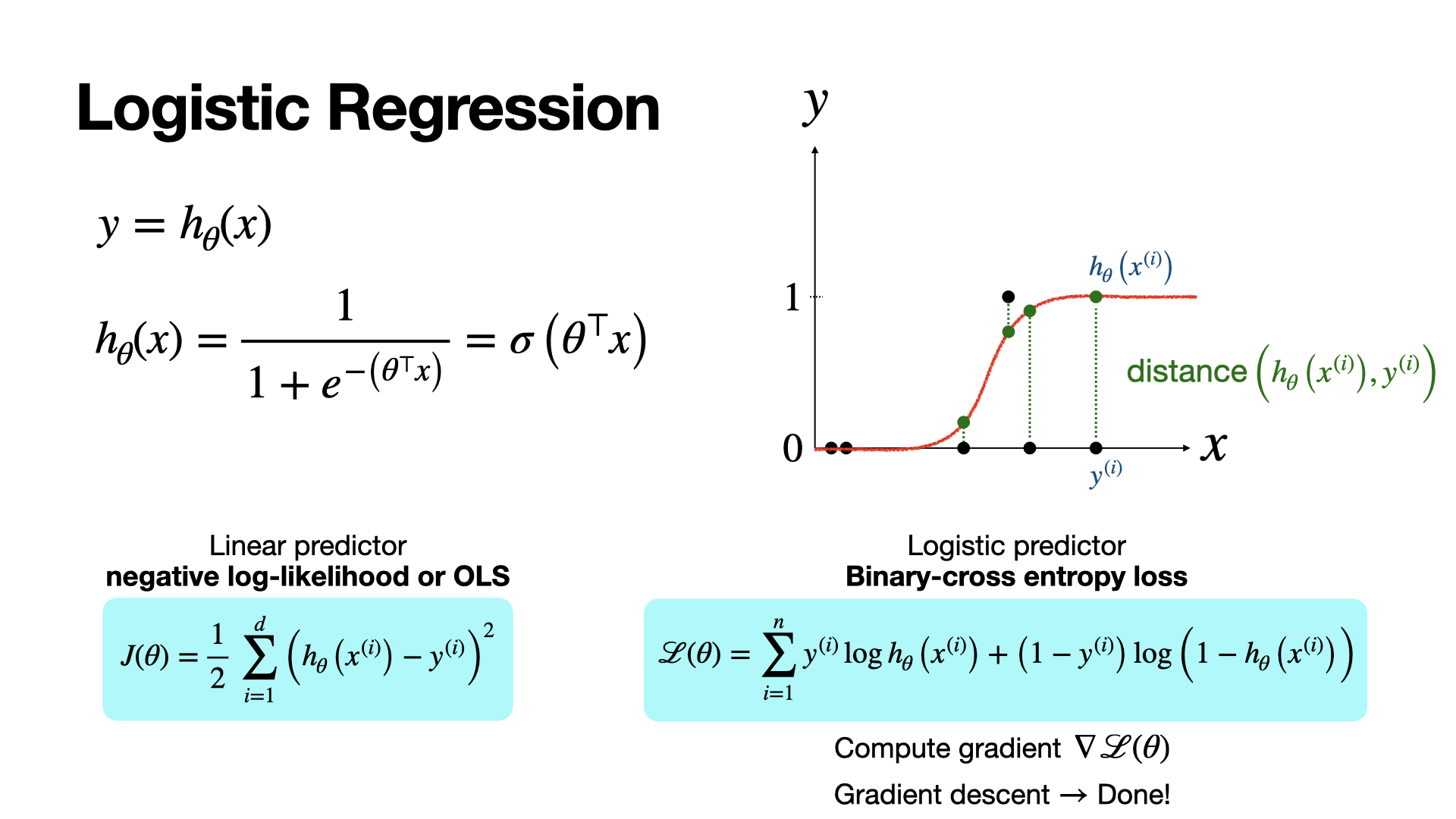
Logistic Regression
Gradient descent  Done!
Compute gradient 
Logistic Regression
Actions: make decisions and act from a set of possible
Perceptions: observe the world and one’s own state
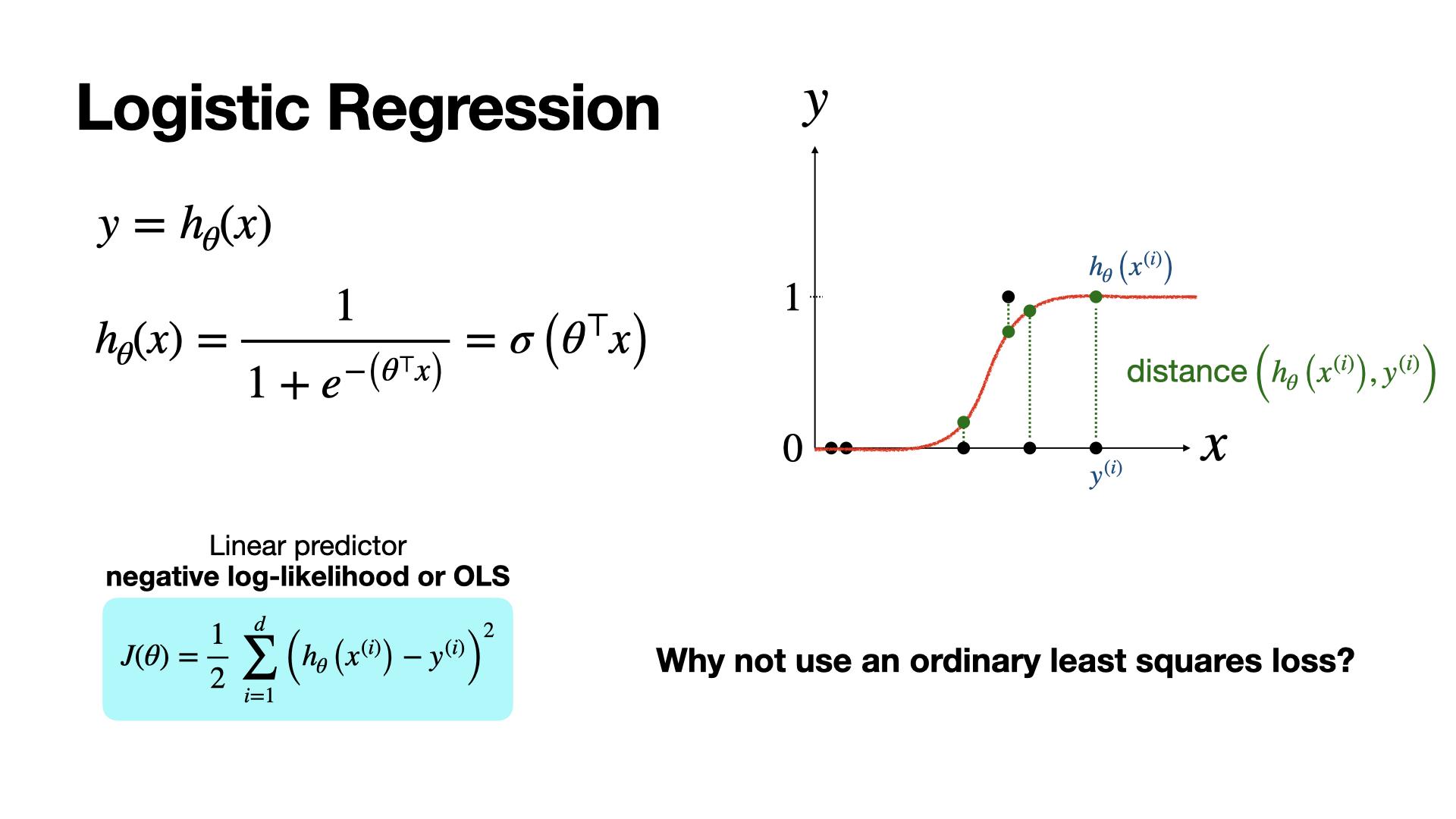
Logistic Regression
Why not use an ordinary least squares loss?
Logistic Regression
Actions: make decisions and act from a set of possible
Perceptions: observe the world and one’s own state
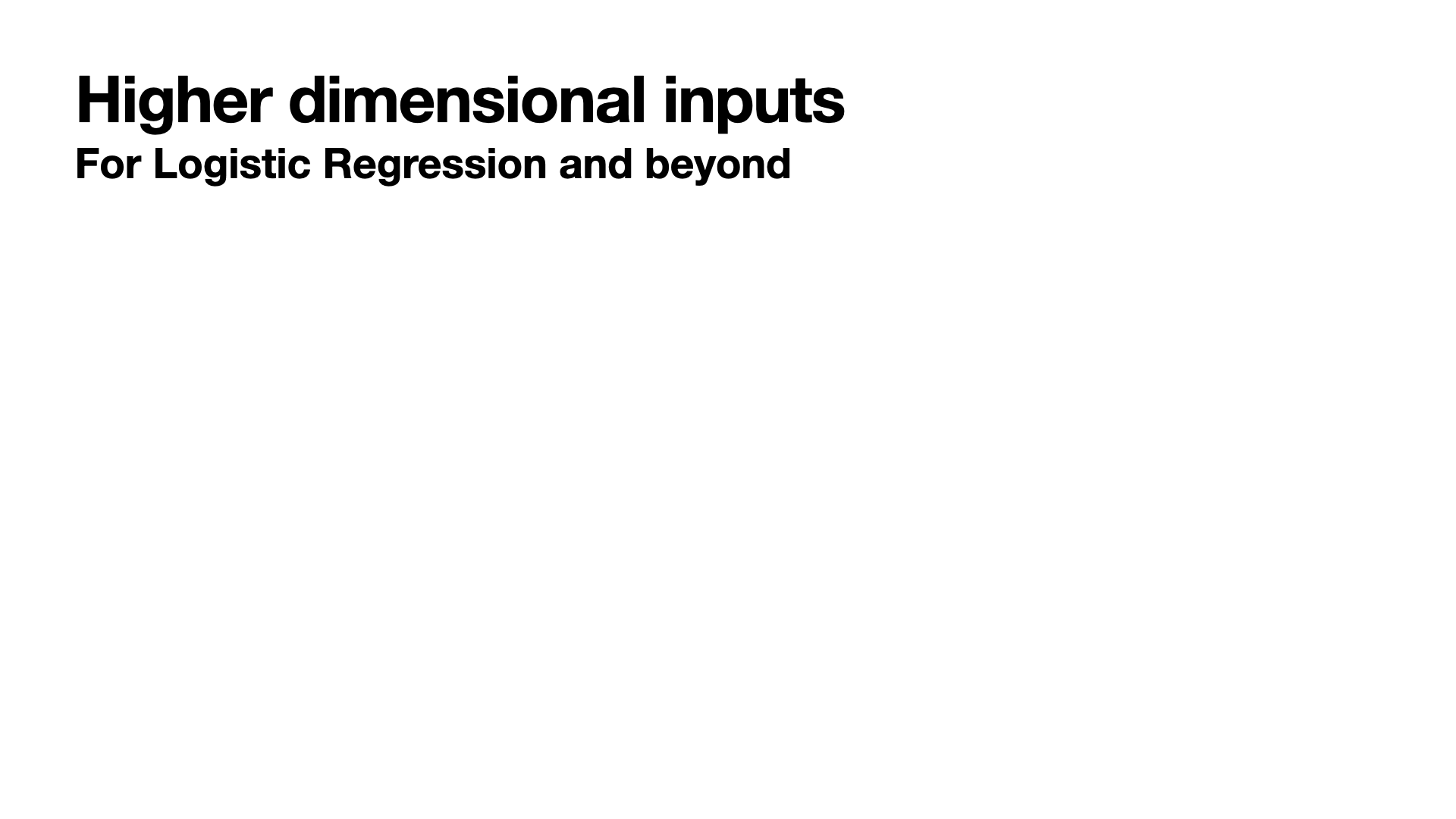
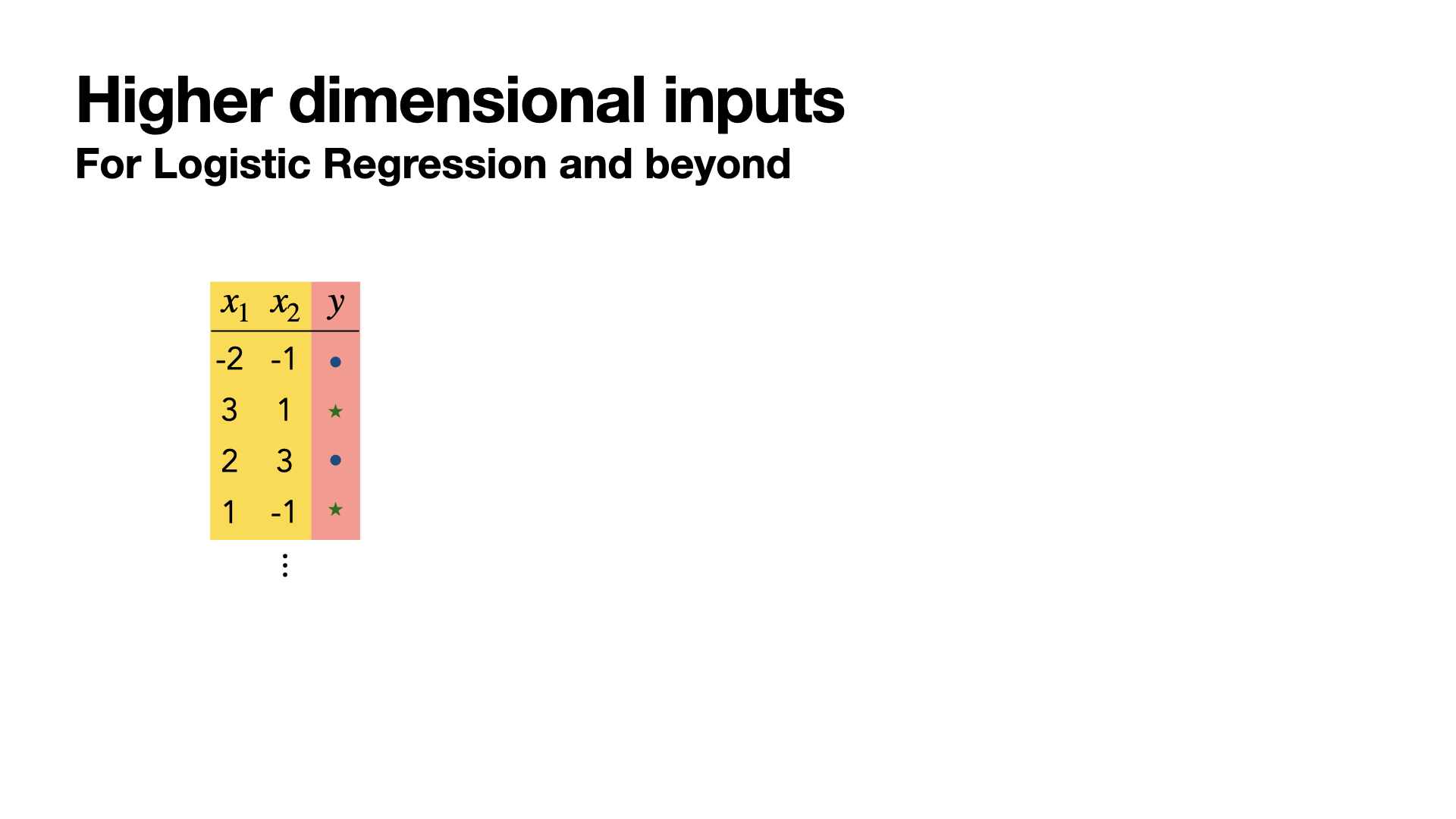
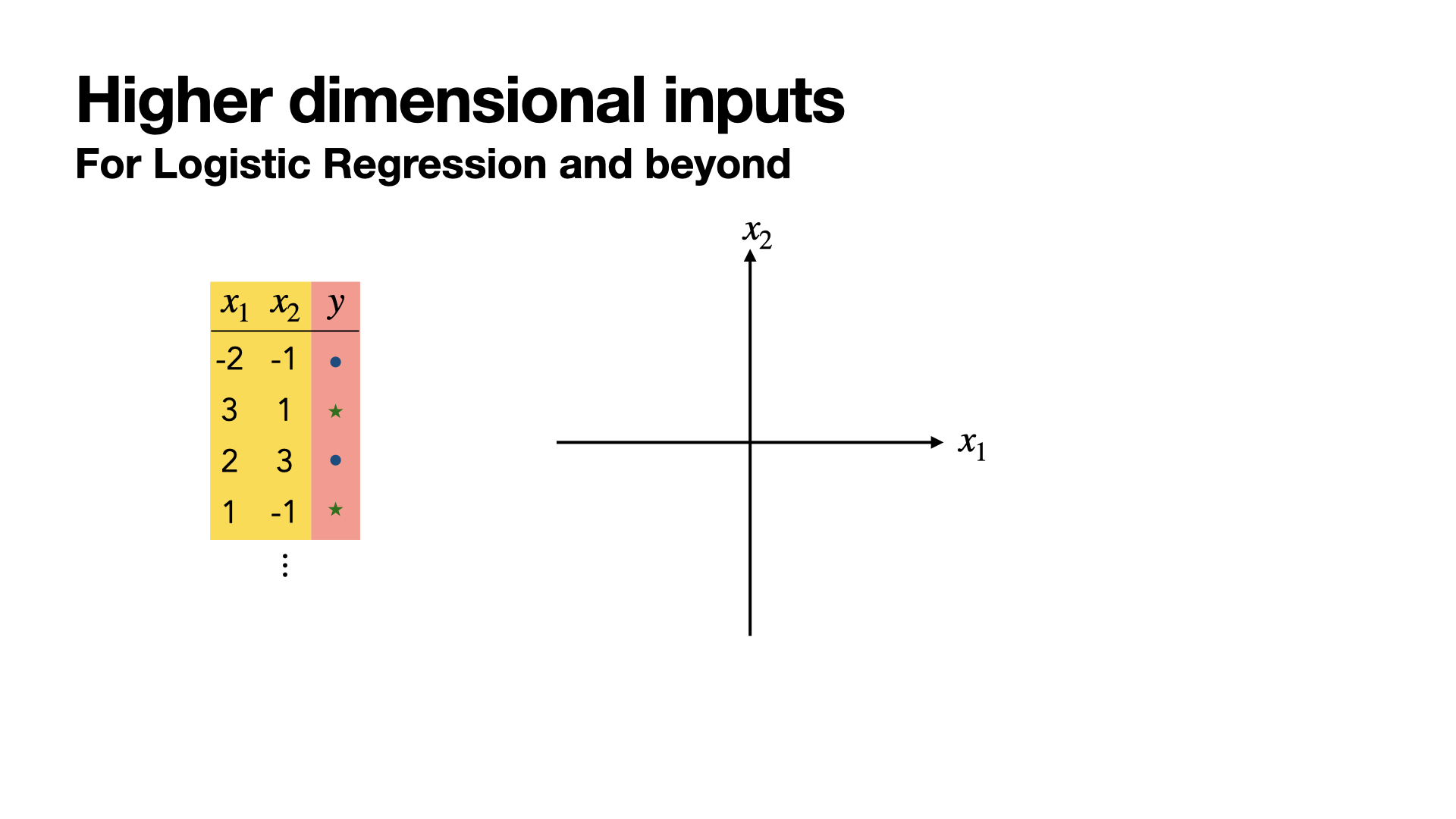
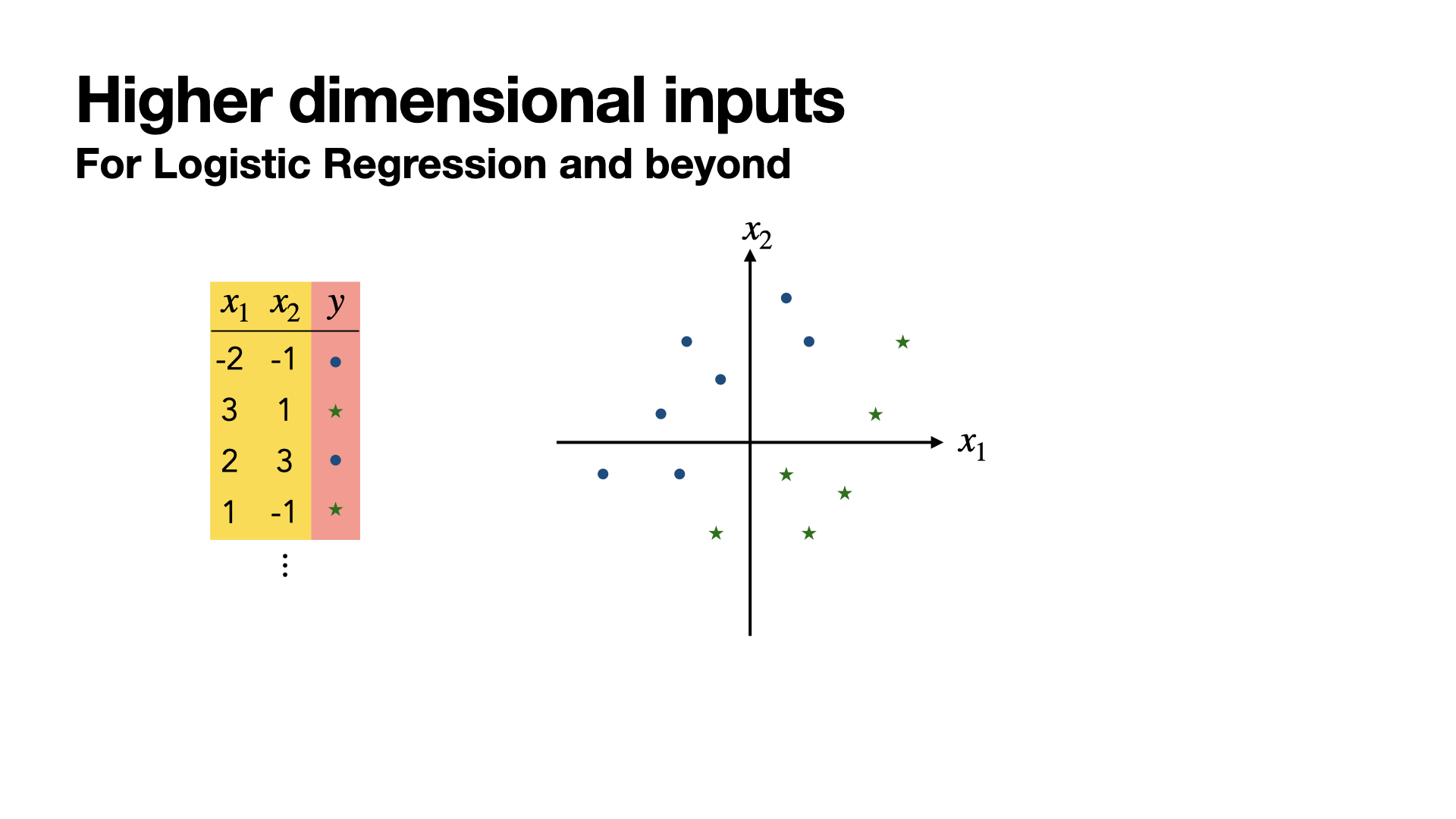
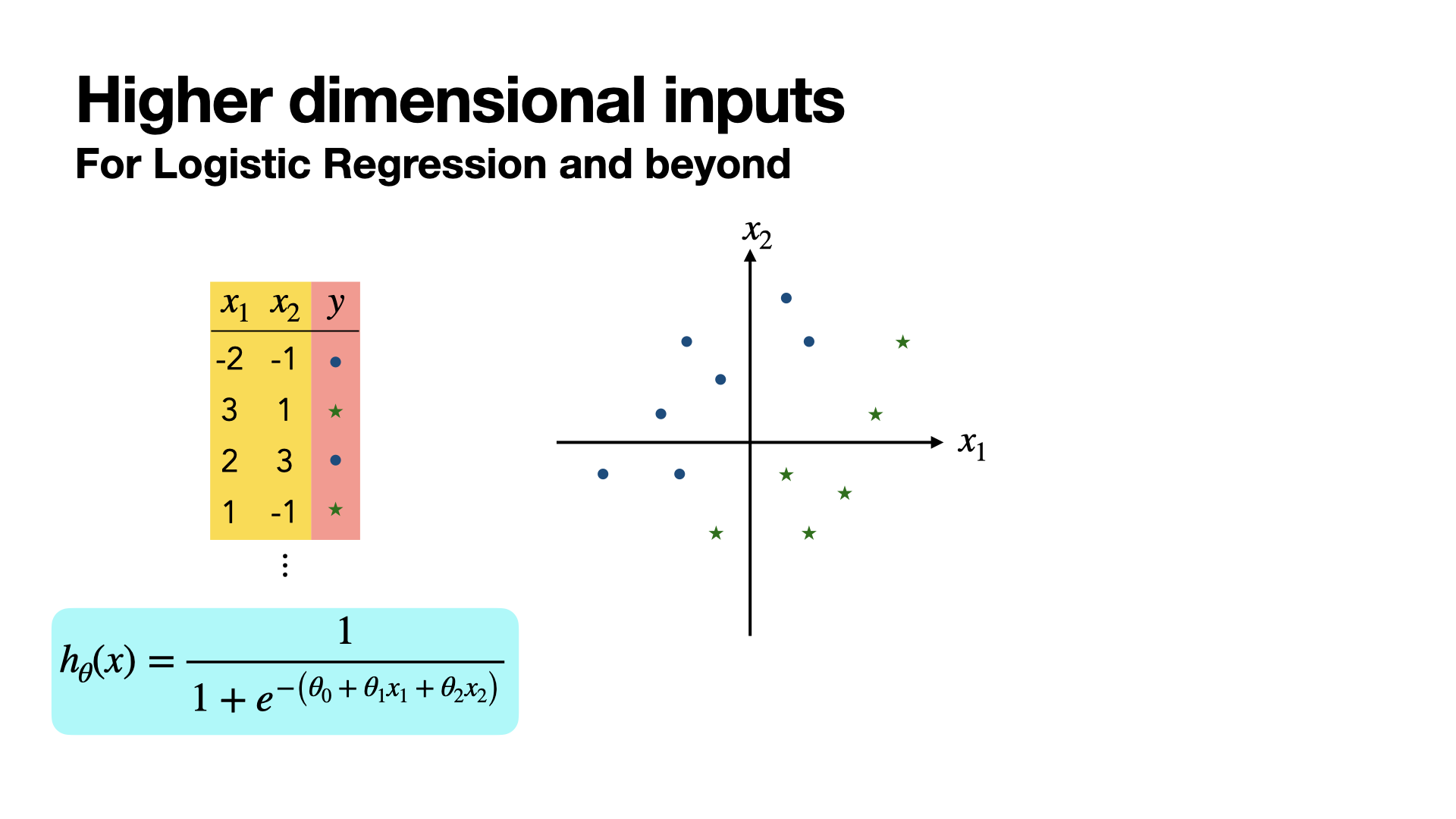
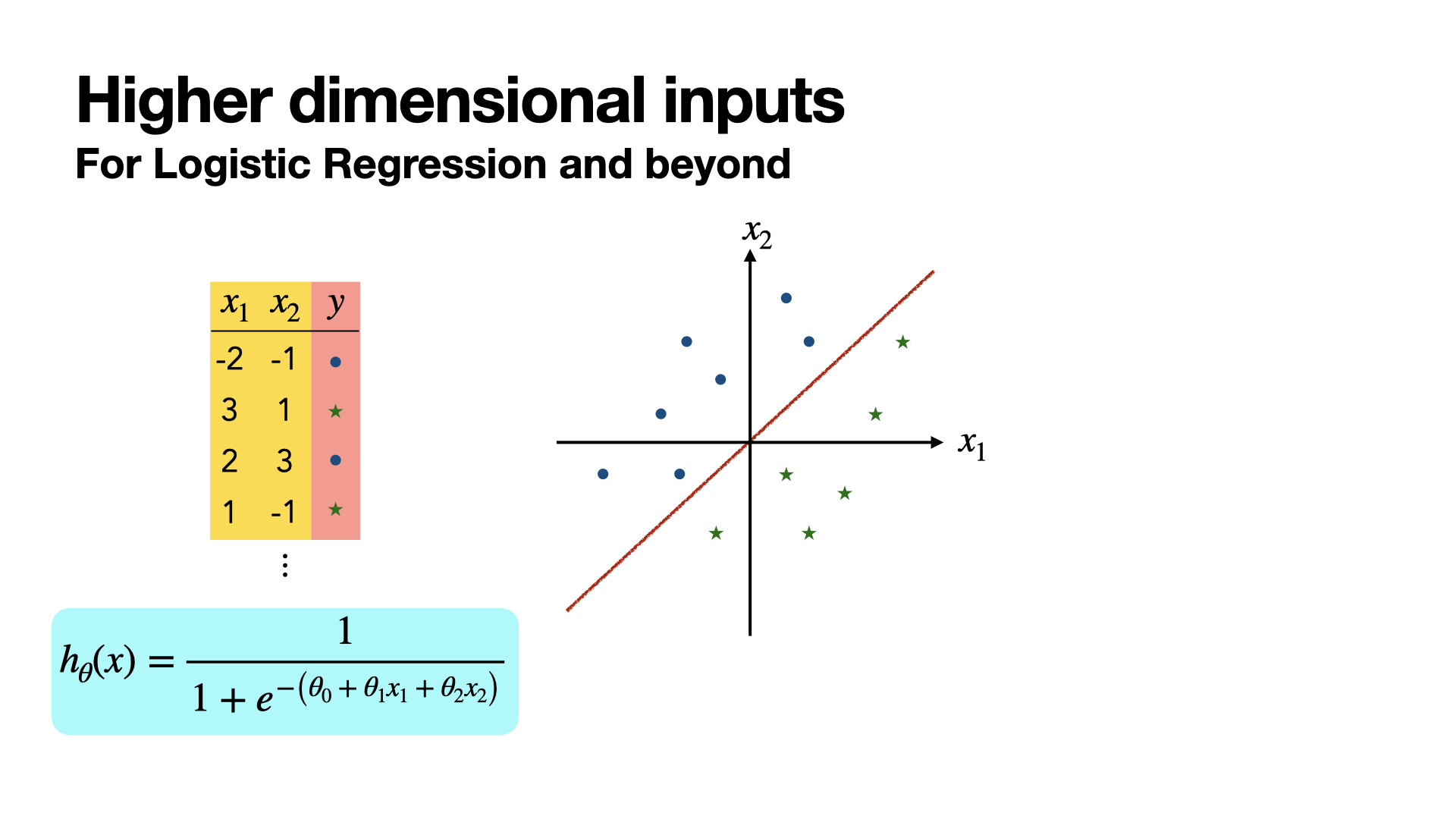
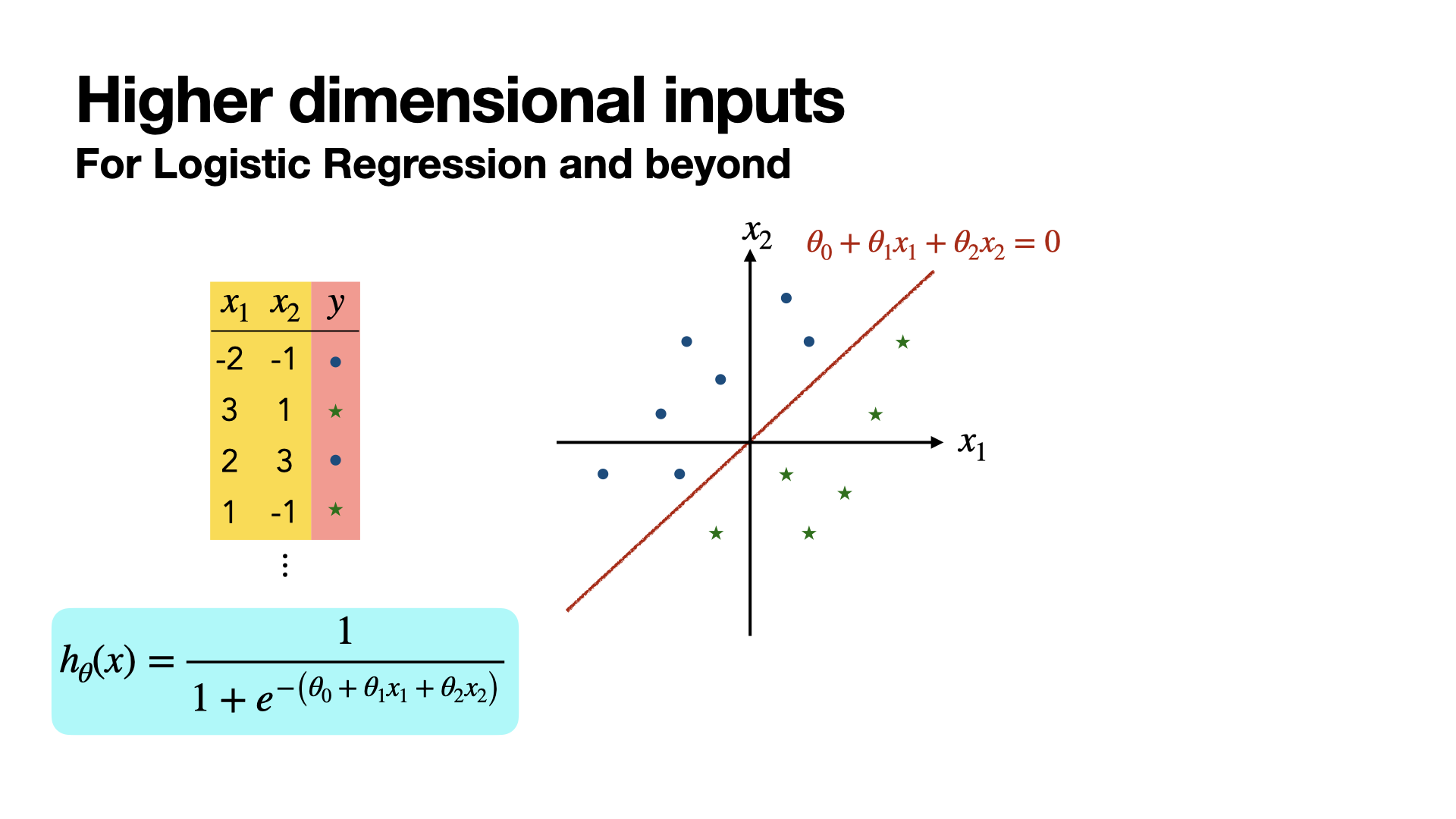
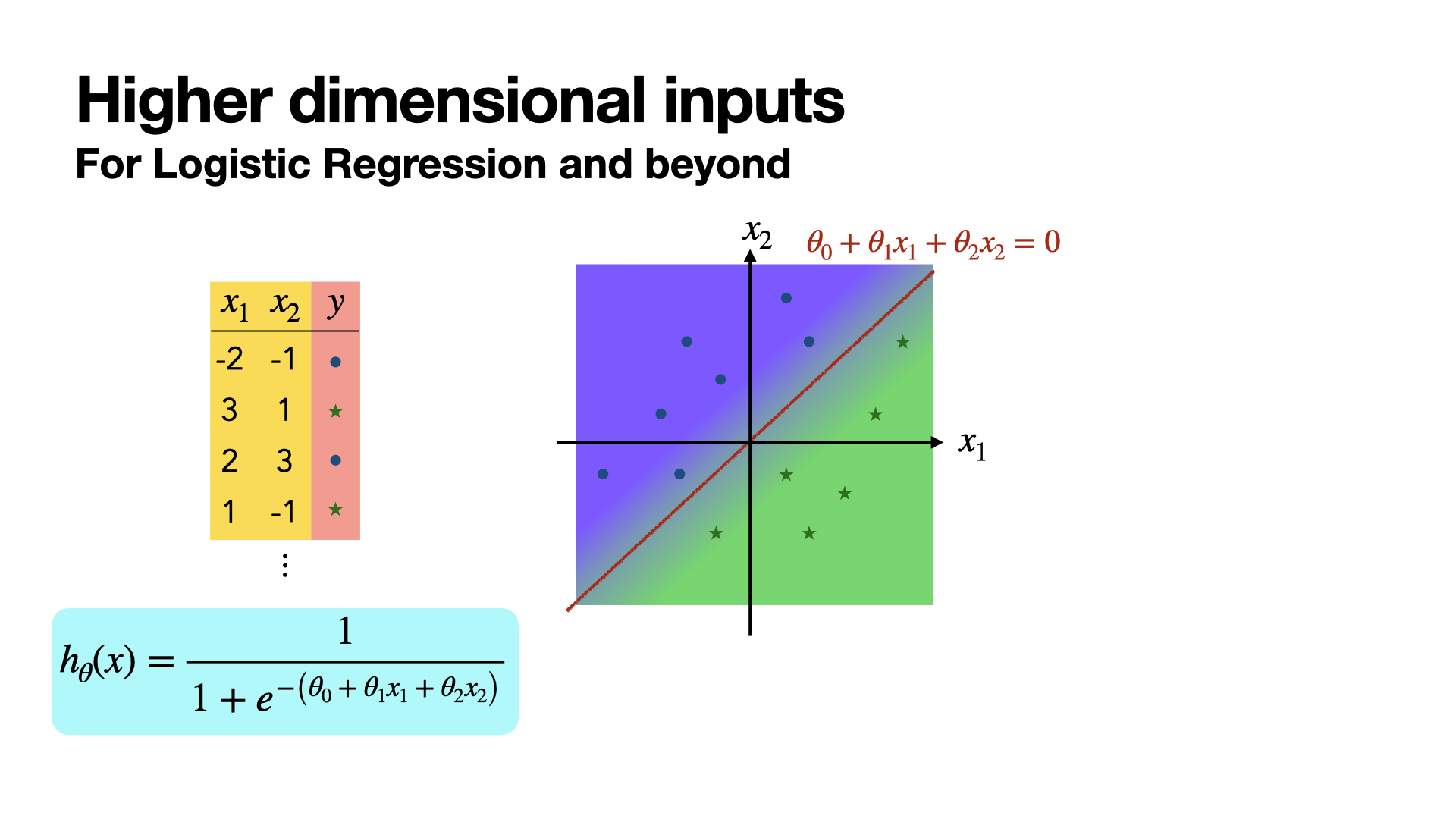
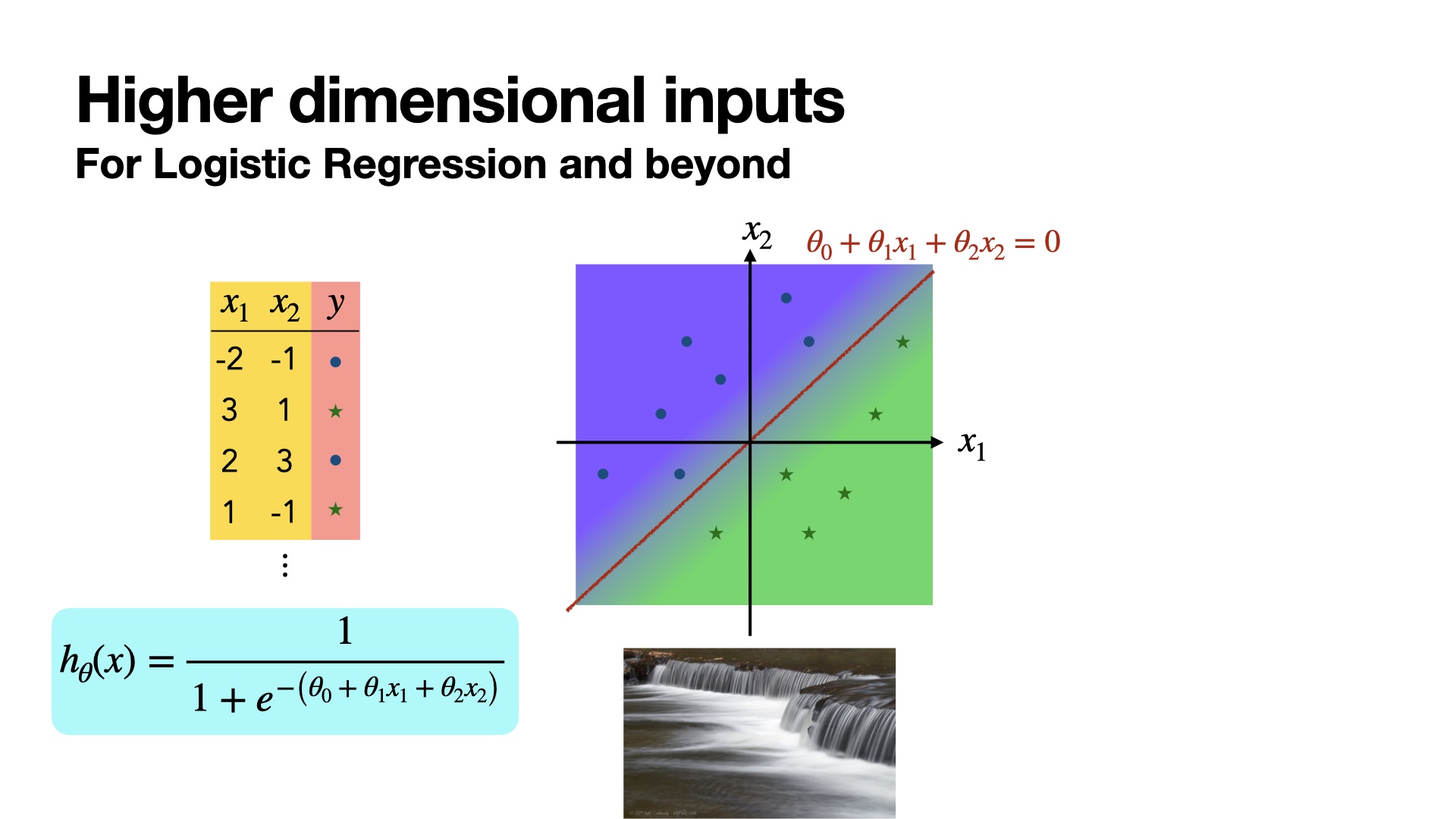
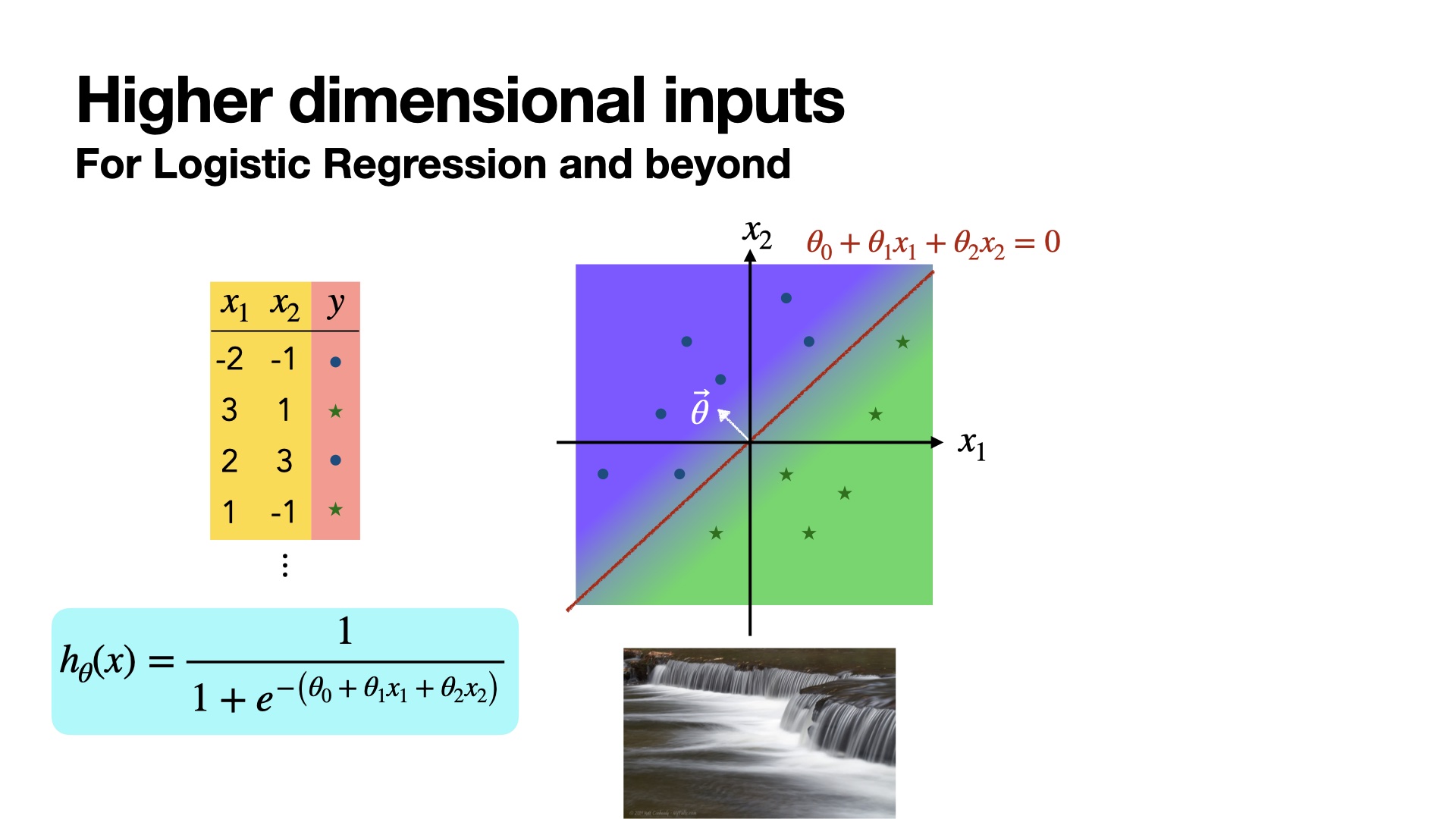
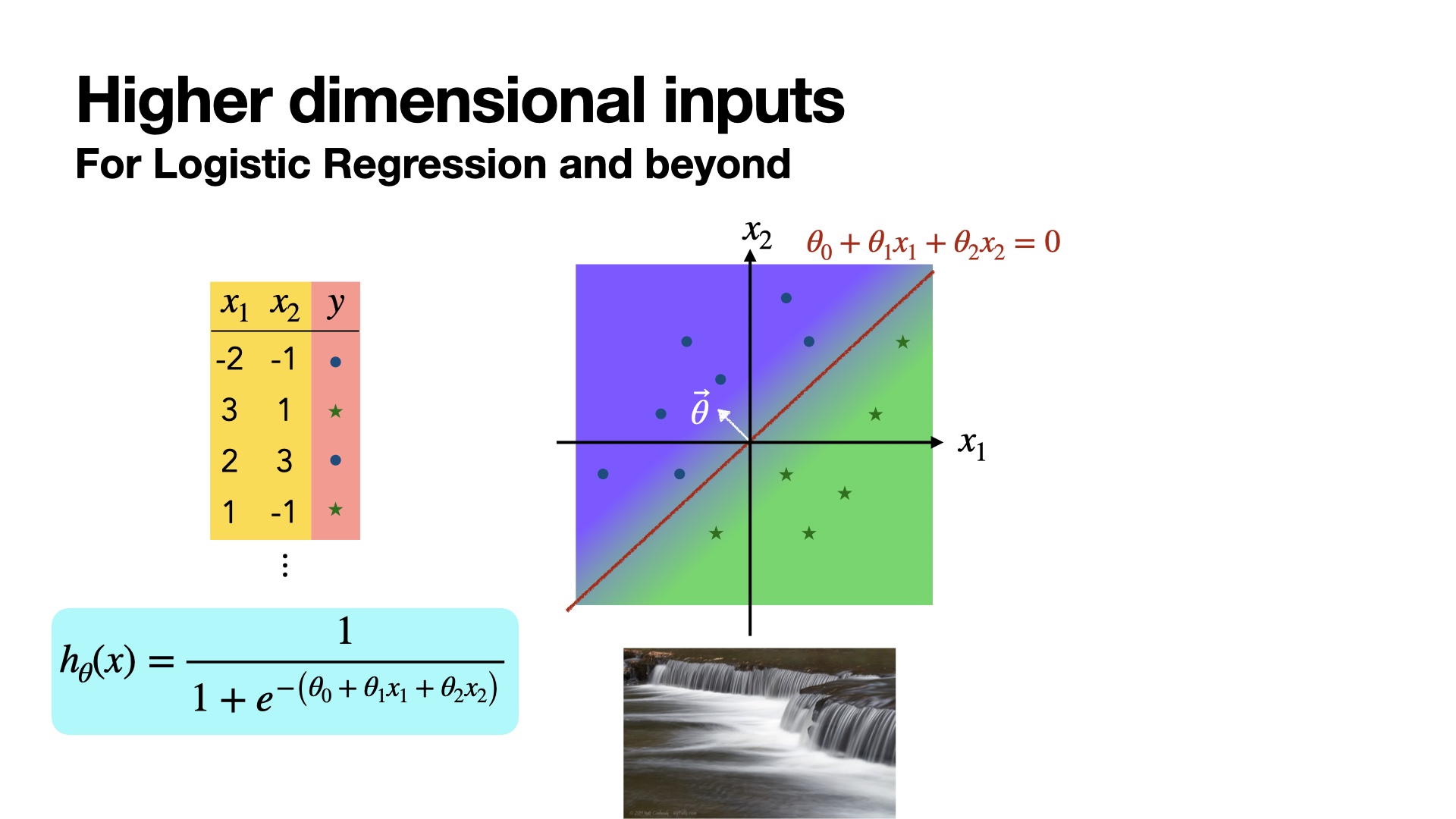
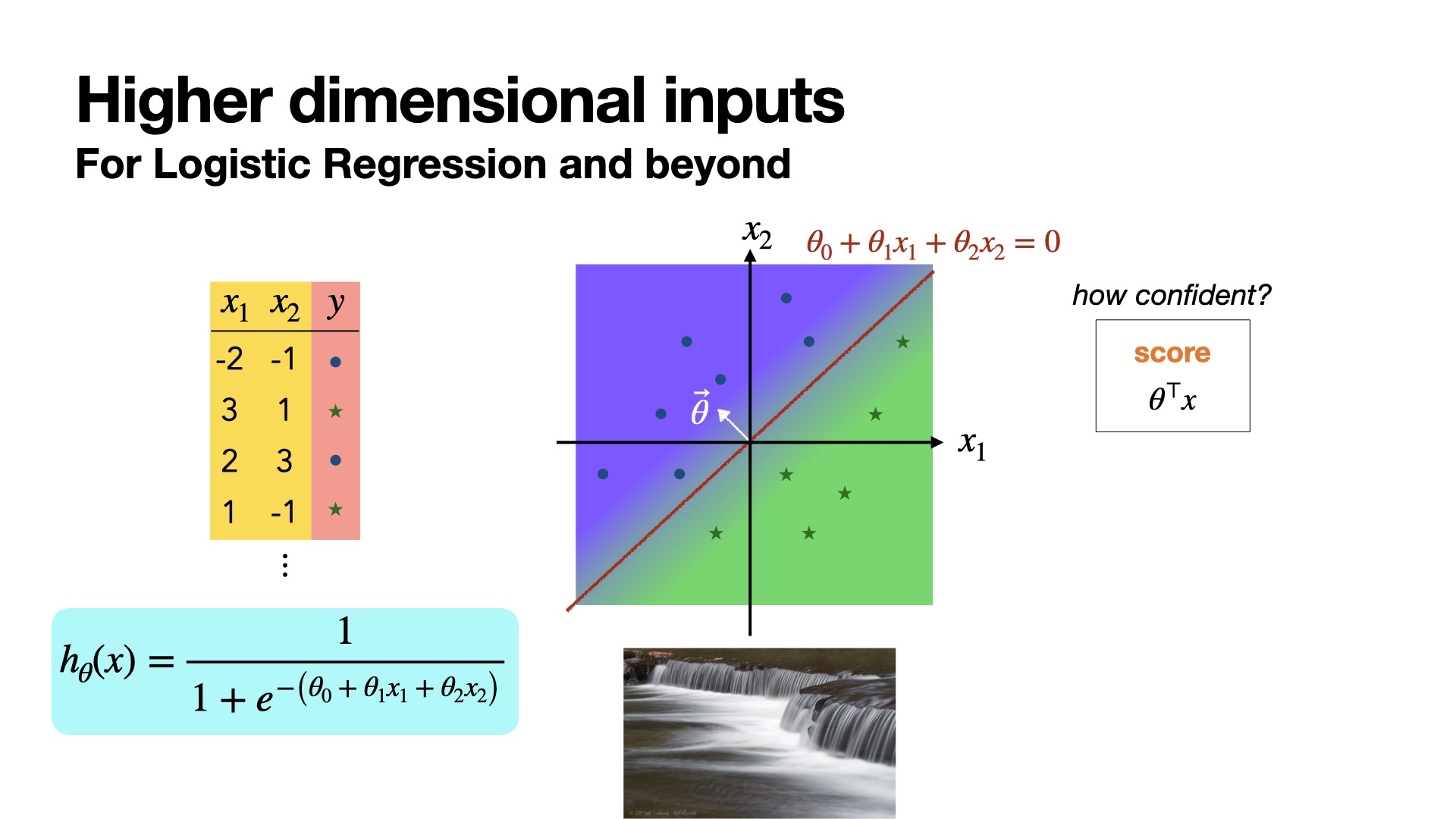
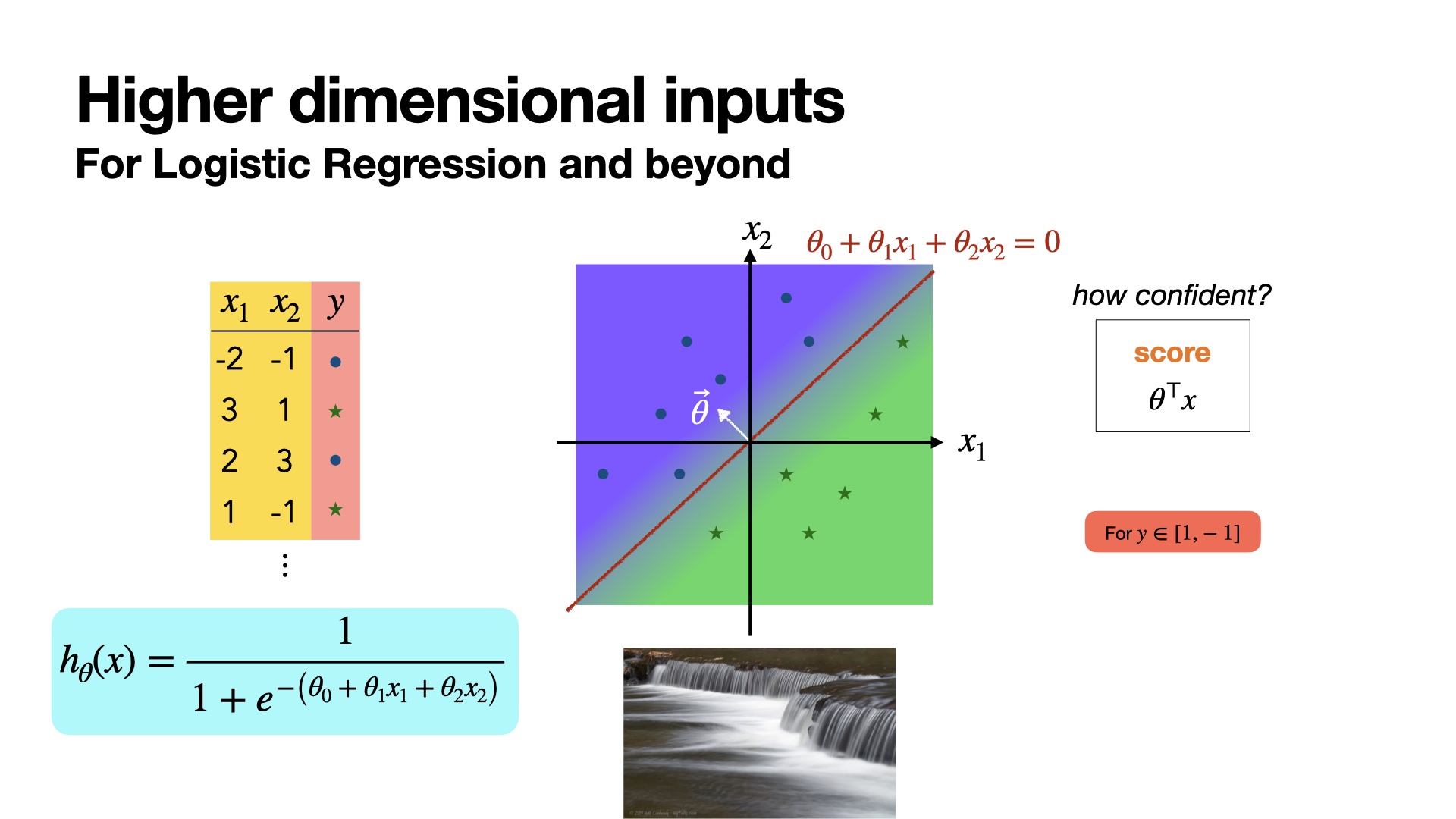
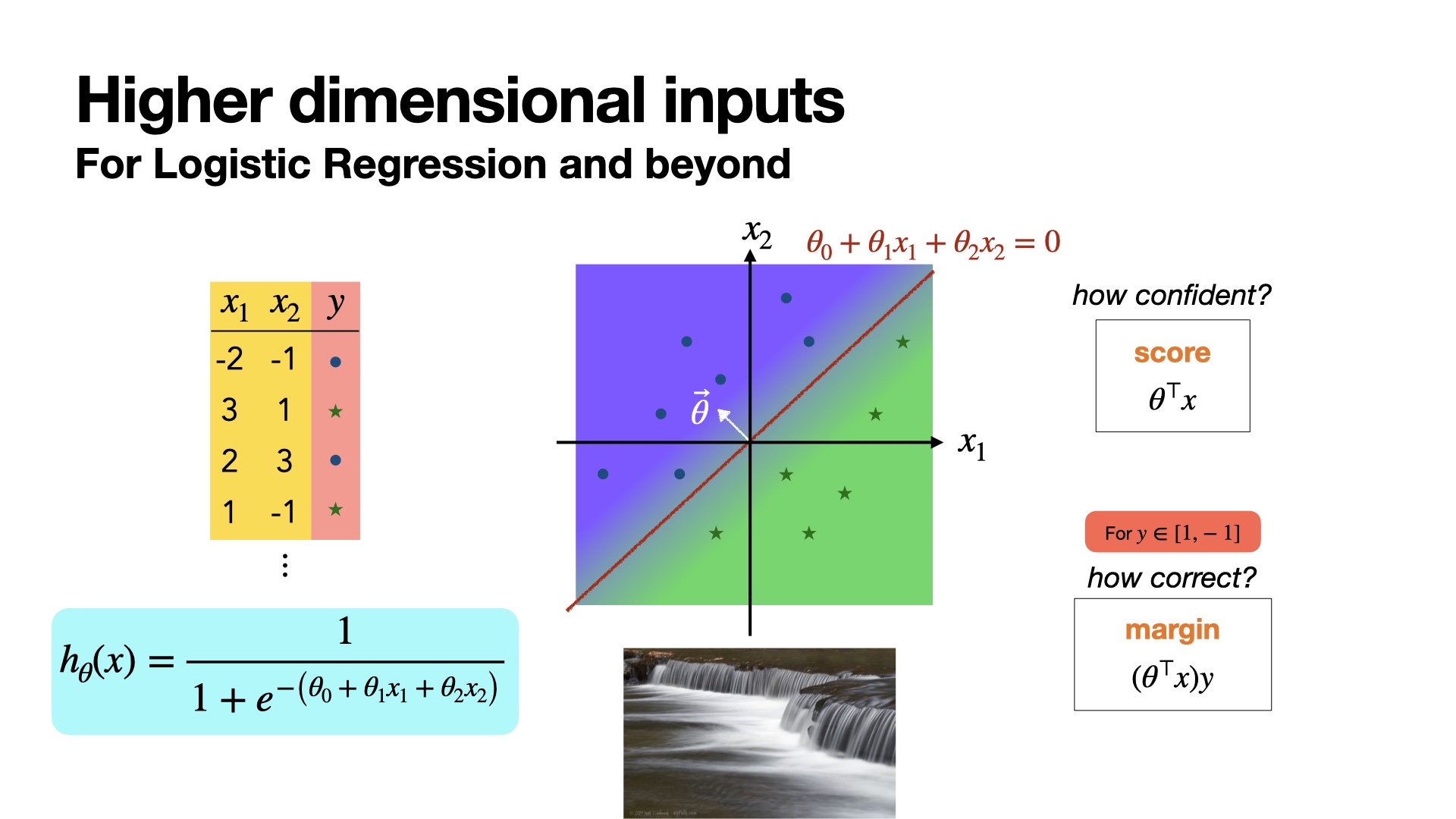
Higher dimensional inputs
For Logistic Regression and beyond
Higher dimensional inputs
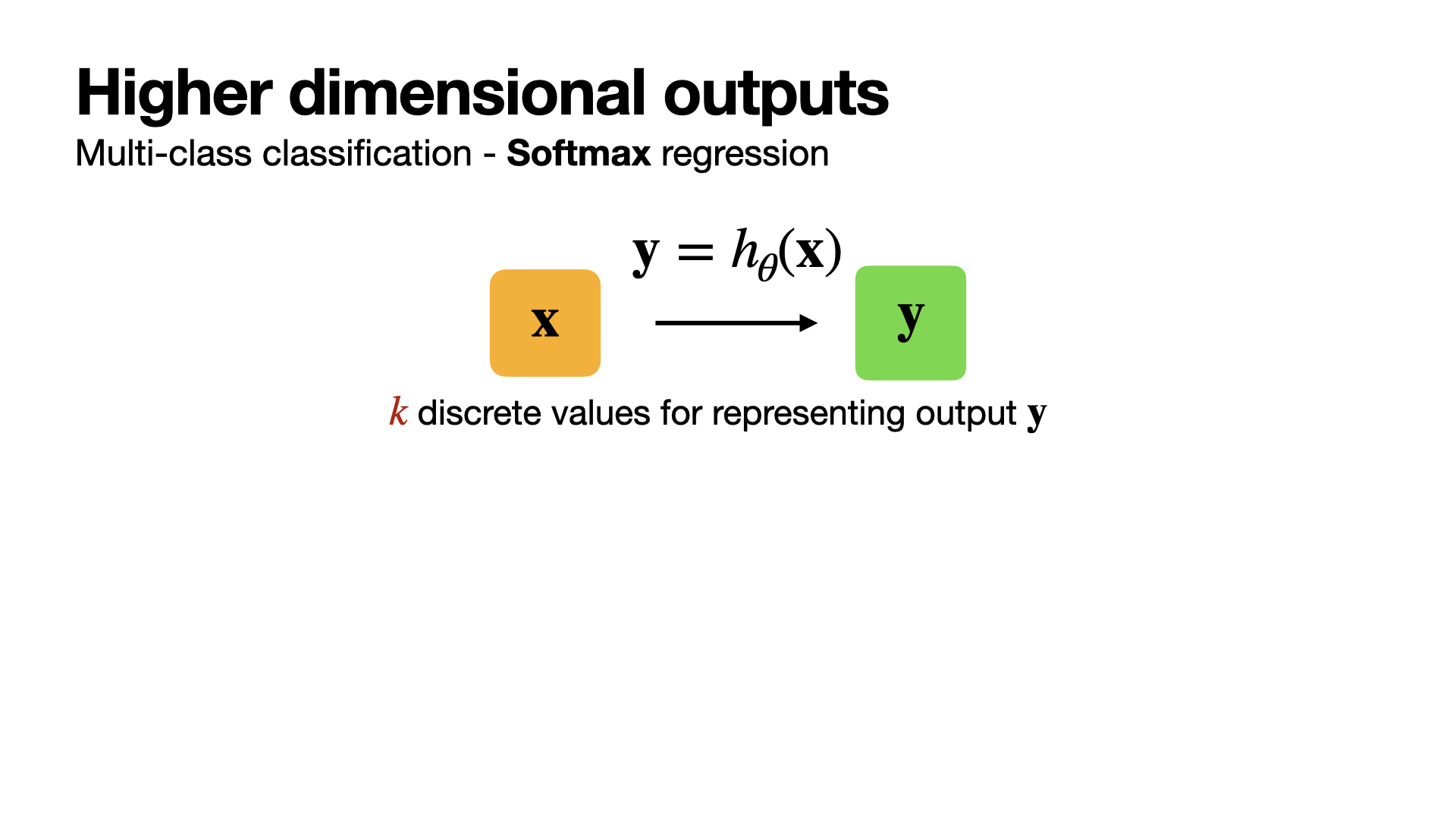
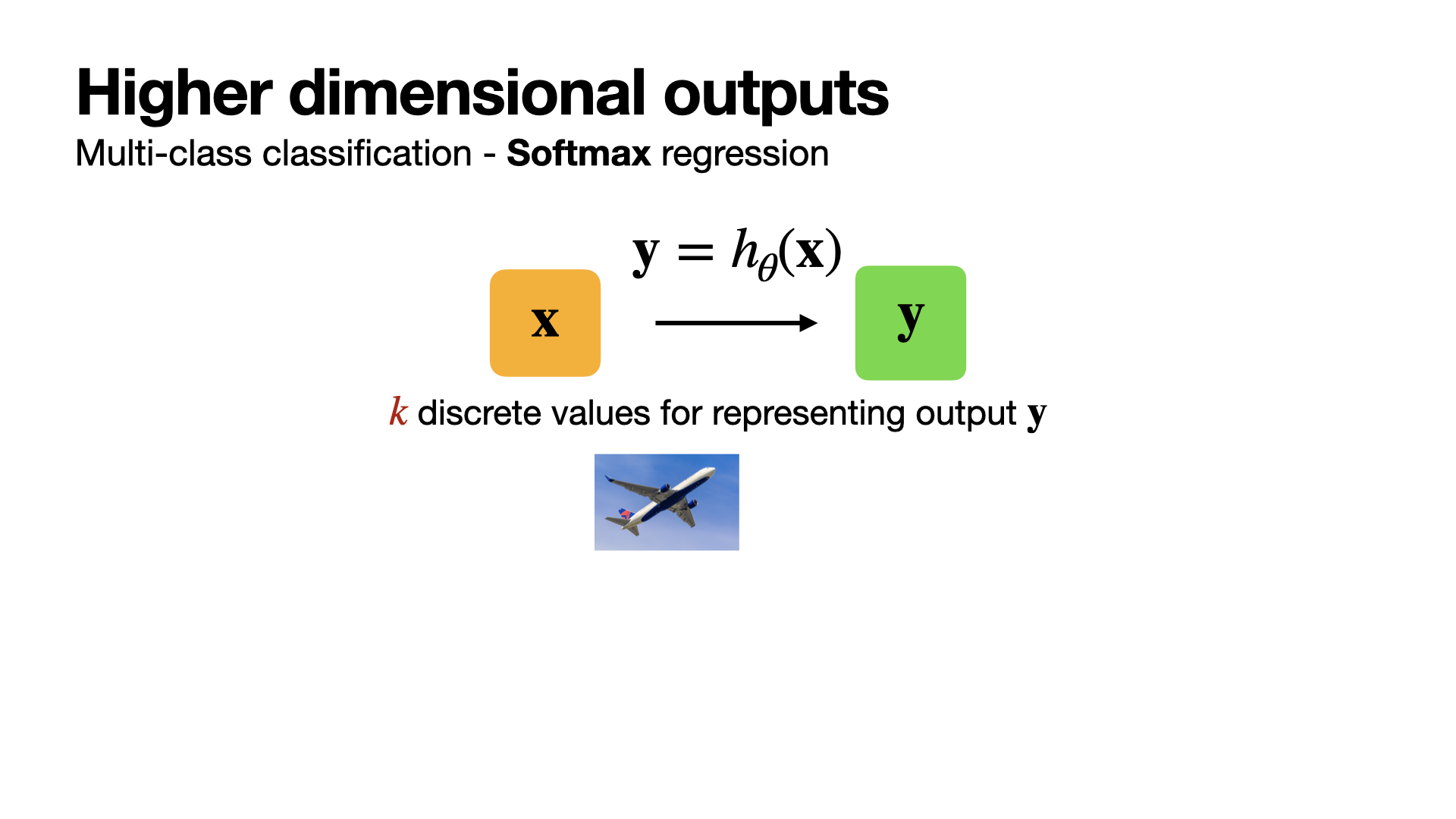
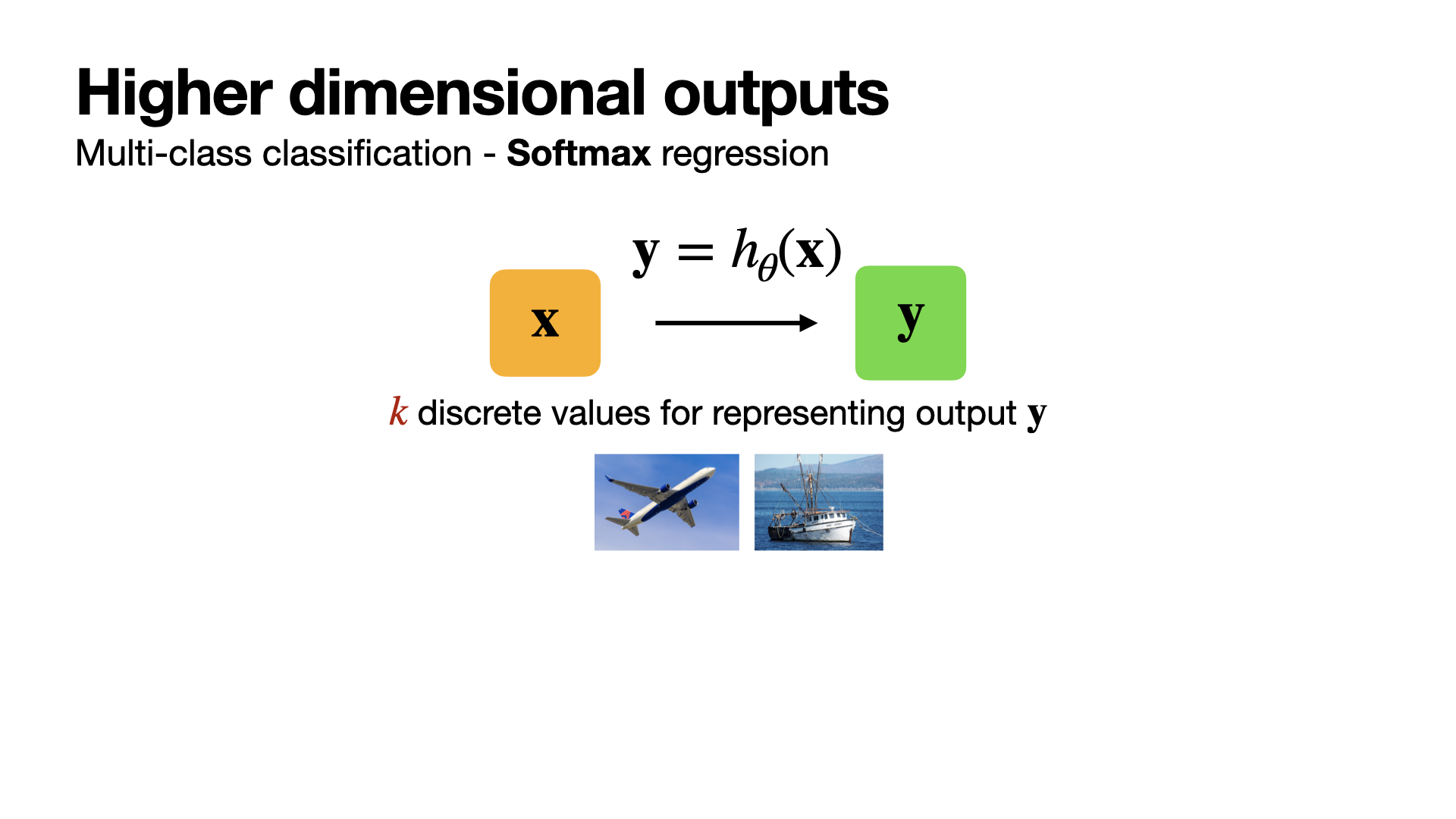
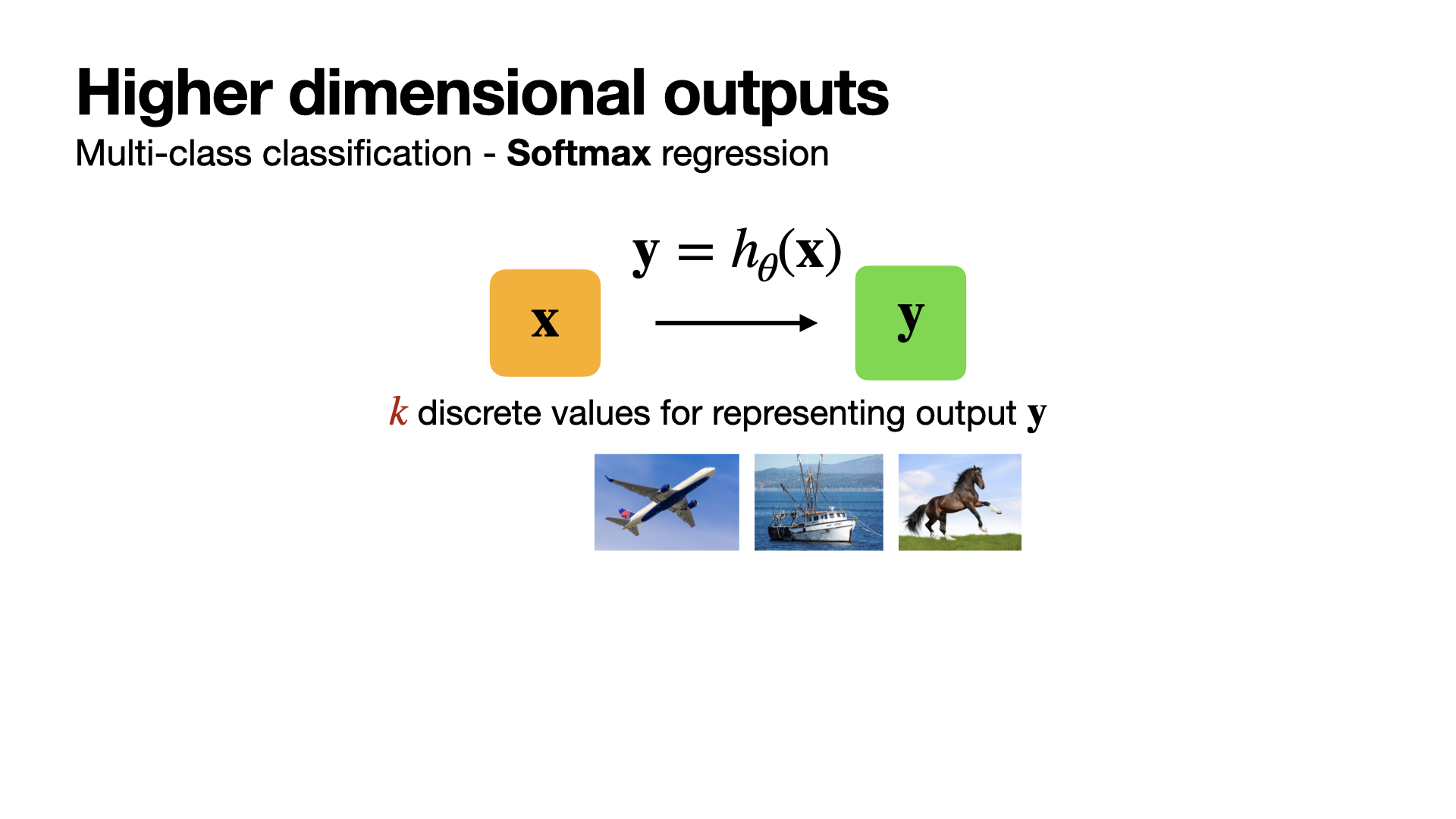
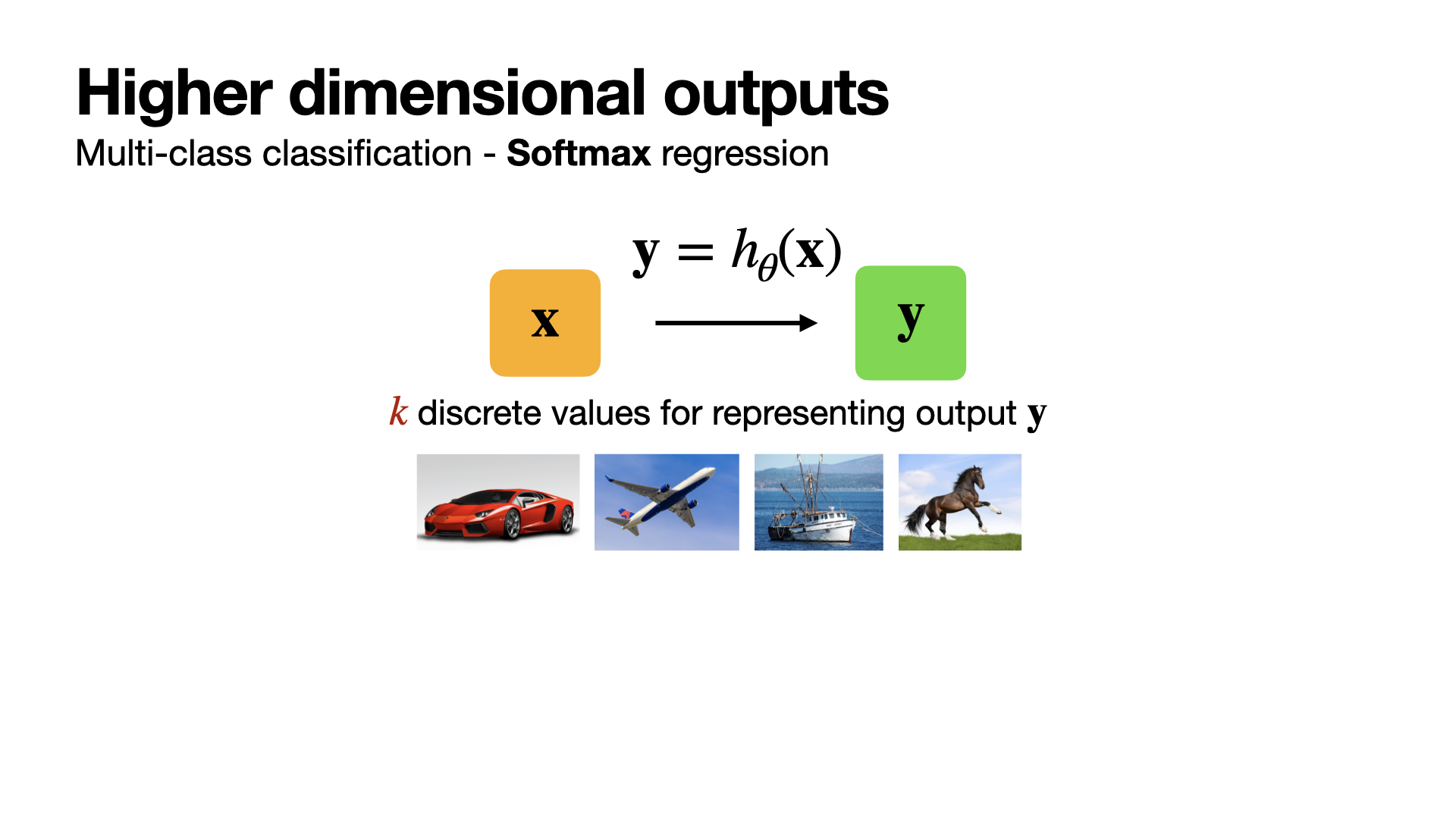
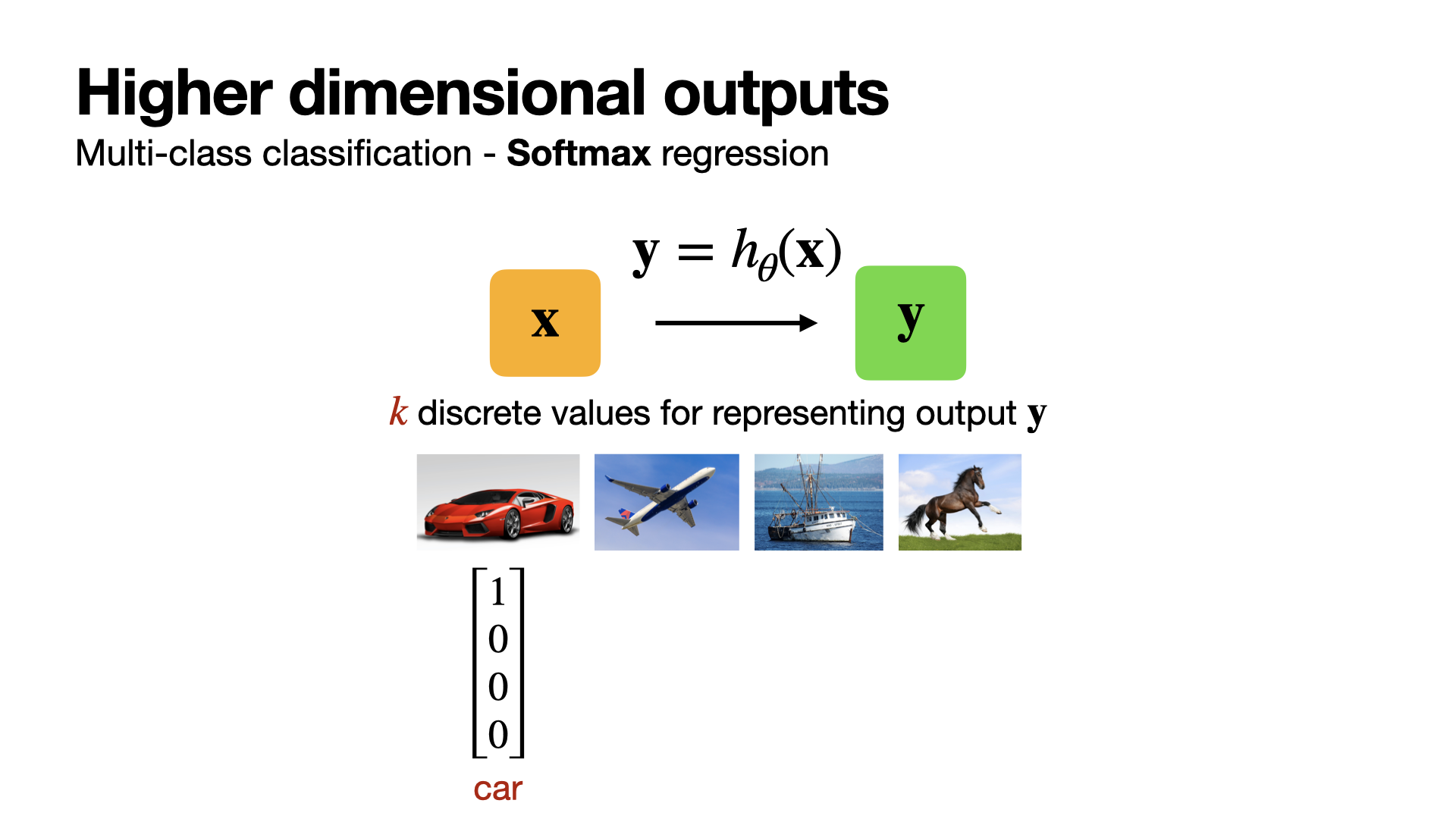
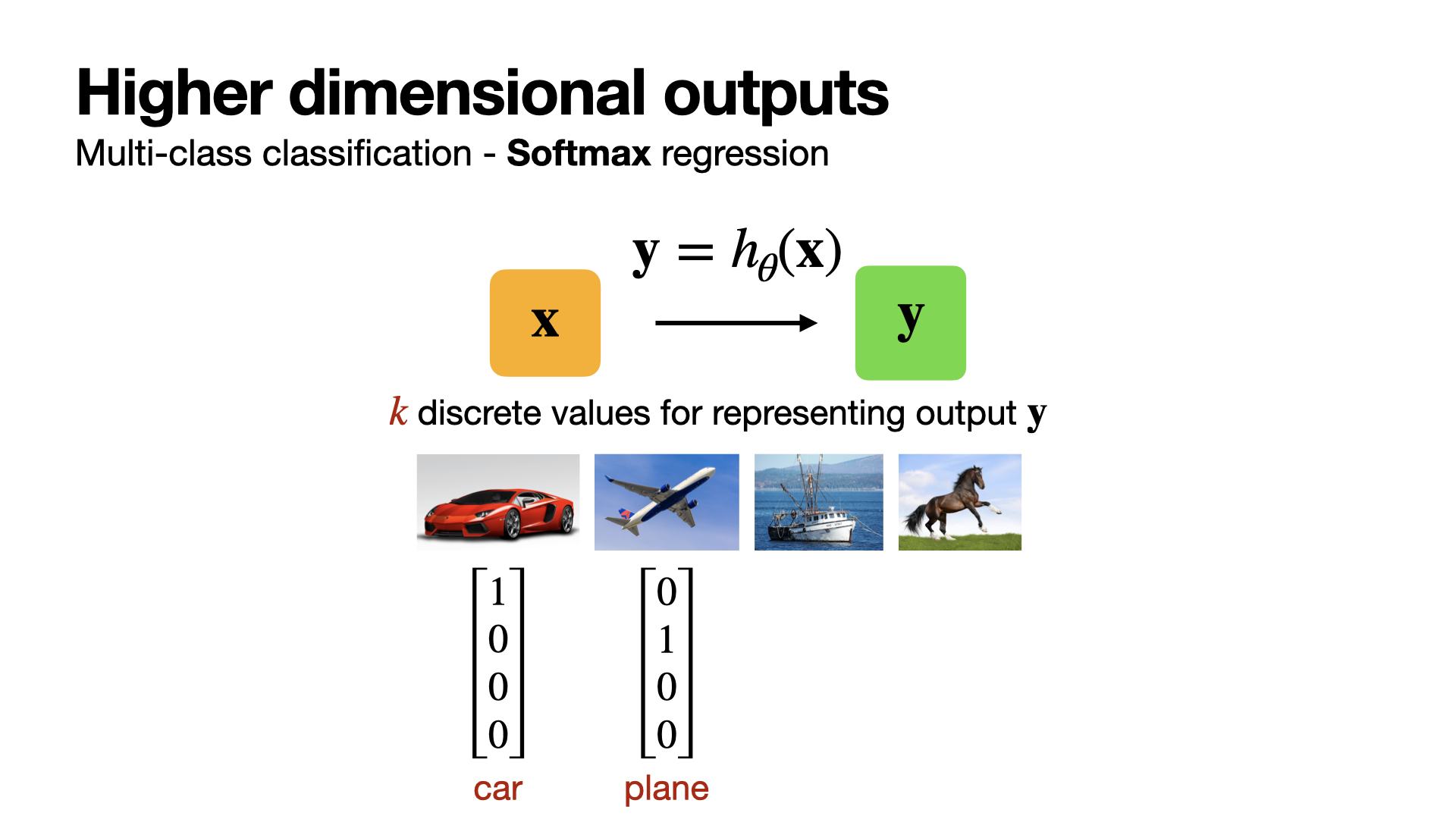
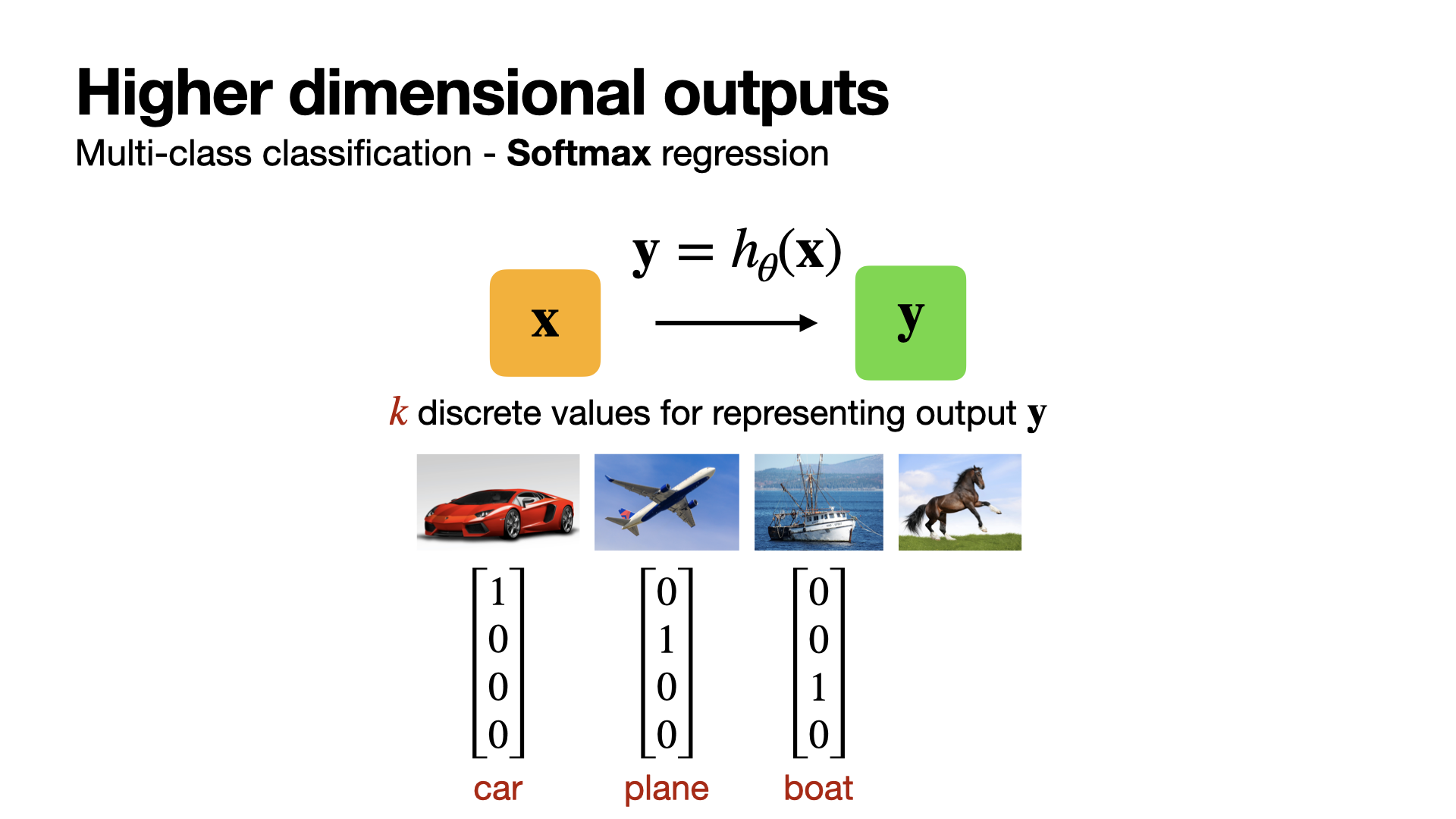
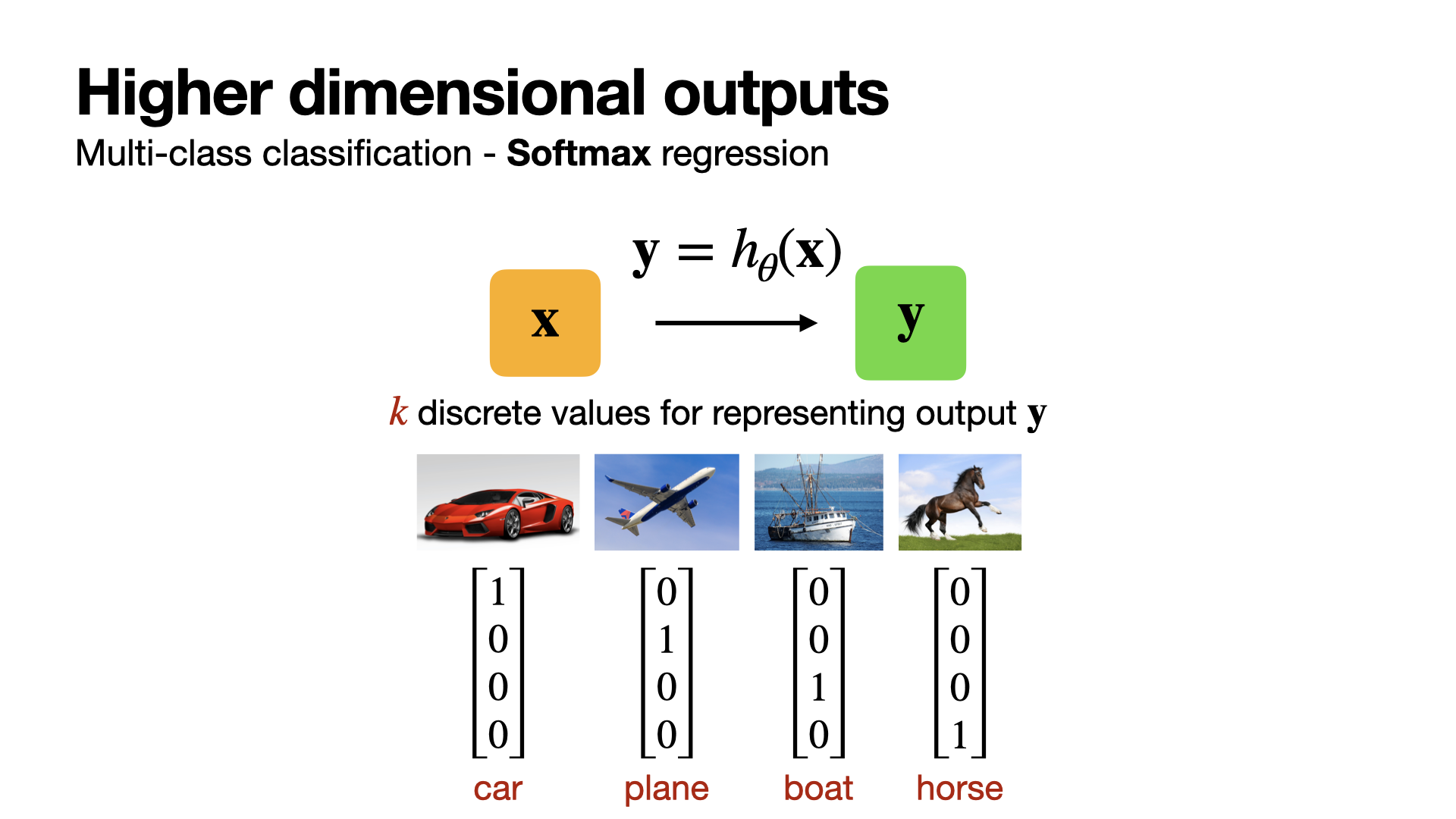
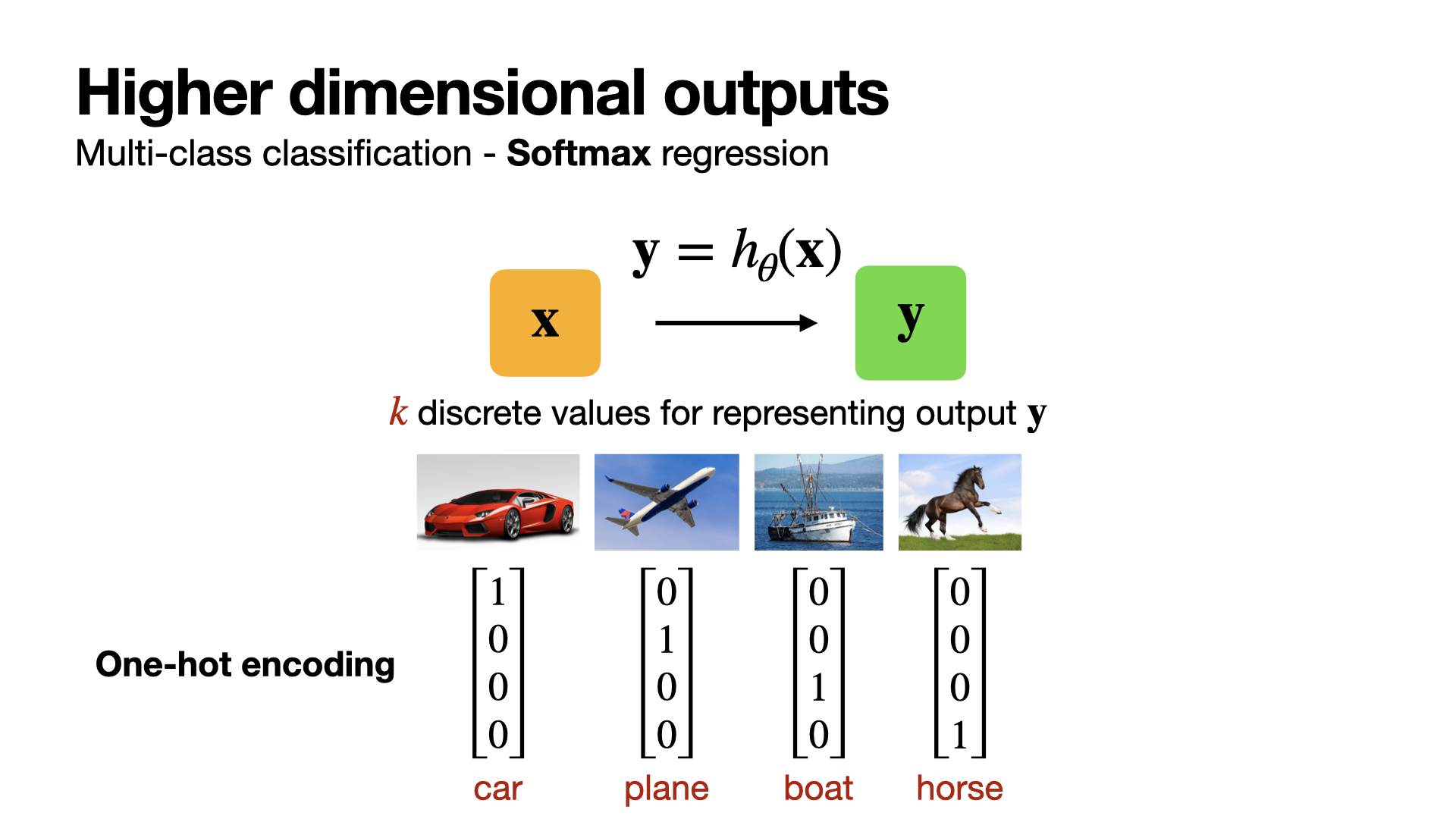
 discrete values for representing output 
One-hot encoding
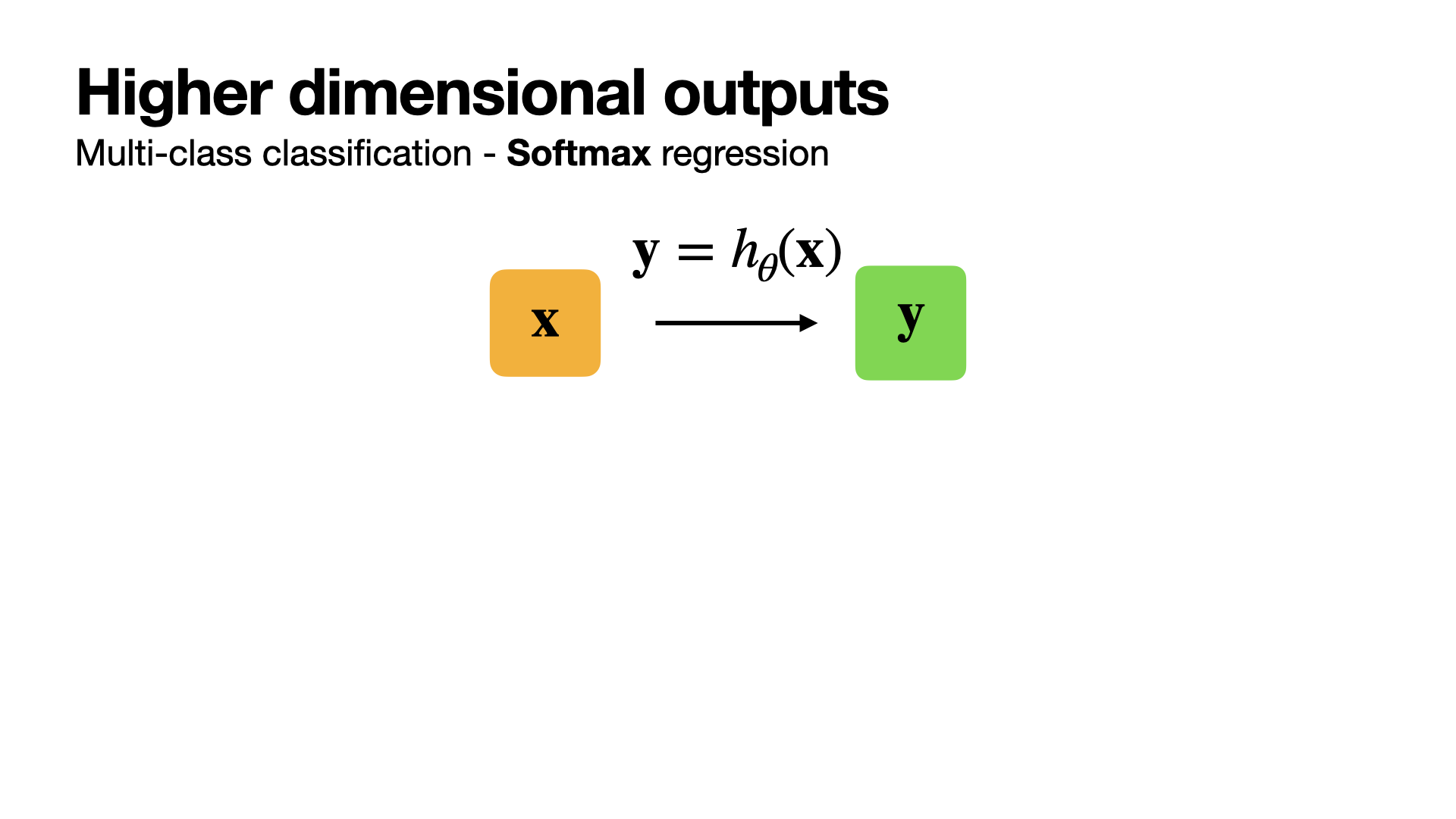
Higher dimensional outputs
Multi-class classification - Softmax regression
Higher dimensional outputs
 is called the base measure (not depend on )
 is called the log partition function (not depend on )
,  and  are scalar.  and  have the same dimensions.
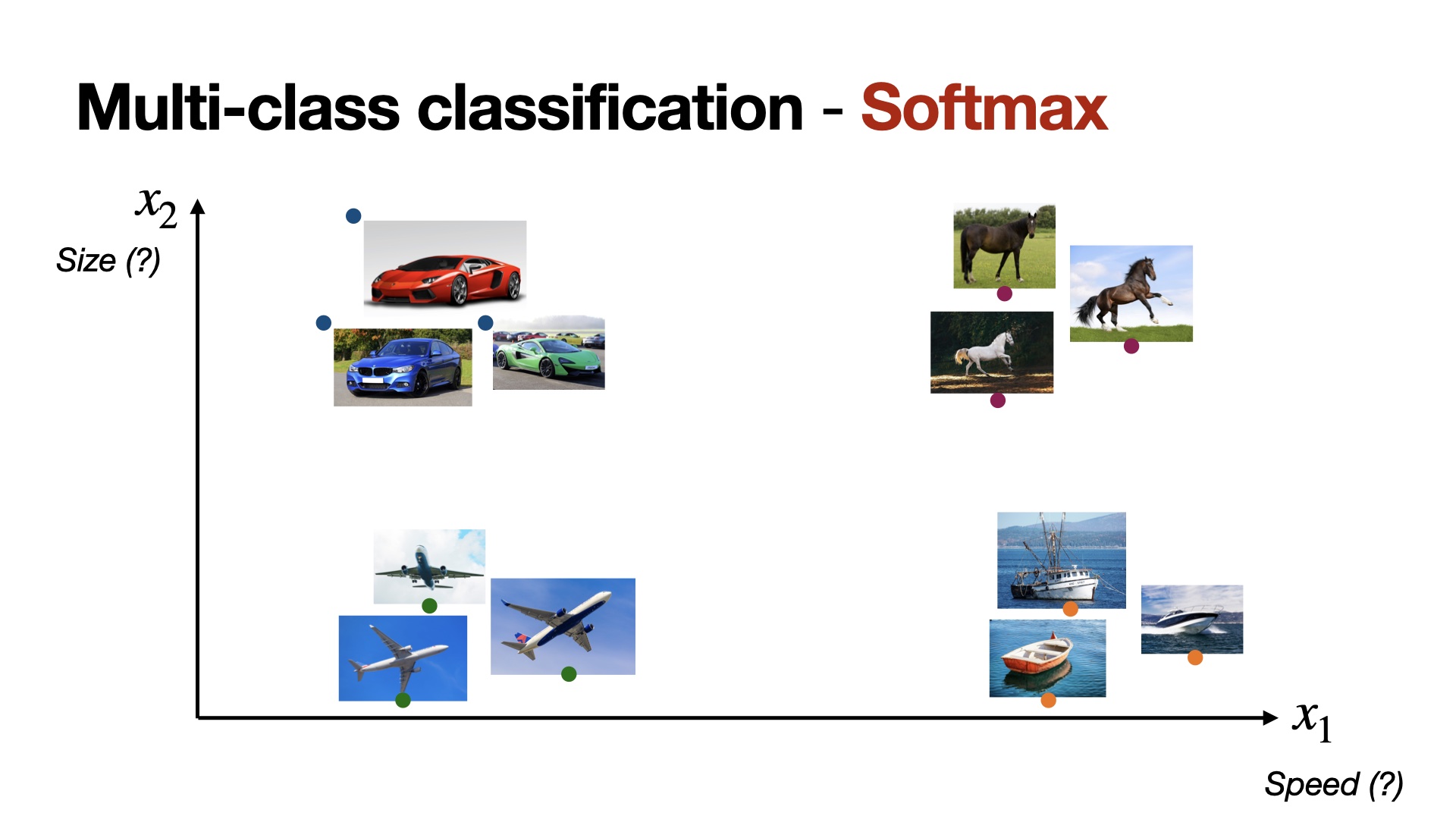
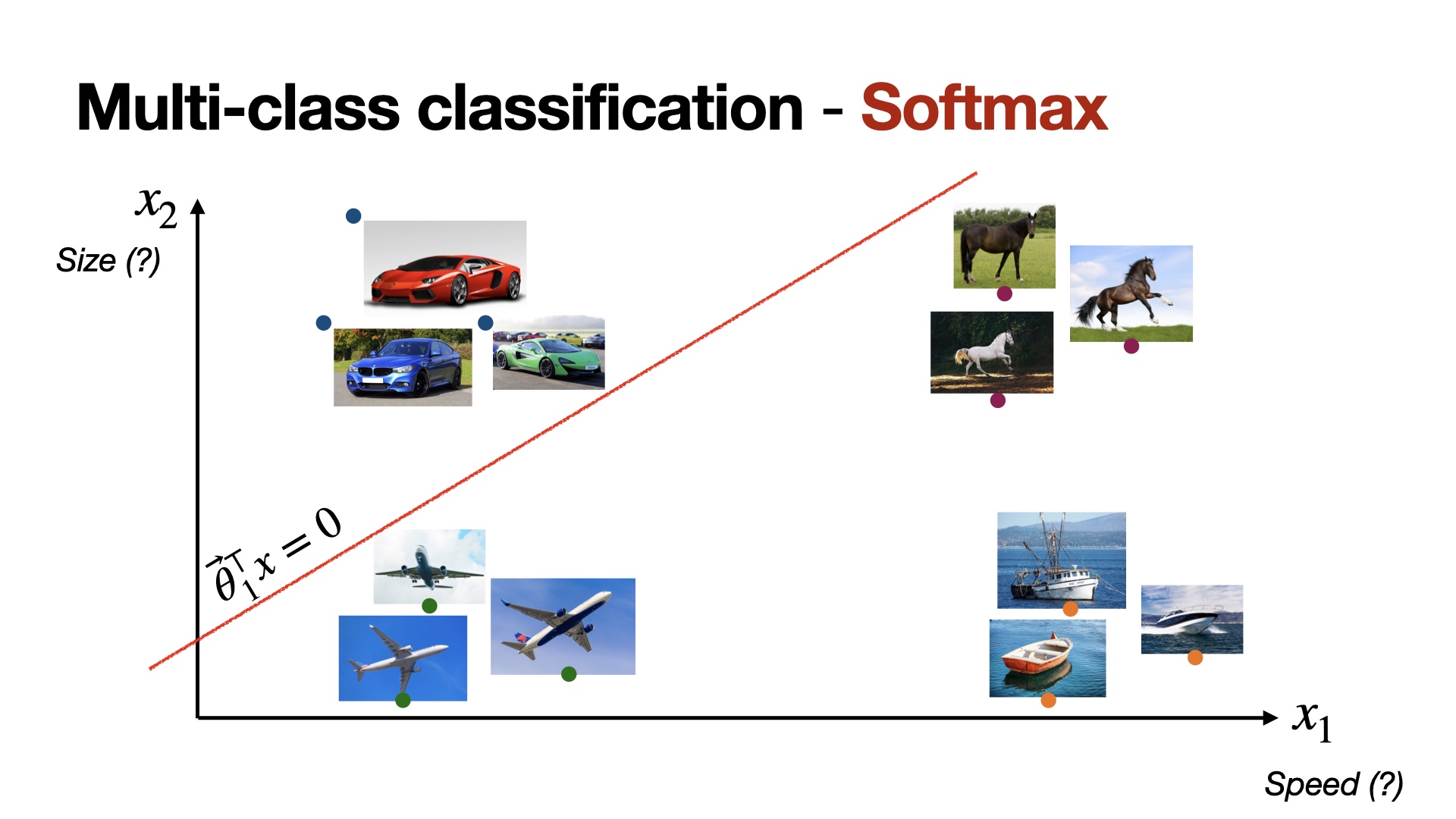
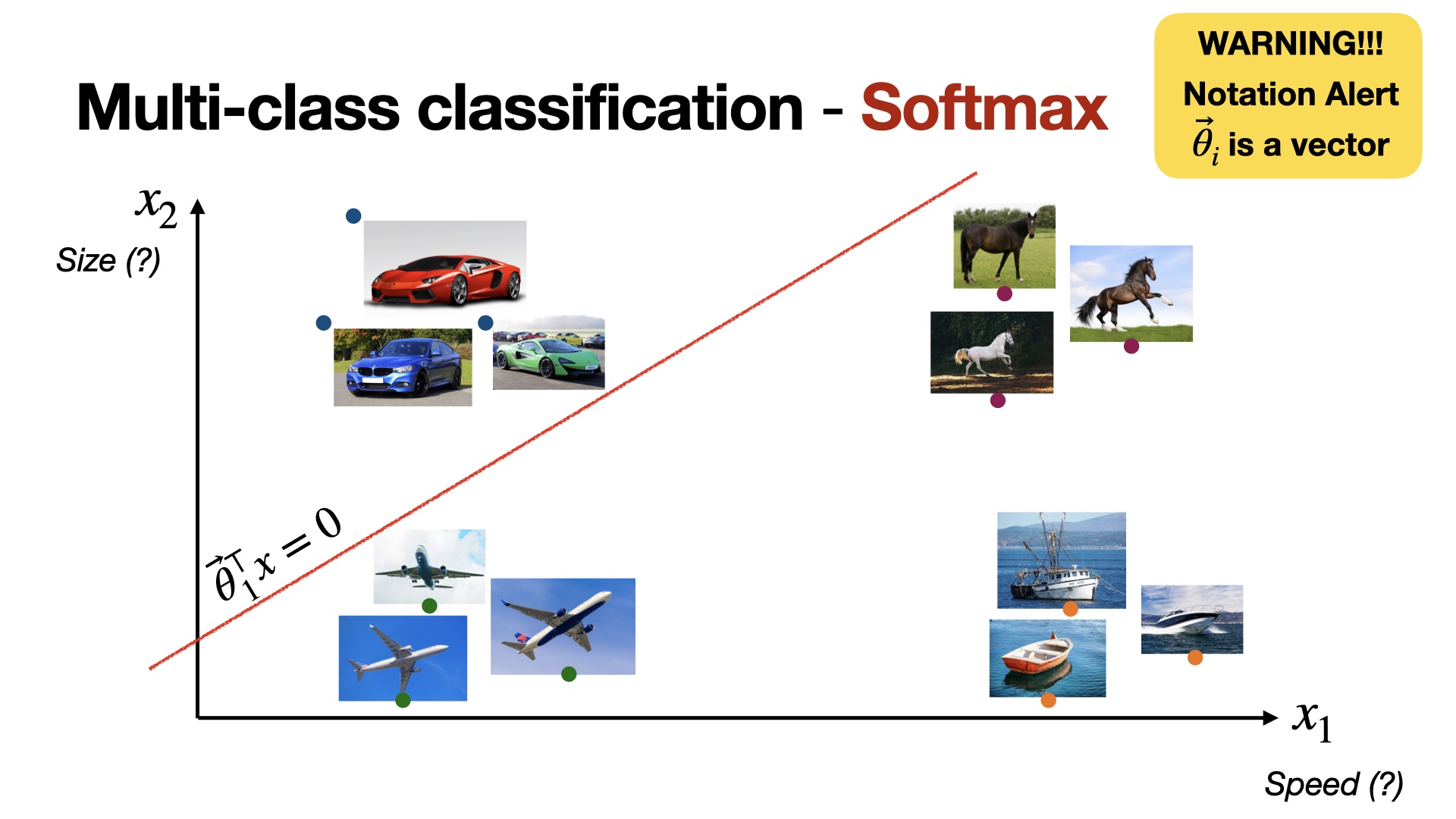
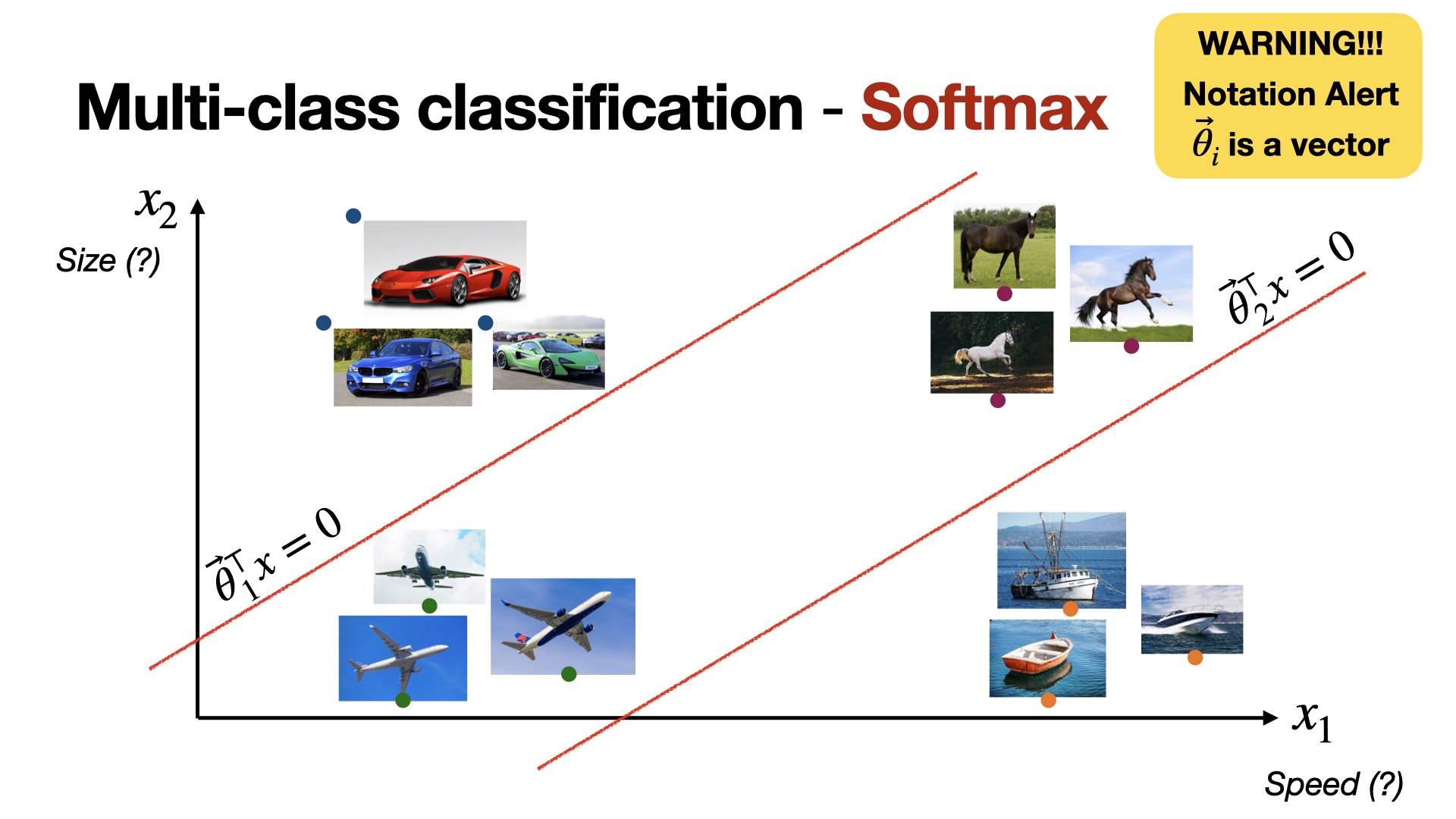
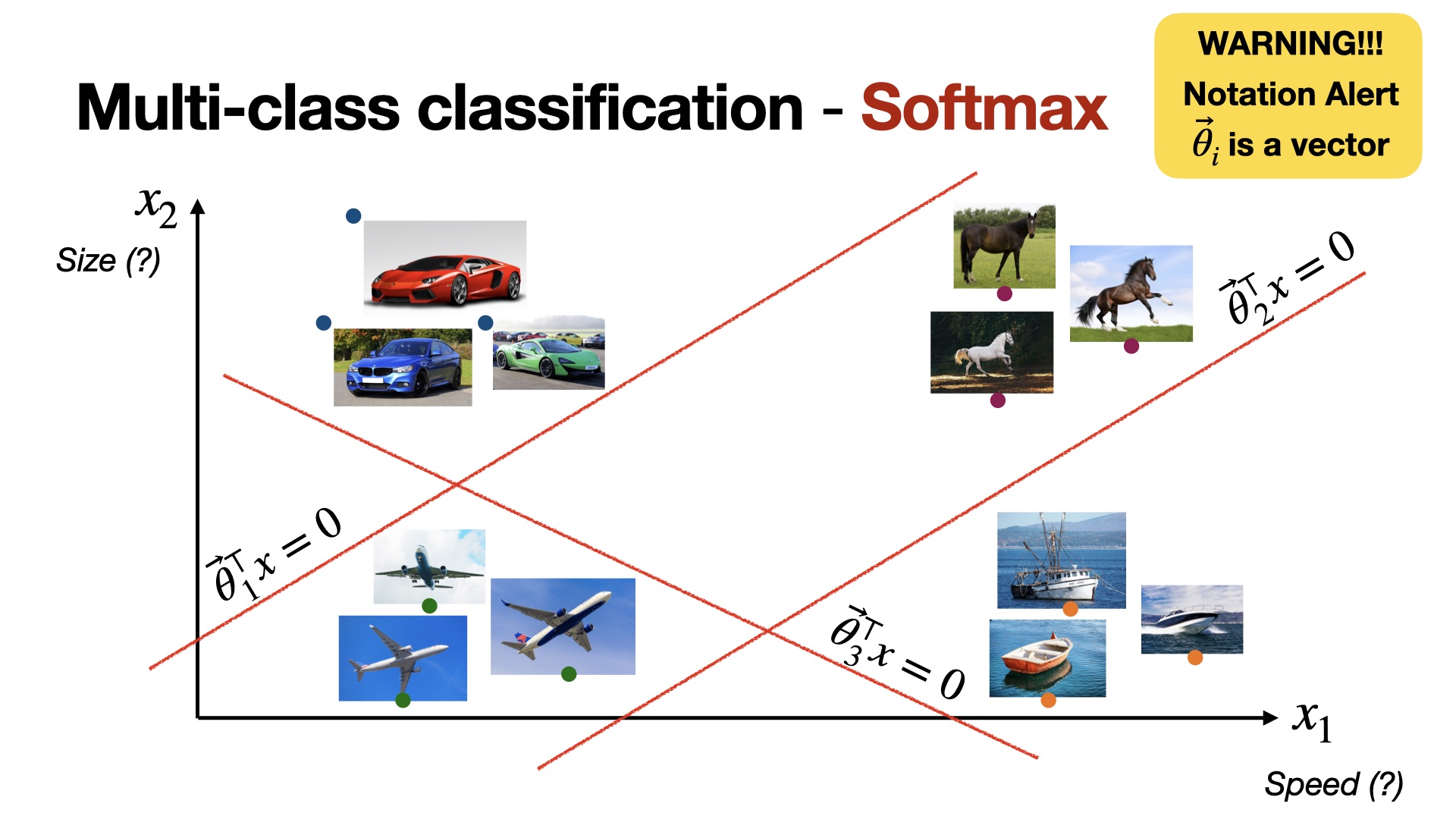
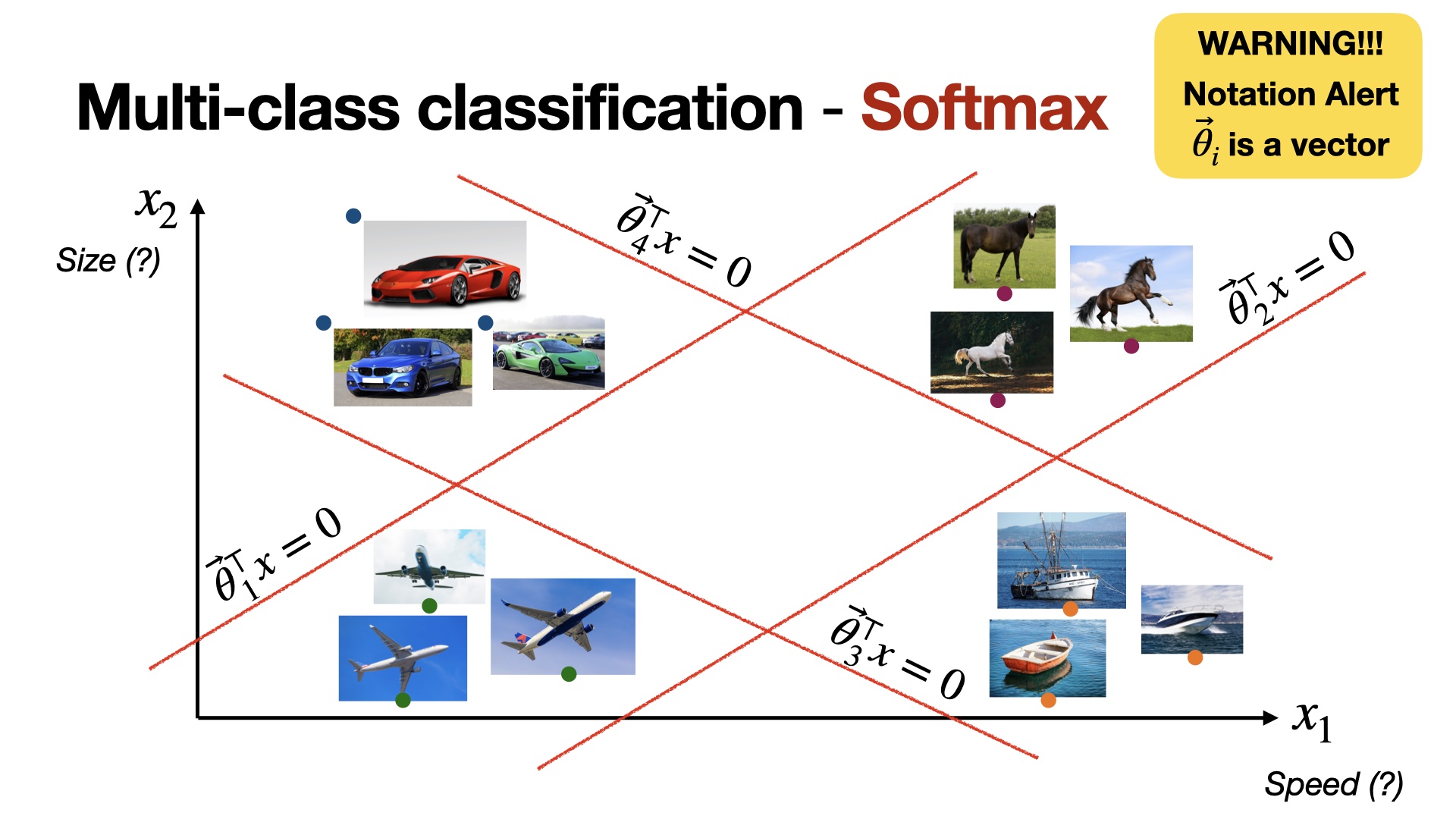
Multi-class classification - Softmax


Speed (?)
Size (?)
Multi-class classification - Softmax
 is called the base measure (not depend on )
 is called the log partition function (not depend on )
,  and  are scalar.  and  have the same dimensions.
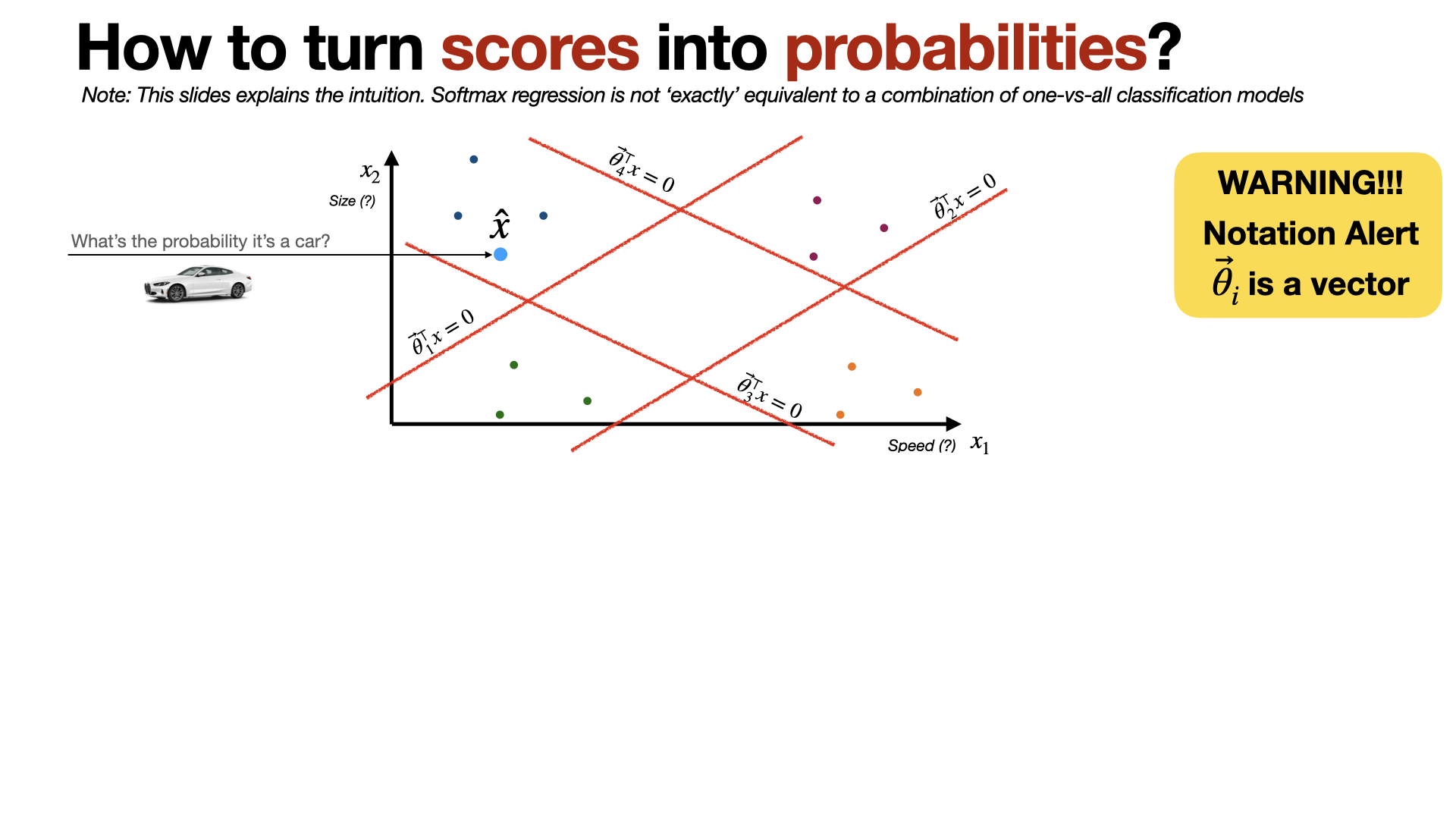
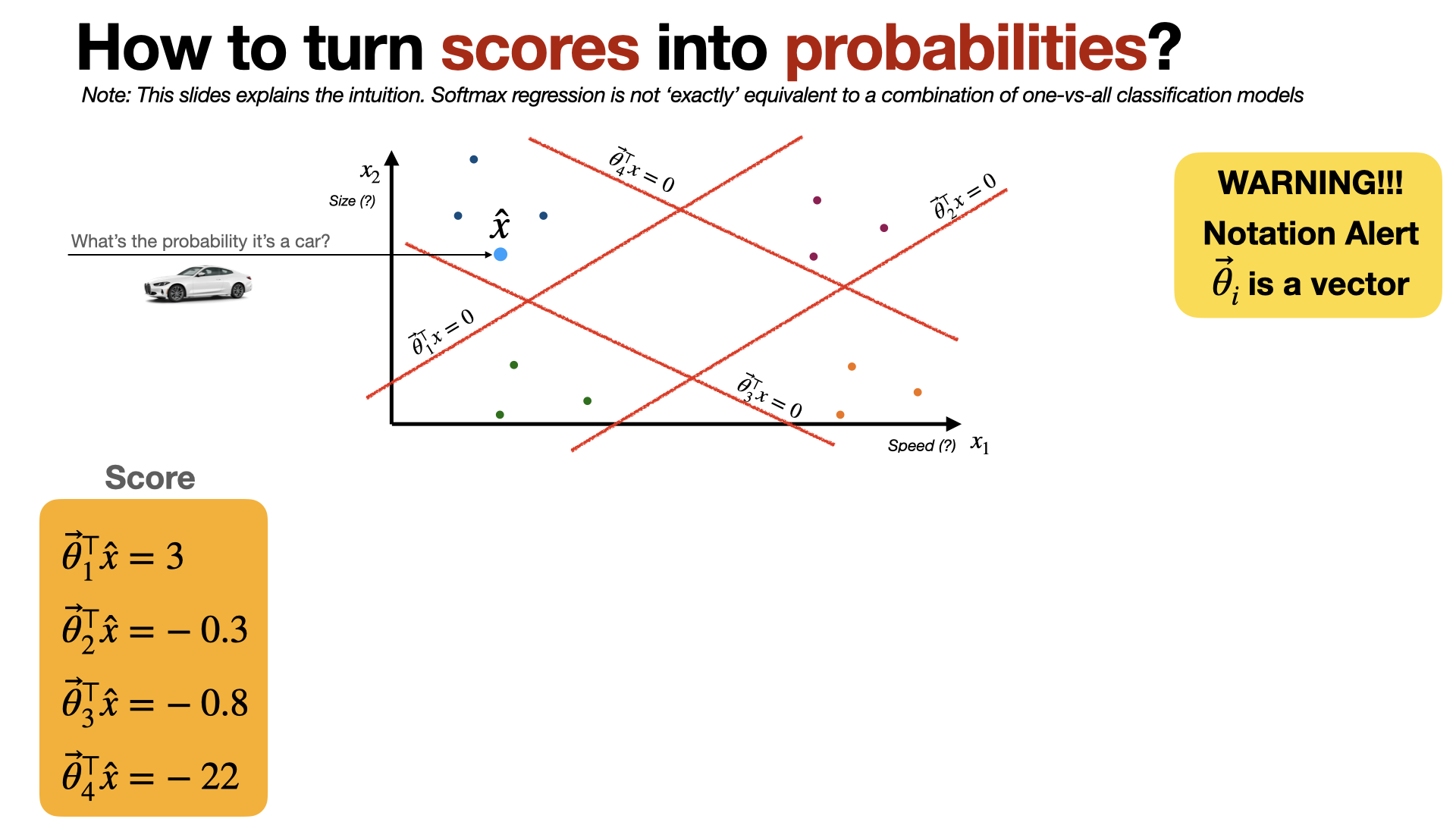
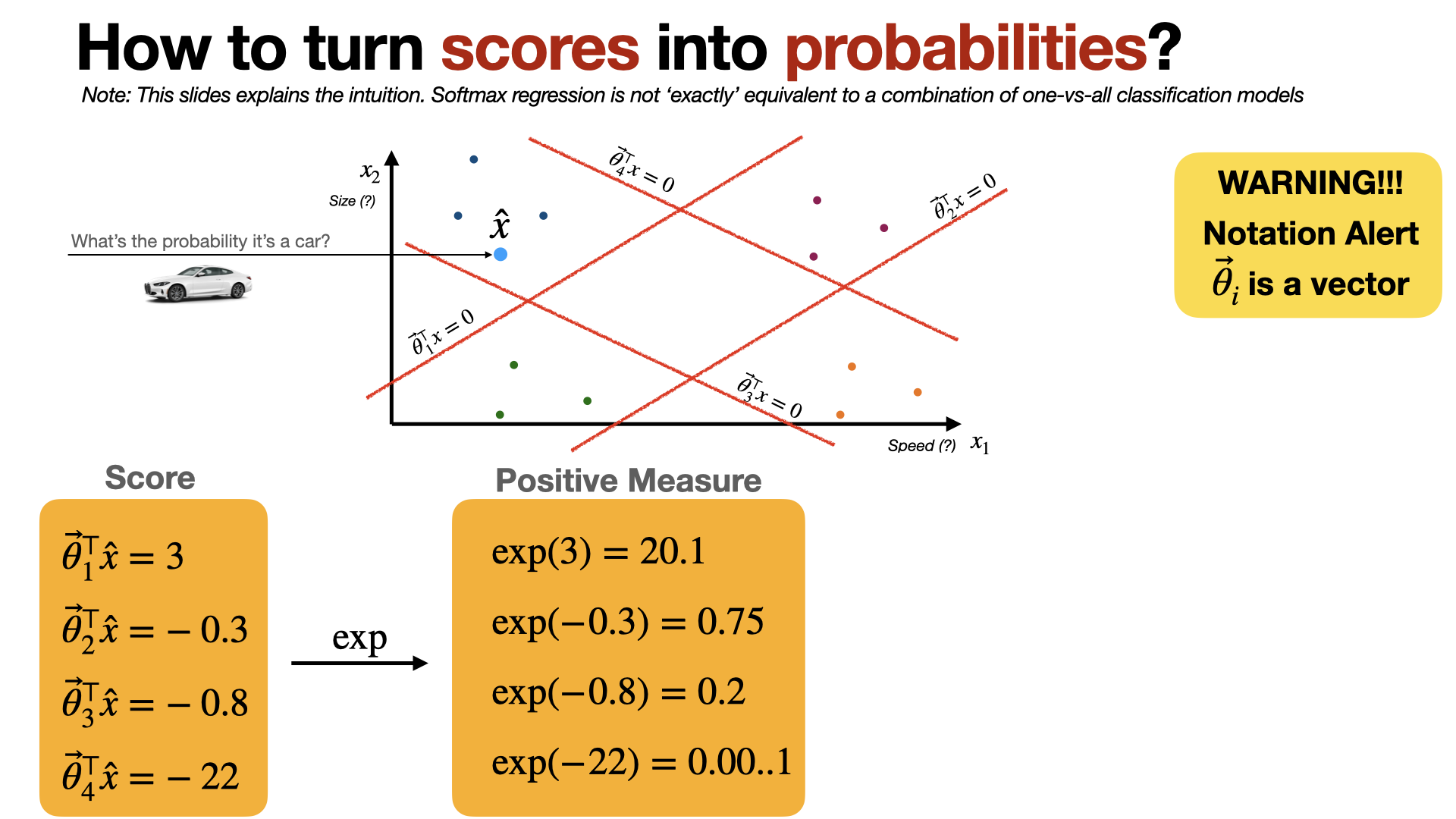
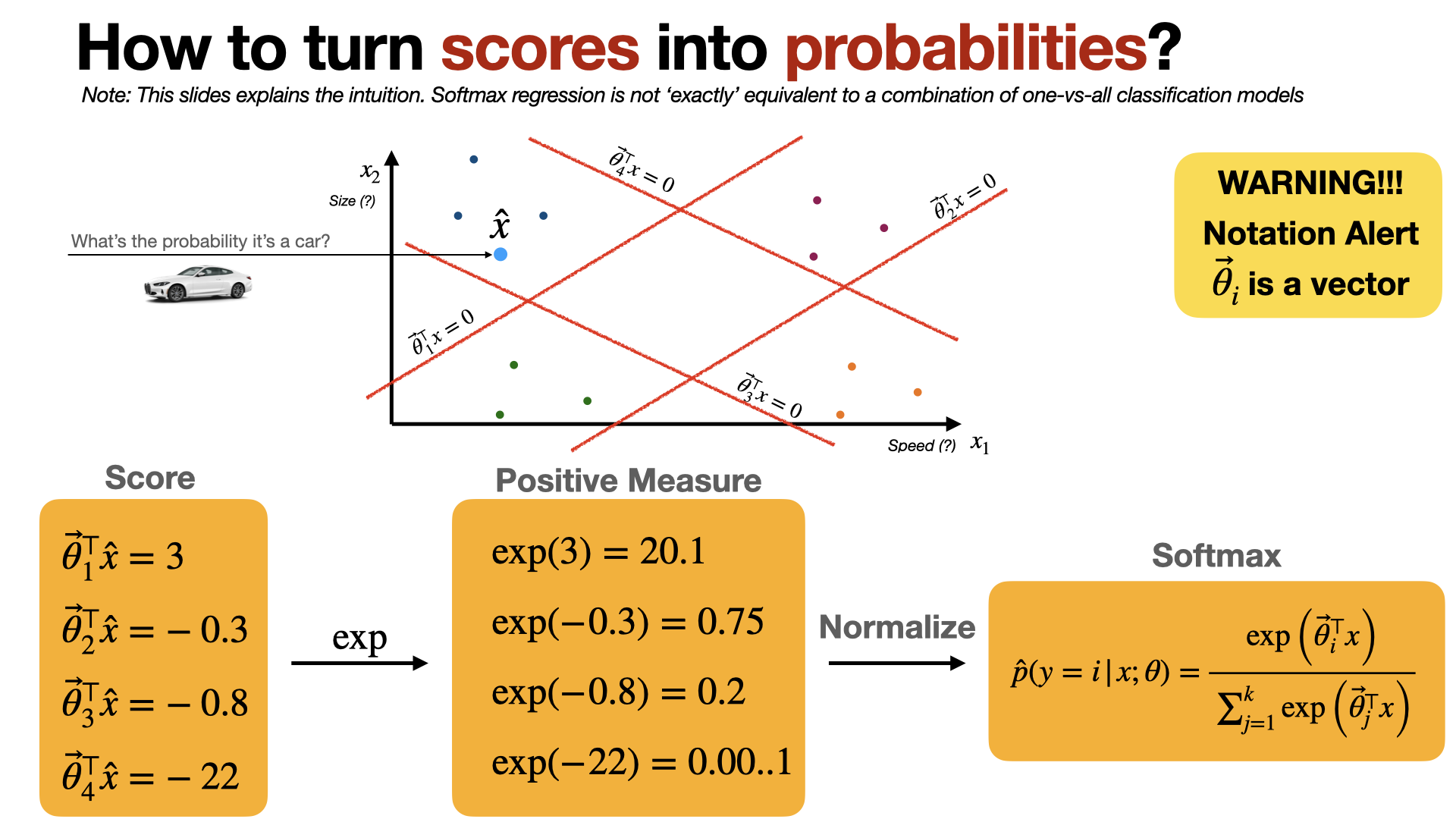
How to turn scores into probabilities?
What’s the probability it’s a car?
Note: This slides explains the intuition. Softmax regression is not ‘exactly’ equivalent to a combination of one-vs-all classification models
How to turn scores into probabilities?
 is called the base measure (not depend on )
 is called the log partition function (not depend on )
,  and  are scalar.  and  have the same dimensions.
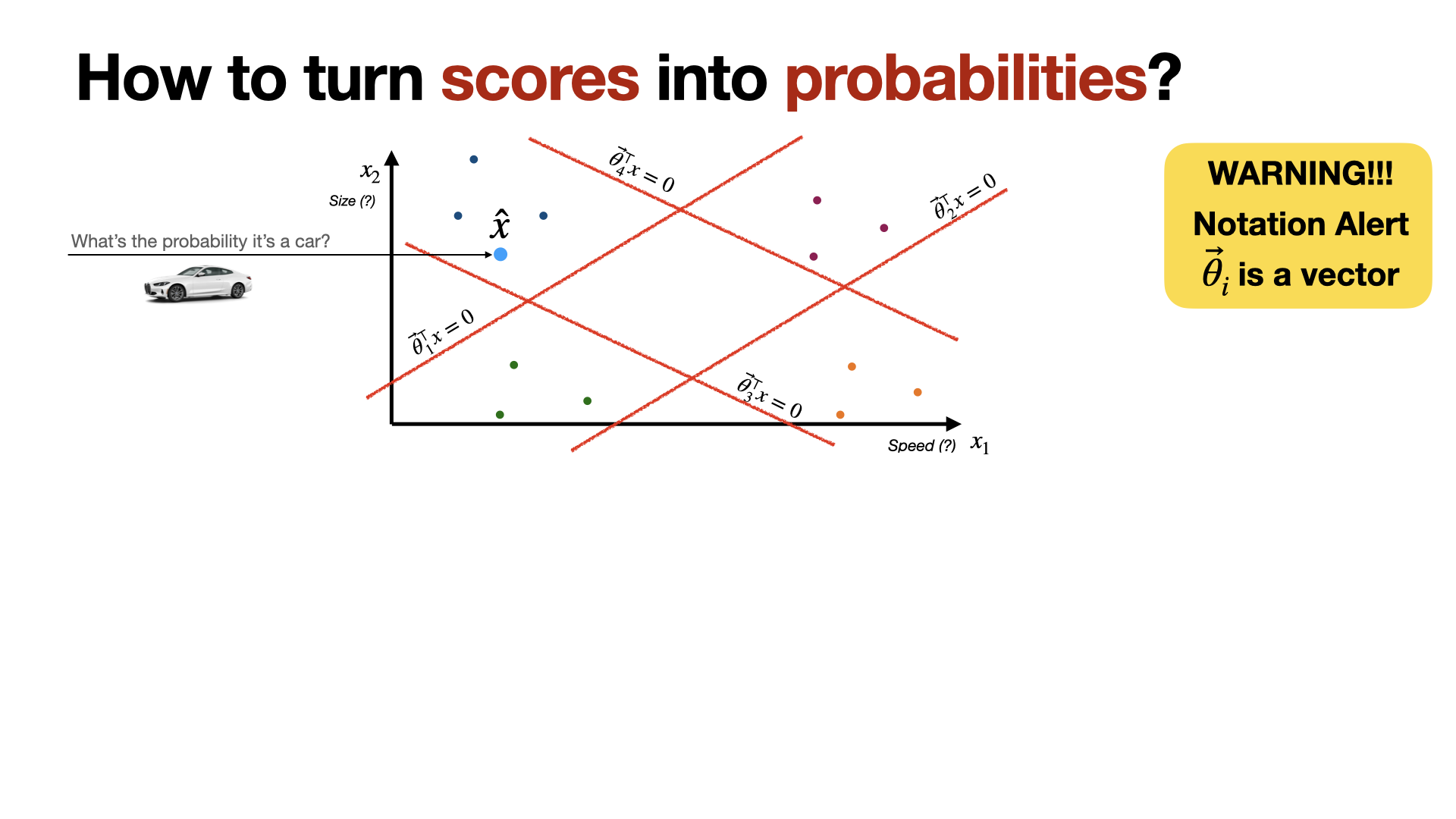
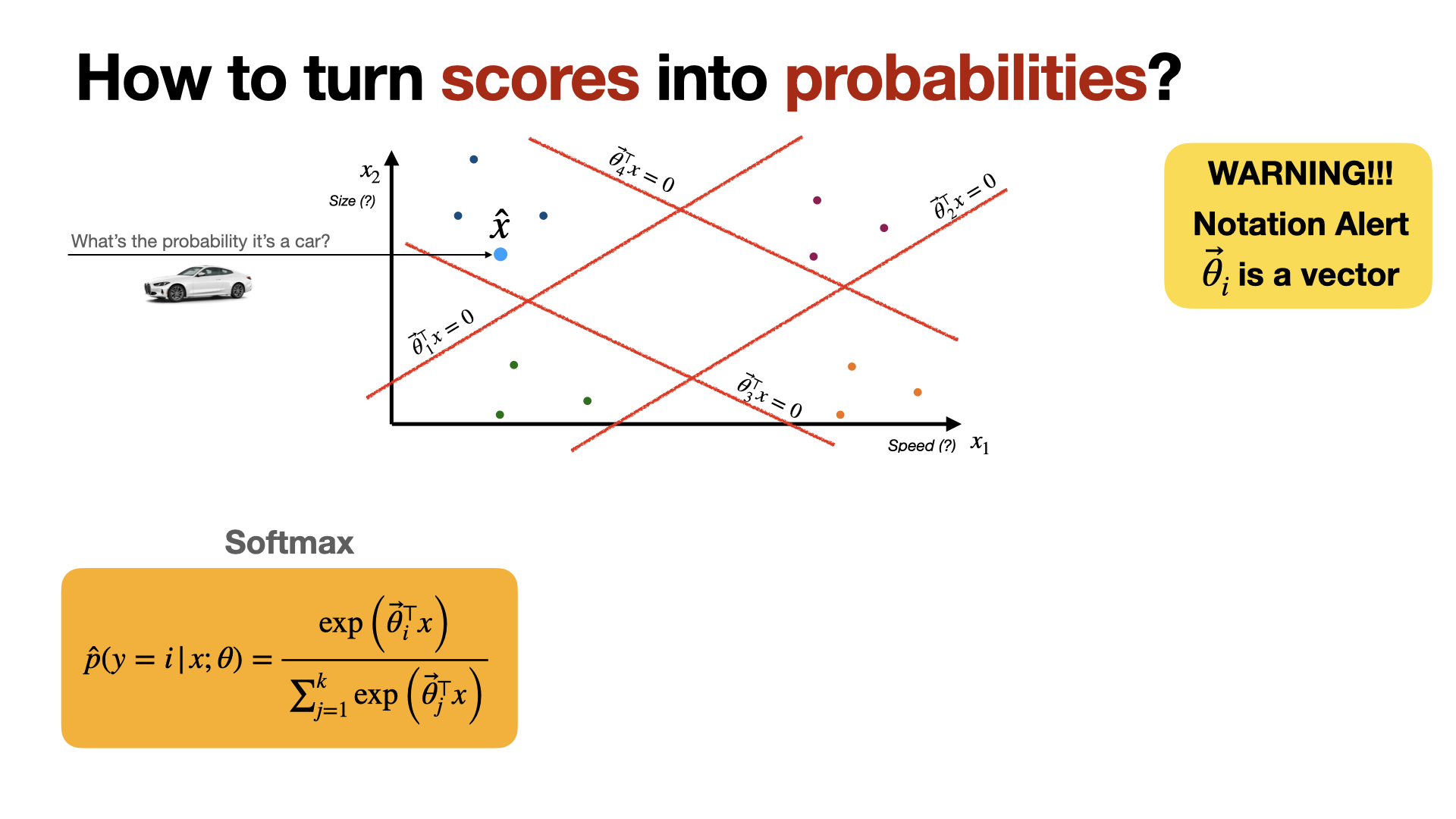
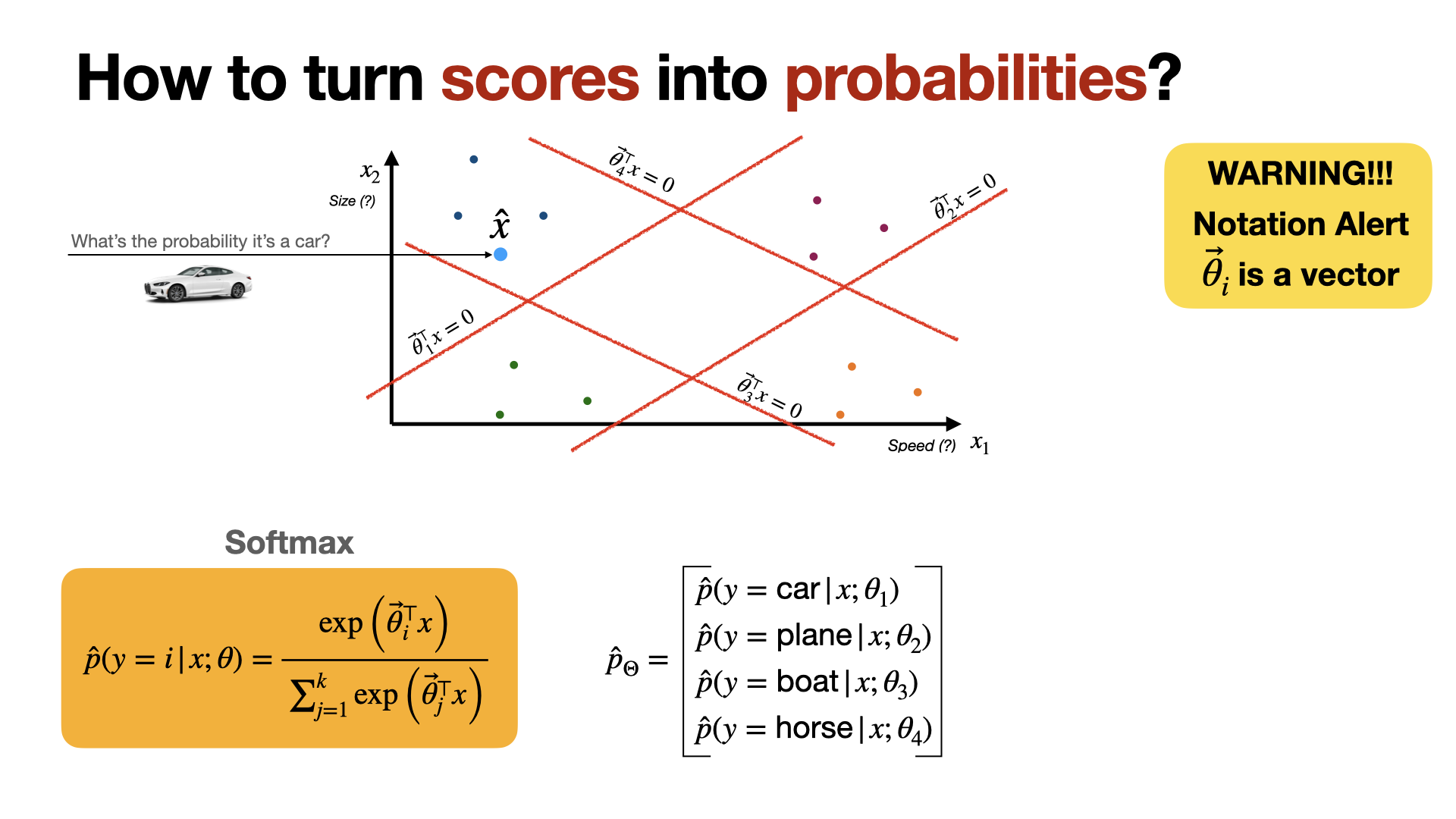
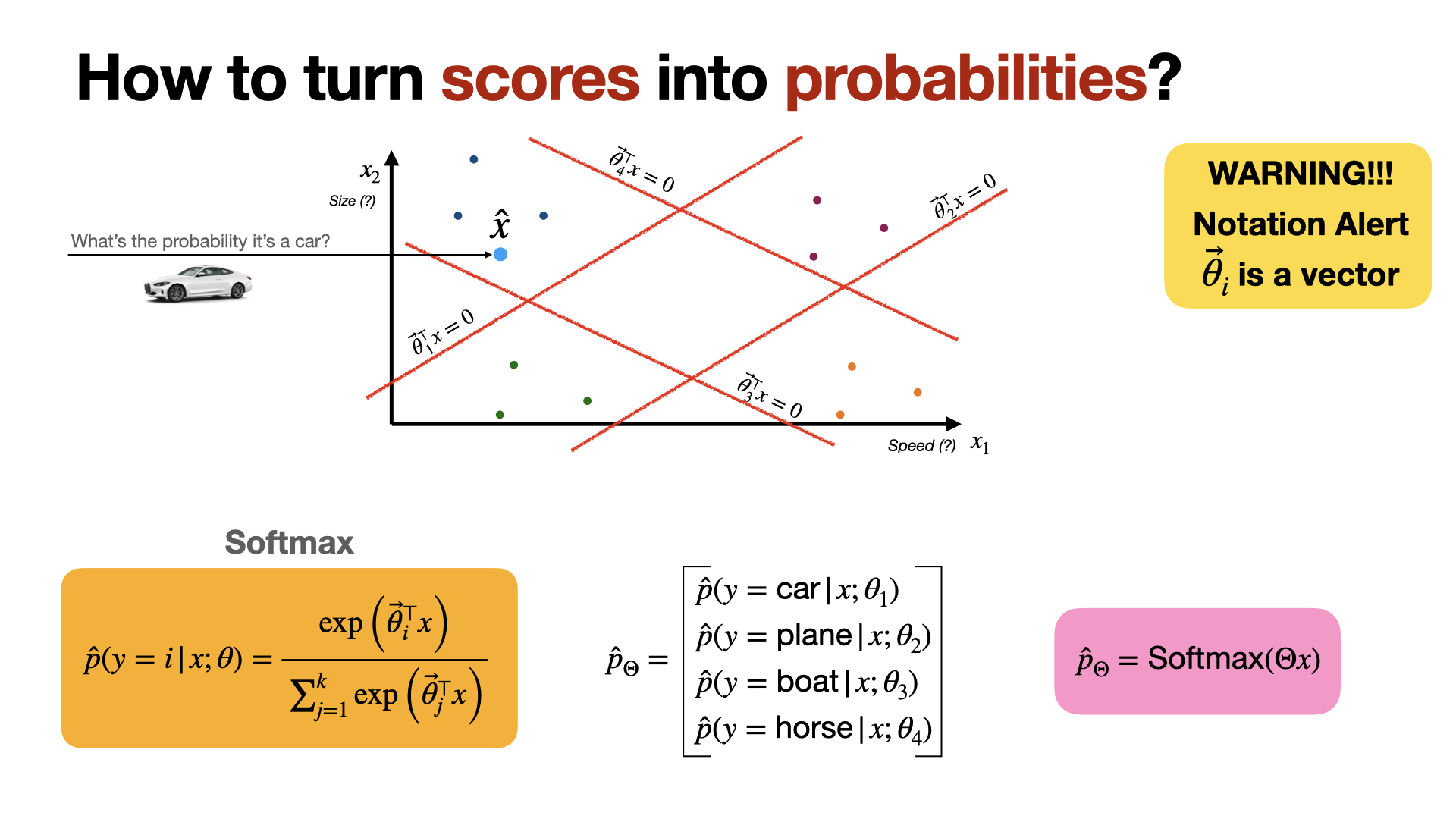
How to turn scores into probabilities?
What’s the probability it’s a car?
How to turn scores into probabilities?
 is called the base measure (not depend on )
 is called the log partition function (not depend on )
,  and  are scalar.  and  have the same dimensions.
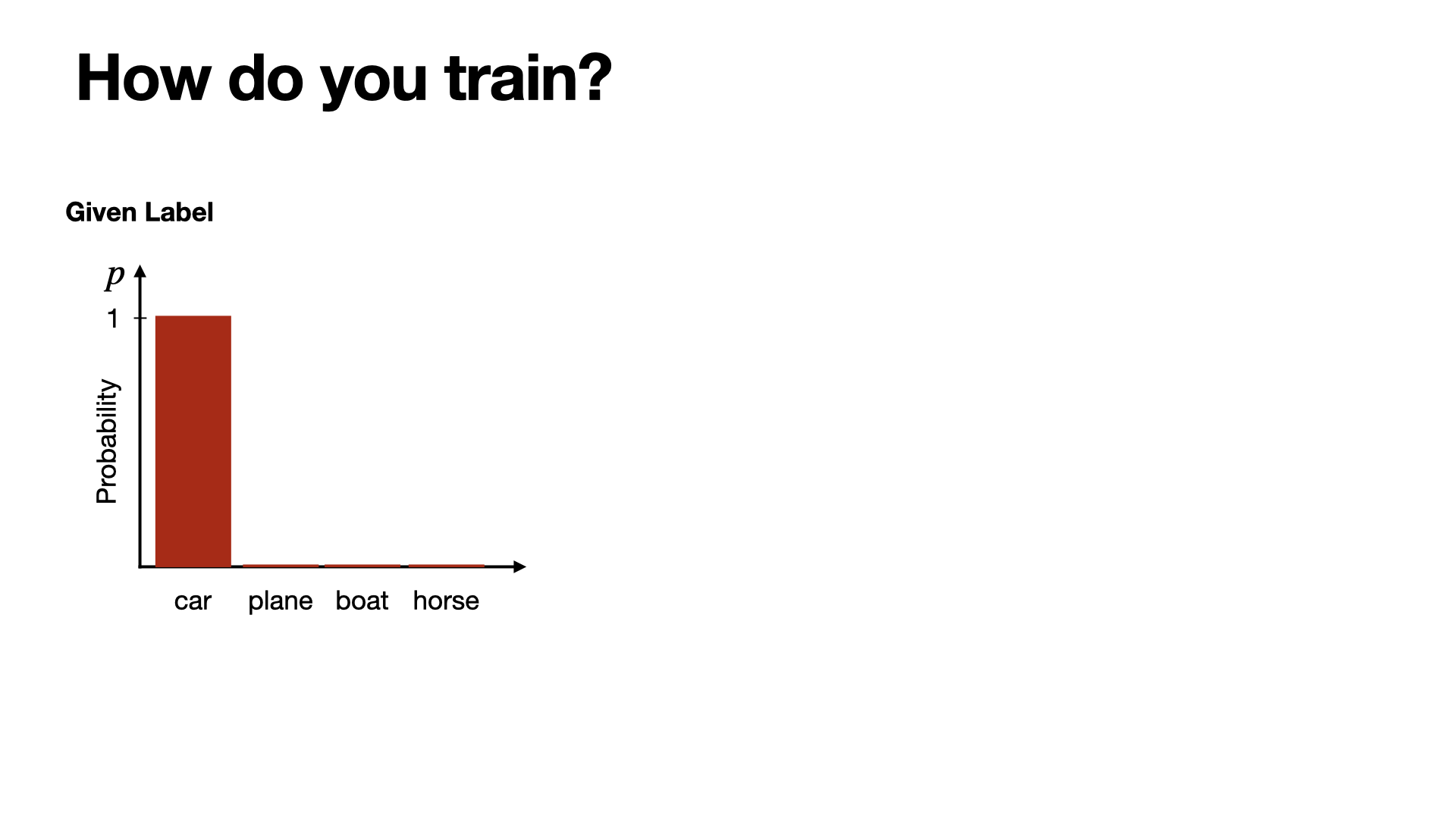
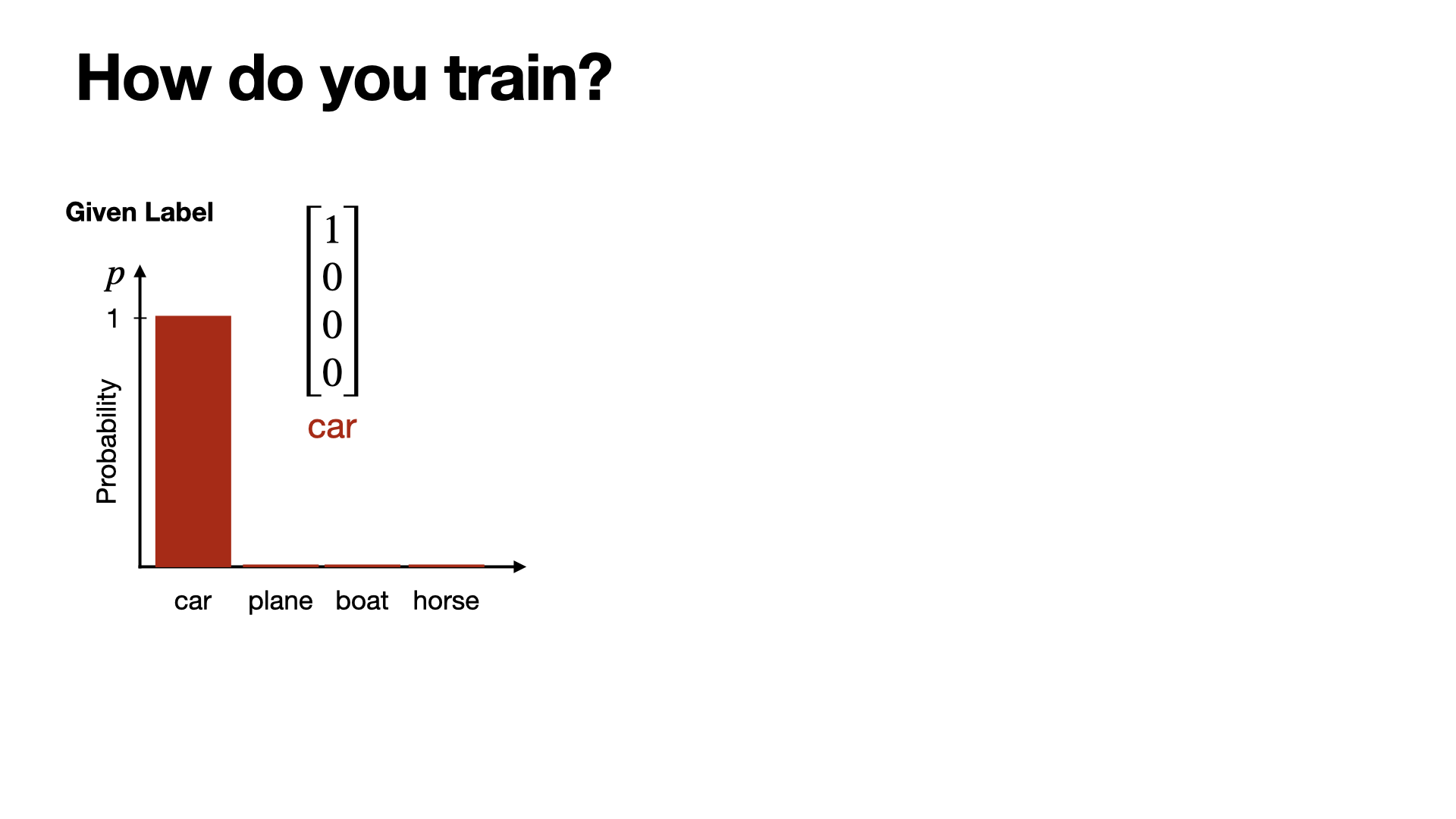
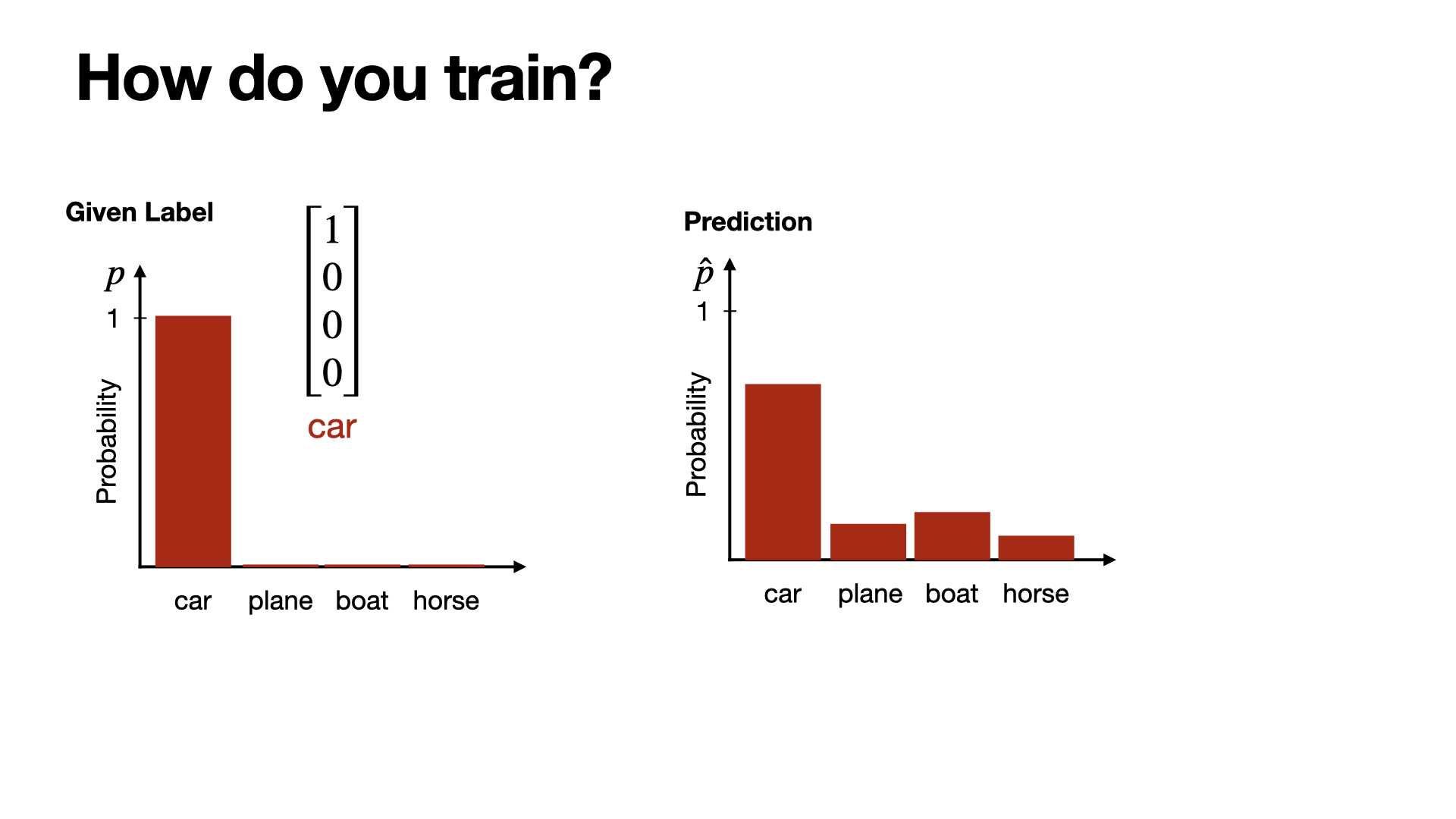
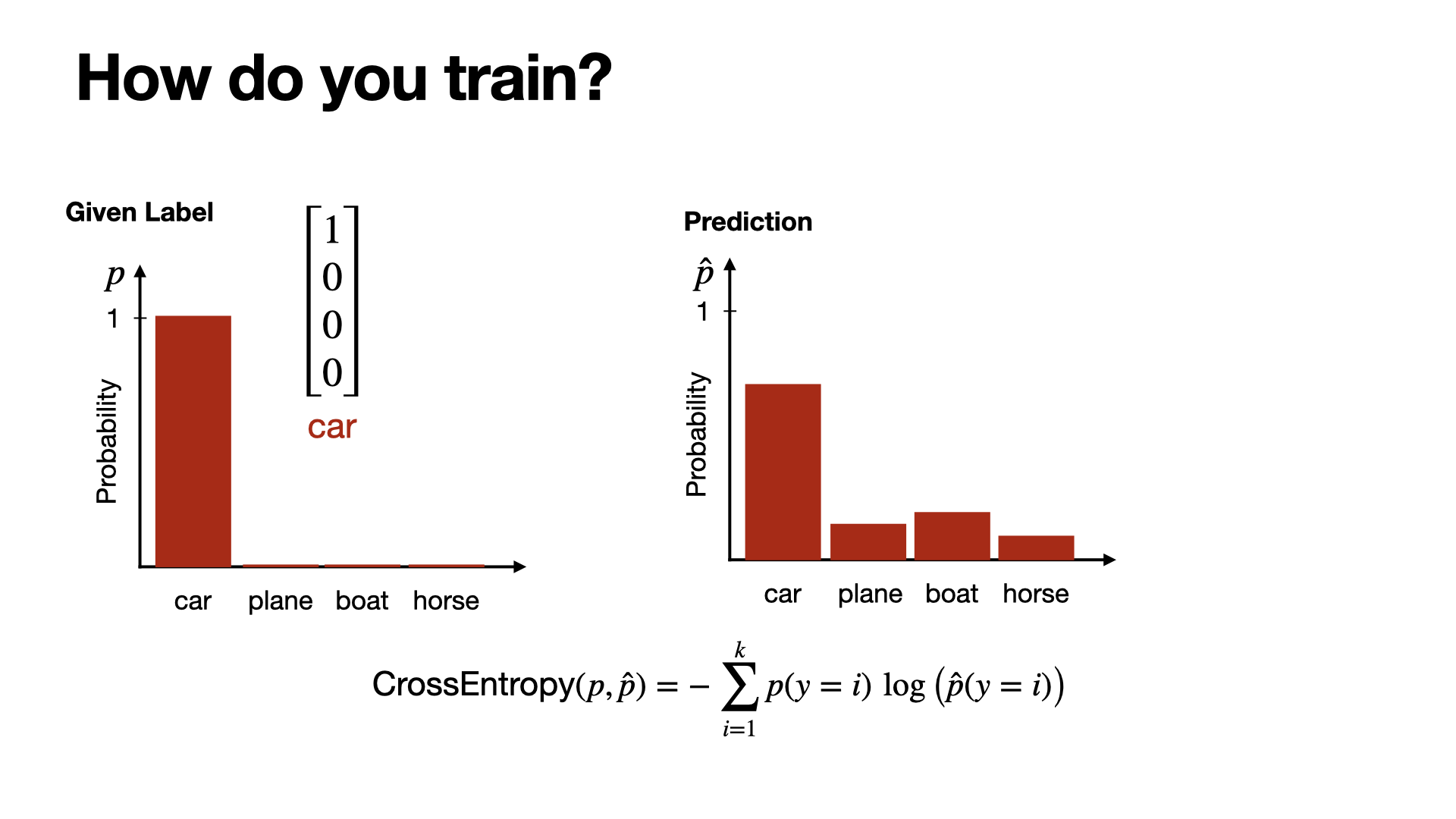
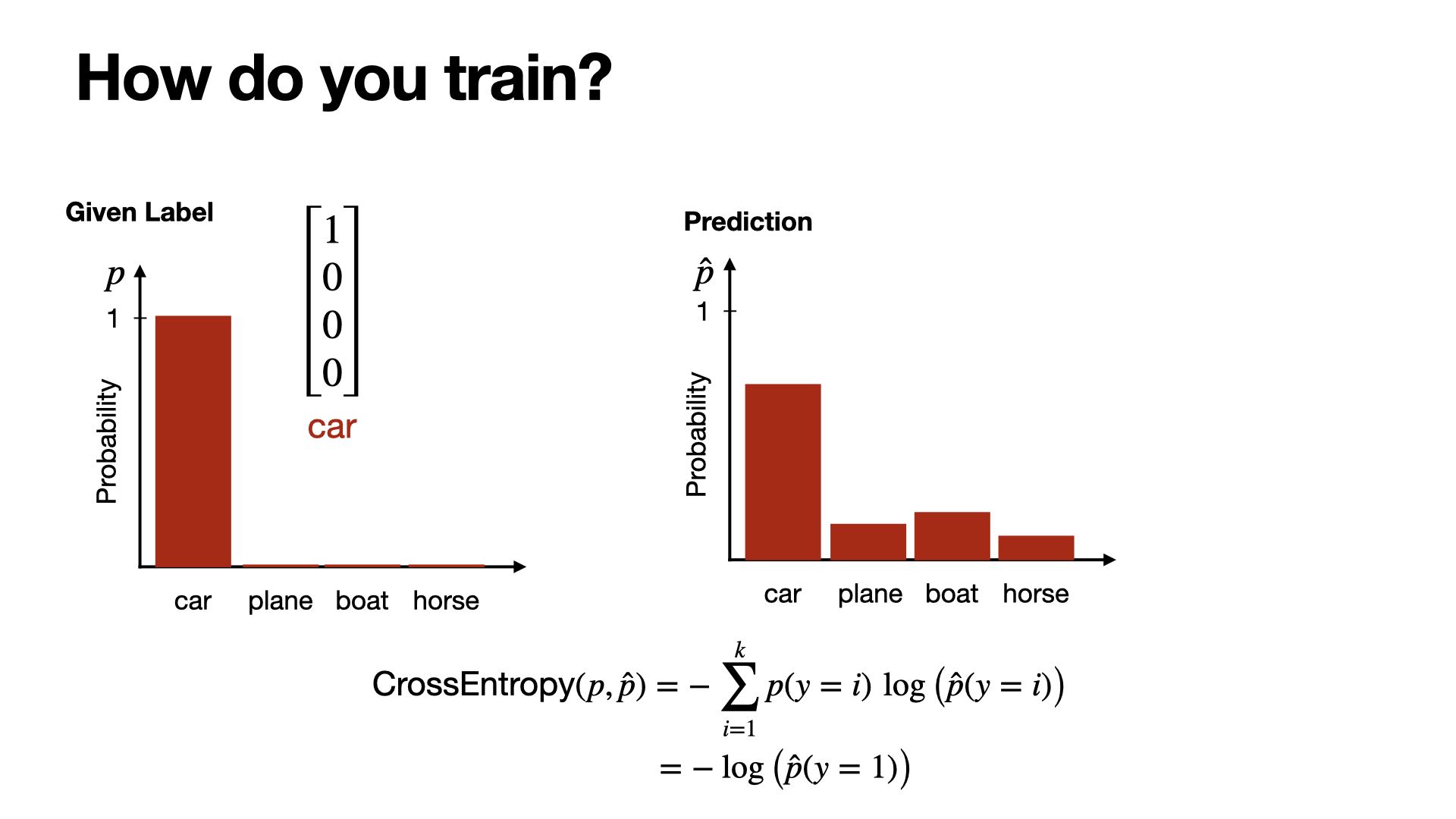
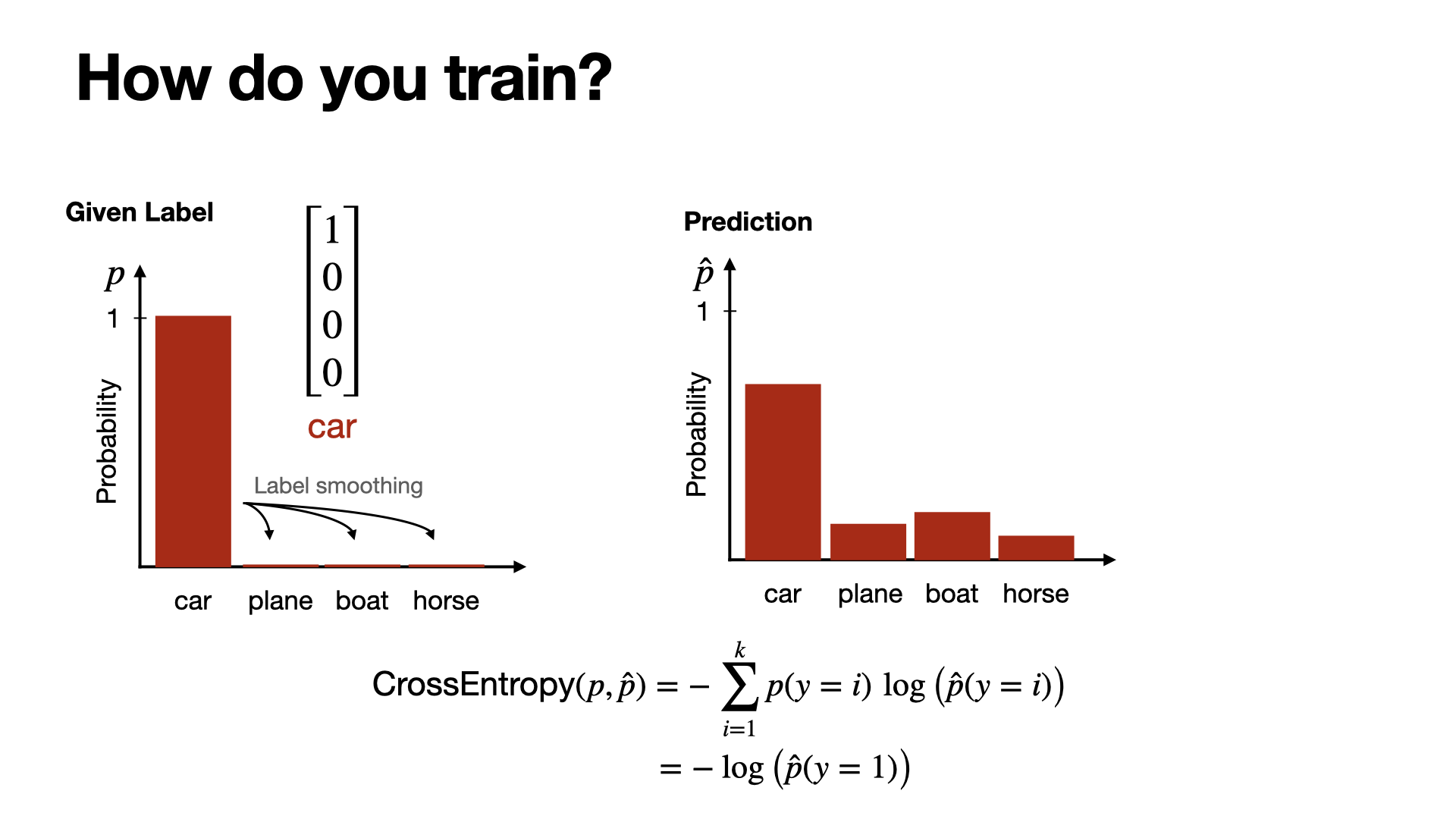
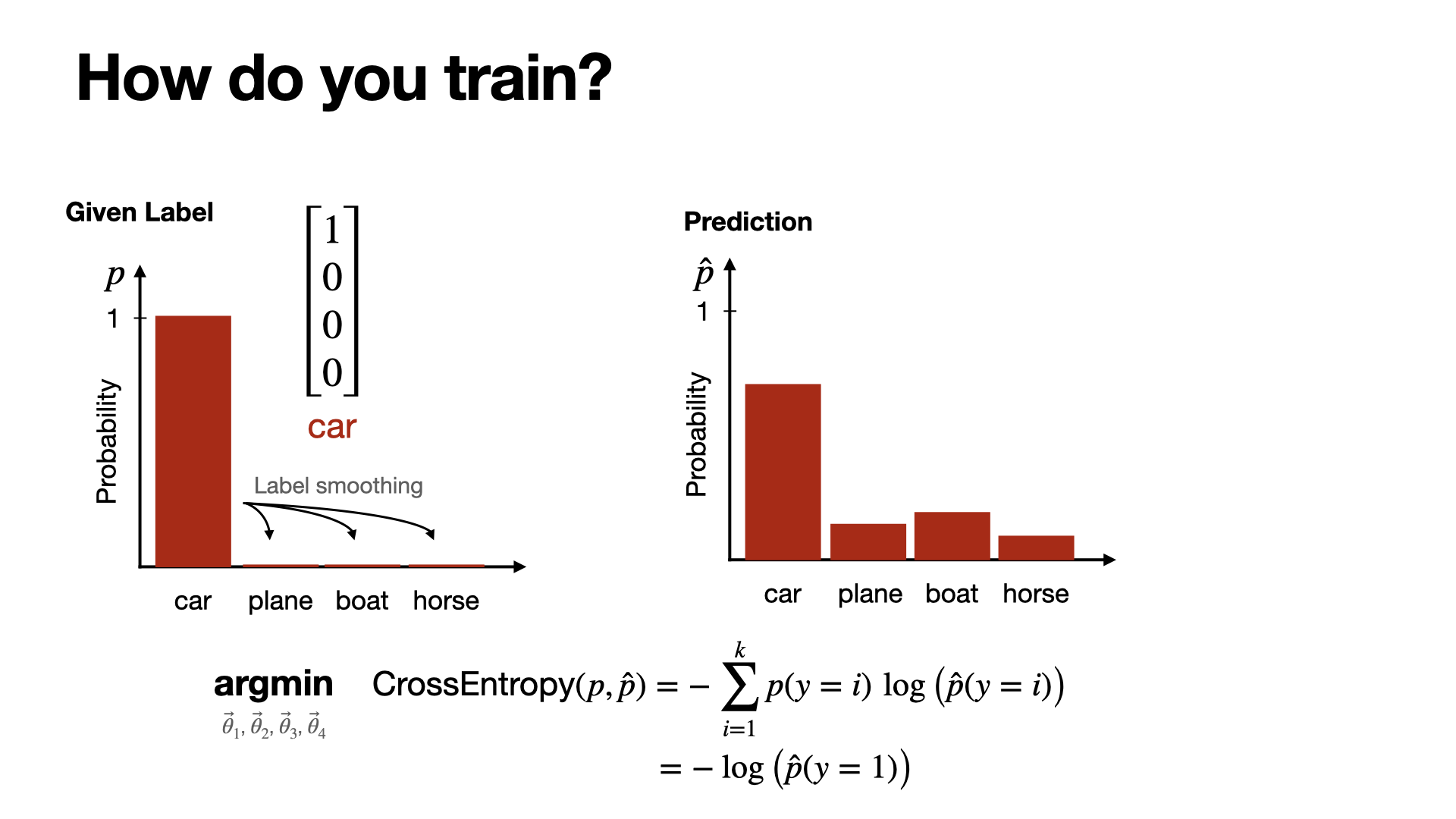
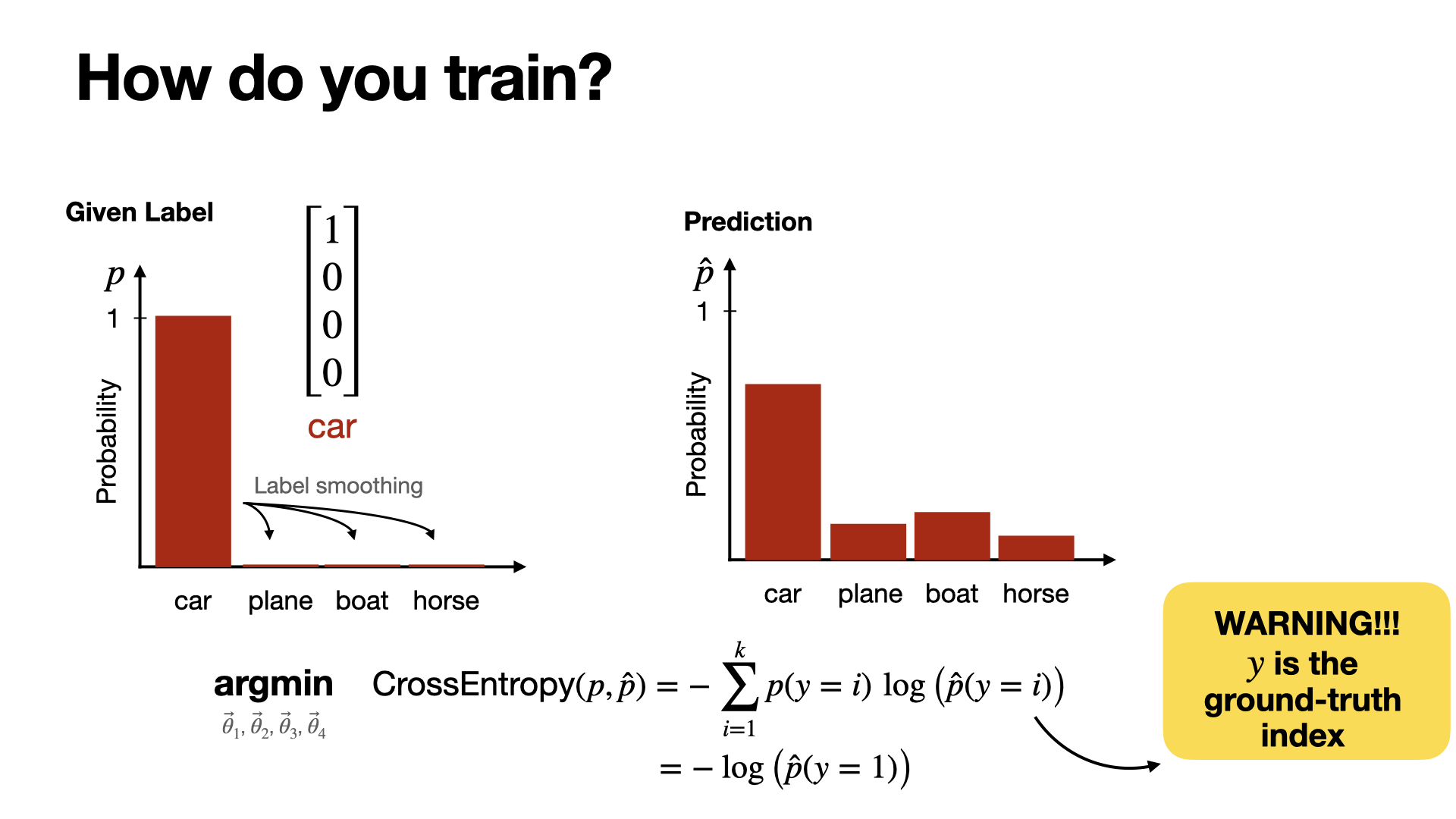
How do you train?
car
plane
boat
horse
1
Probability
Given Label
How do you train?
 is called the base measure (not depend on )
 is called the log partition function (not depend on )
,  and  are scalar.  and  have the same dimensions.
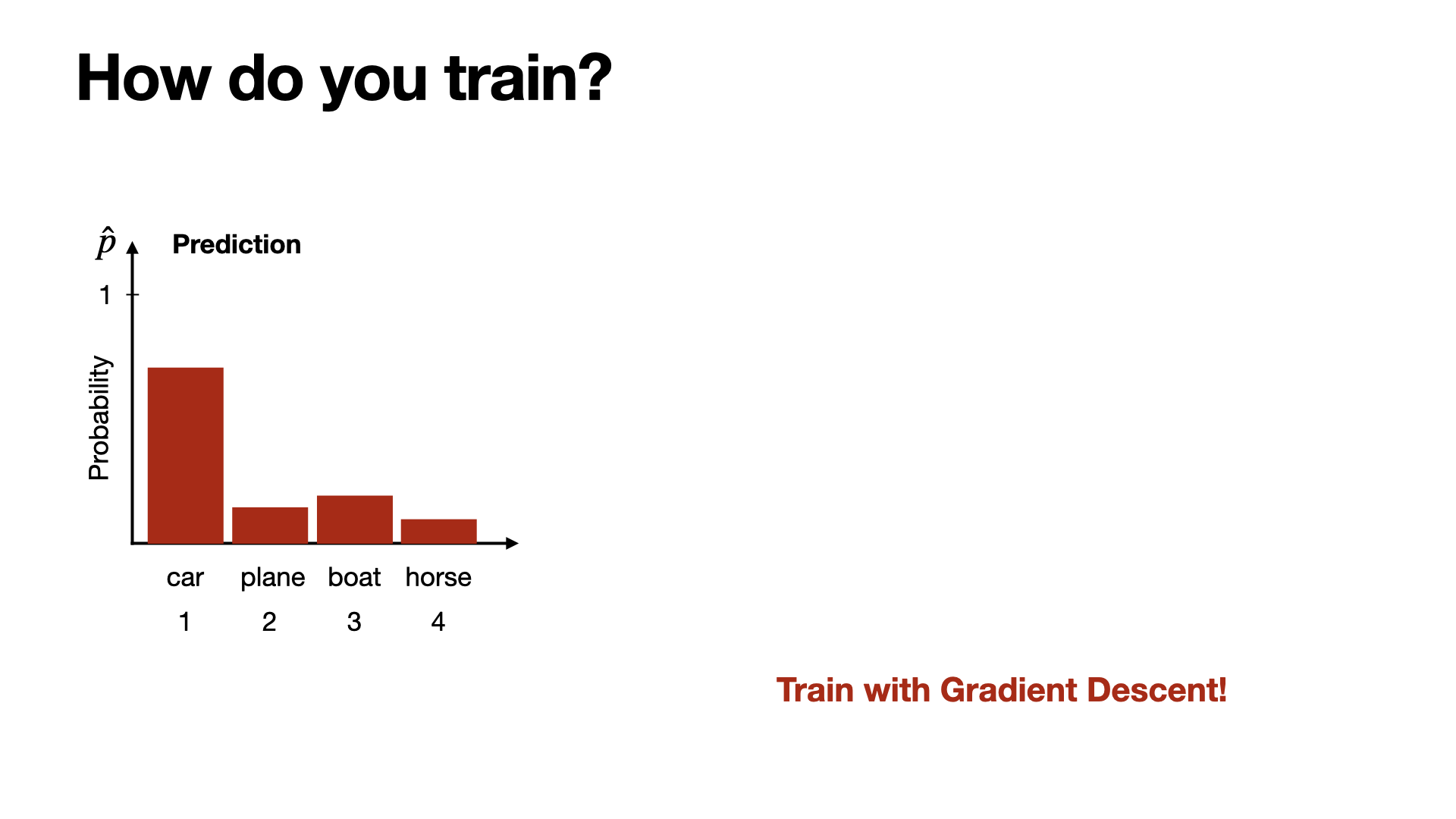
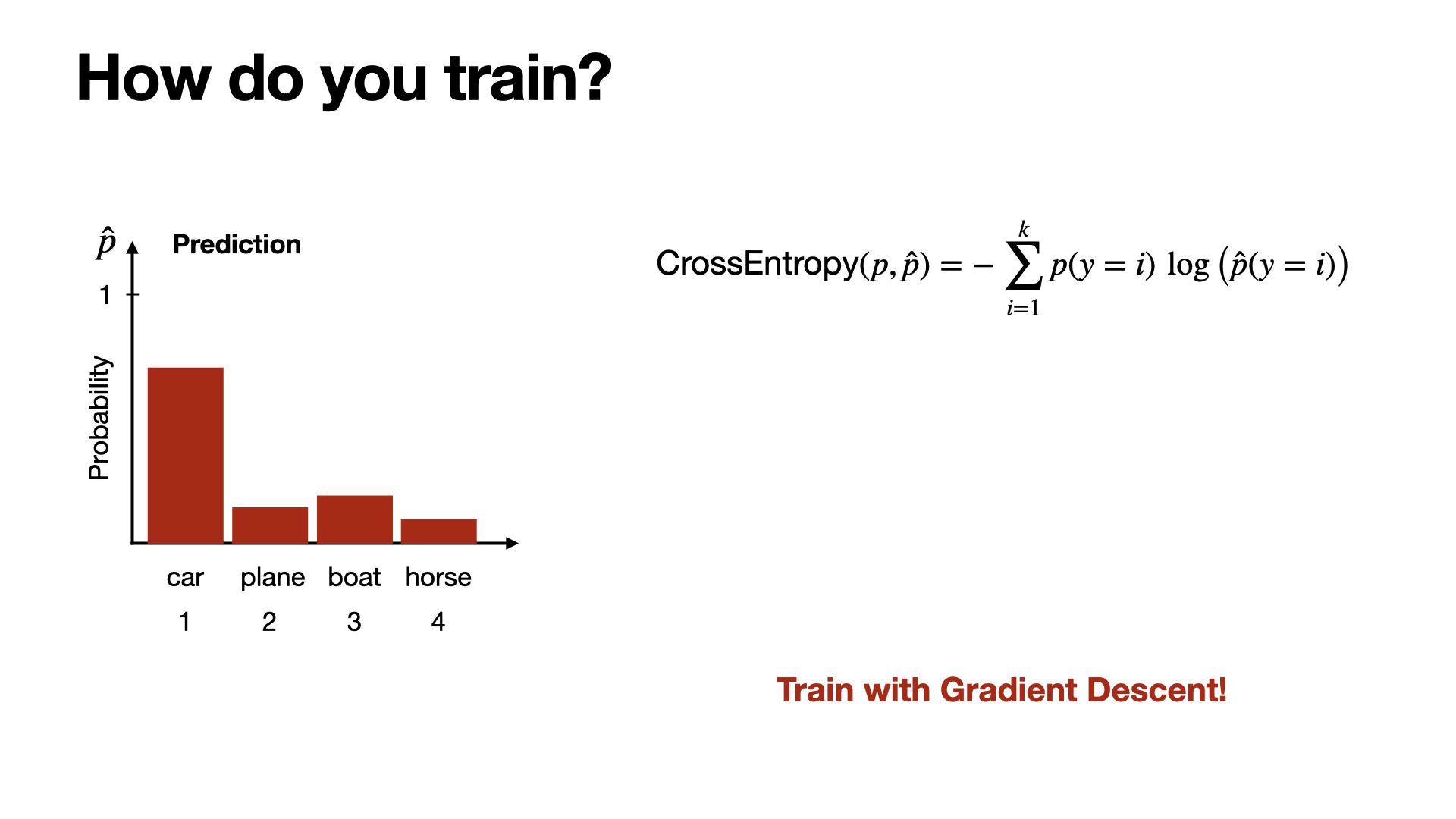
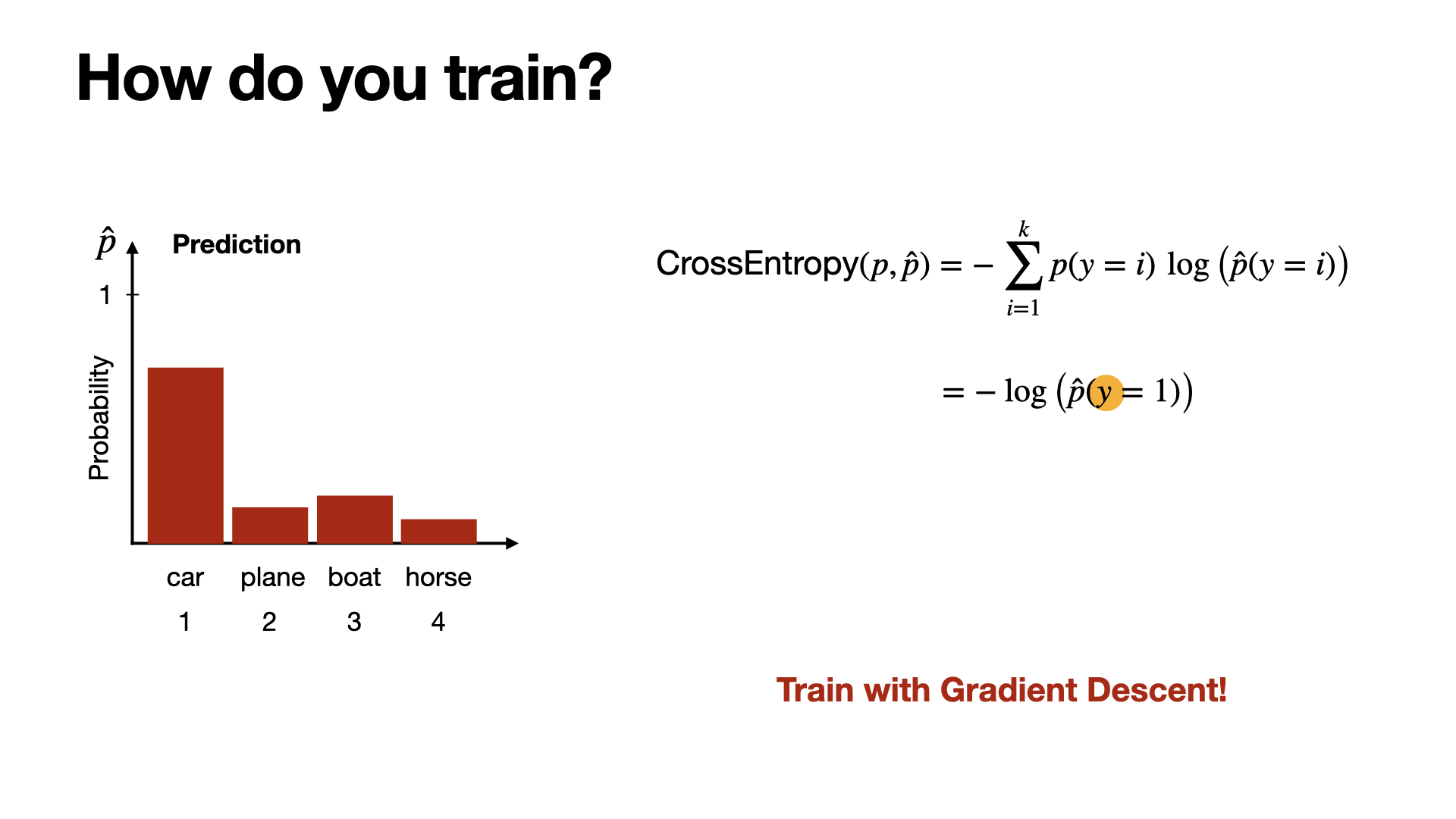
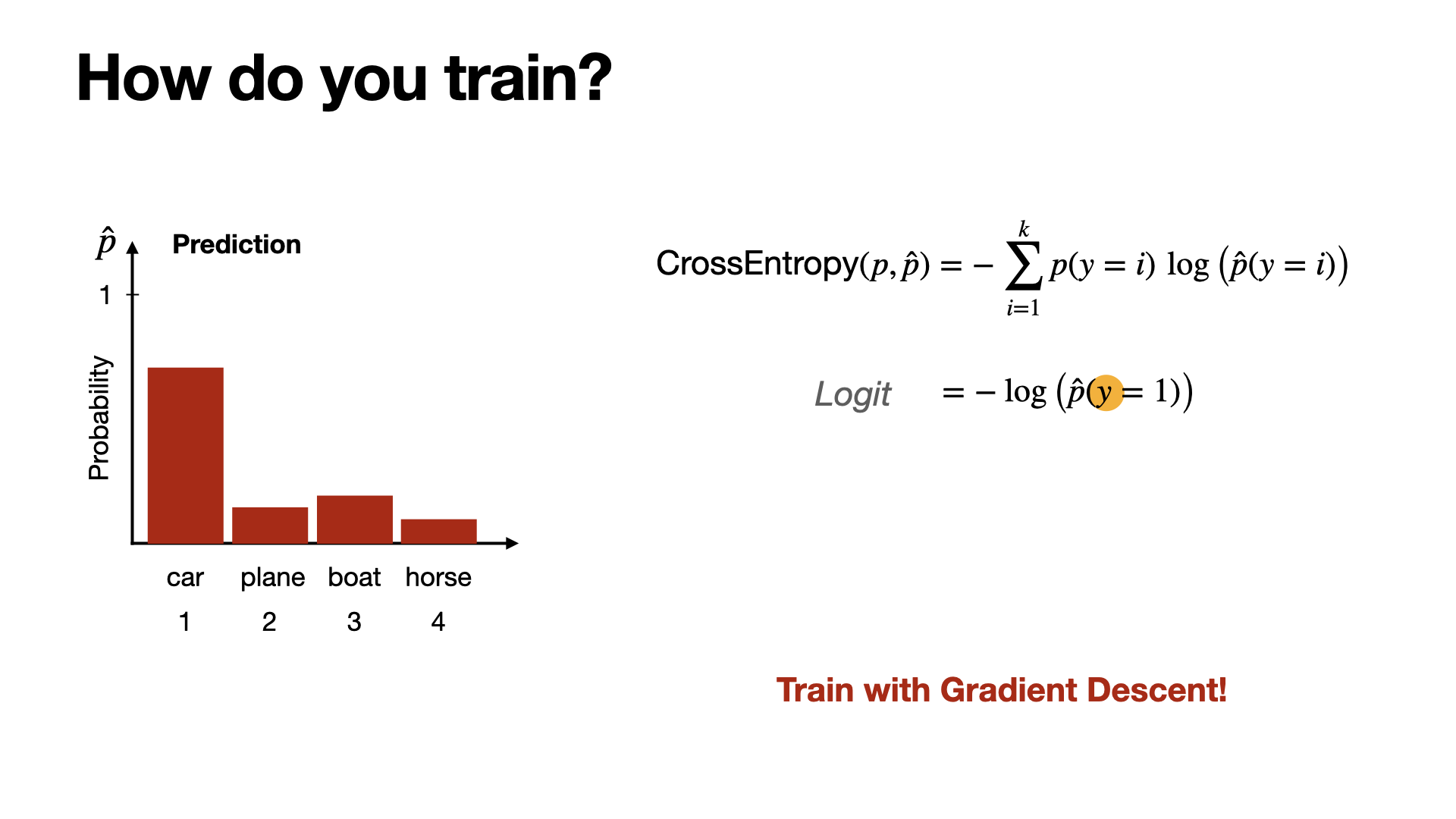
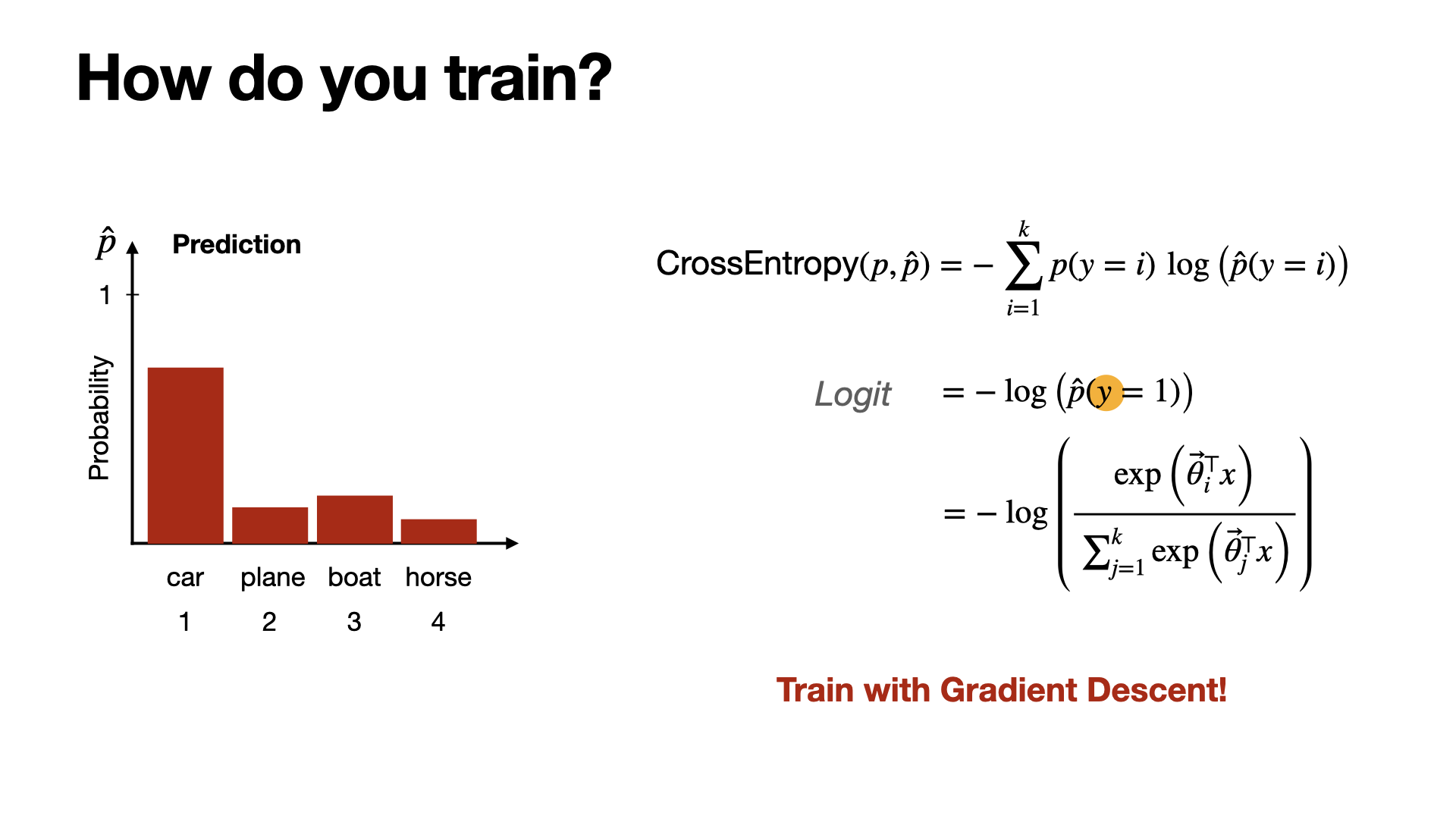
How do you train?
car
plane
boat
horse
1
Probability
Prediction
Logit
Train with Gradient Descent!
1
2
3
4
How do you train?
 is called the base measure (not depend on )
 is called the log partition function (not depend on )
,  and  are scalar.  and  have the same dimensions.